HTML SitemapExplore
Find Things to DoFind The Best Restaurants

Alcántara Roman Bridge — Attraction in Alcántara

Name
Alcántara Roman Bridge
Description
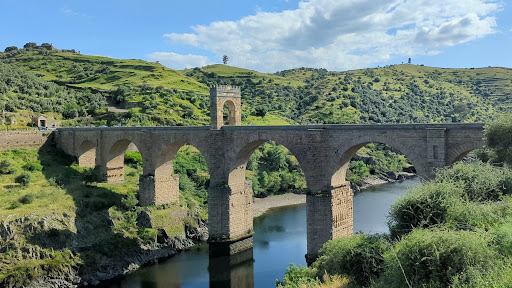
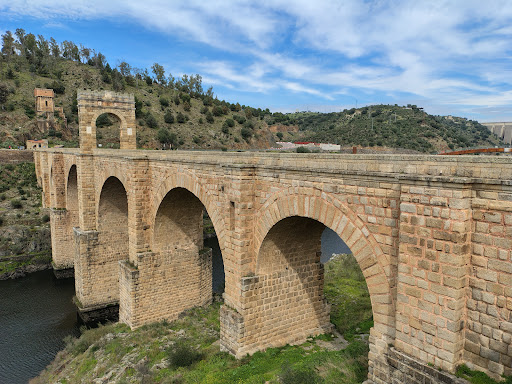
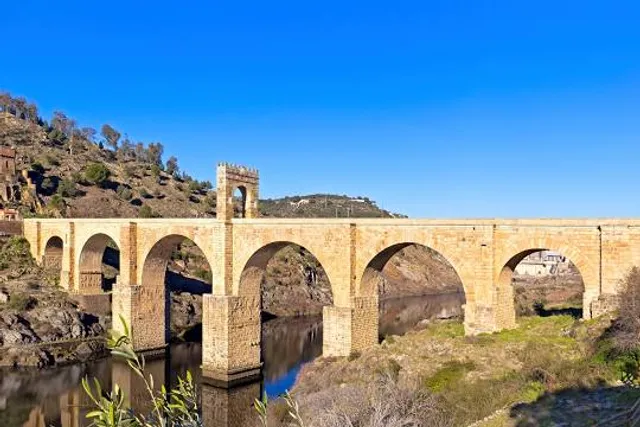
The Alcántara Bridge is a Roman bridge at Alcántara, in Extremadura, Spain. Alcántara is from the Arabic word al-Qantarah meaning "the arch". The stone arch bridge was built over the Tagus River between 104 and 106 AD by an order of the Roman emperor Trajan in 98.
Nearby attractions
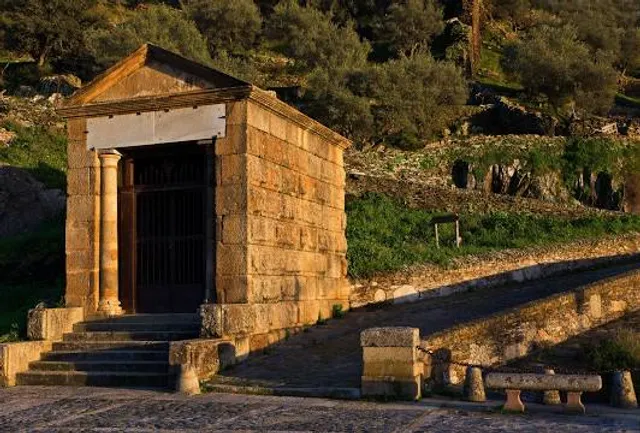
Roman Temple of Alcántara
10980 Alcántara, Cáceres, Spain
Nearby restaurants
Nearby hotels
Related posts
Keywords
Alcántara Roman Bridge tourism.Alcántara Roman Bridge hotels.Alcántara Roman Bridge bed and breakfast. flights to Alcántara Roman Bridge.Alcántara Roman Bridge attractions.Alcántara Roman Bridge restaurants.Alcántara Roman Bridge travel.Alcántara Roman Bridge travel guide.Alcántara Roman Bridge travel blog.Alcántara Roman Bridge pictures.Alcántara Roman Bridge photos.Alcántara Roman Bridge travel tips.Alcántara Roman Bridge maps.Alcántara Roman Bridge things to do.
Alcántara Roman Bridge things to do, attractions, restaurants, events info and trip planning
Alcántara Roman Bridge
SpainExtremaduraAlcántaraAlcántara Roman Bridge

Basic Info

Alcántara Roman Bridge

10980 Alcántara, Cáceres, Spain
4.8(1.3K)
Open 24 hours
Save
spot

Ratings & Description

Info

The Alcántara Bridge is a Roman bridge at Alcántara, in Extremadura, Spain. Alcántara is from the Arabic word al-Qantarah meaning "the arch". The stone arch bridge was built over the Tagus River between 104 and 106 AD by an order of the Roman emperor Trajan in 98.

Cultural
Outdoor
Accessibility
attractions: Roman Temple of Alcántara, restaurants:
logoLearn more insights from Wanderboat AI.
Phone
+34 927 39 08 63
Website
turismocaceres.org

Plan your stay

hotel
Pet-friendly Hotels in Alcántara
Find a cozy hotel nearby and make it a full experience.
hotel
Affordable Hotels in Alcántara
Find a cozy hotel nearby and make it a full experience.
hotel
The Coolest Hotels You Haven't Heard Of (Yet)
Find a cozy hotel nearby and make it a full experience.
hotel
Trending Stays Worth the Hype in Alcántara
Find a cozy hotel nearby and make it a full experience.

Reviews

Nearby attractions of Alcántara Roman Bridge

Roman Temple of Alcántara

Roman Temple of Alcántara

Roman Temple of Alcántara

4.4

(31)

Open 24 hours
Click for details
Get the Appoverlay
Get the AppOne tap to find yournext favorite spots!
Wanderboat LogoWanderboat

Your everyday Al companion for getaway ideas

CompanyAbout Us
InformationAI Trip PlannerSitemap
SocialXInstagramTiktokLinkedin
LegalTerms of ServicePrivacy Policy

Get the app

© 2025 Wanderboat. All rights reserved.

Posts

Orion BukantisOrion Bukantis
A beautiful, stunning engineering feat, in a beautiful natural setting. Standing as a monumental testament to the genius of Roman engineering, the Alcántara Bridge majestically crosses the Tagus River in Cáceres, Spain. Constructed in just two years between 104 and 106 AD, during the reign of the Hispanic Emperor Trajan, it remains one of the most remarkable surviving pieces of Roman civil architecture. The bridge's name, derived from the Arabic al-Qantarah ("the bridge"), reflects the awe it has inspired for centuries. Its design, attributed to the architect Caius Julius Lacer, is a marvel of precision and scale. Built from mortarless granite blocks, it stretches 194 meters long and soars to a breathtaking height of 71 meters from the riverbed to its deck. Its most notable features include: * Six Soaring Arches: The bridge is supported by six grand, semi-circular arches that vary in size, with the two central arches being the largest, showcasing the Romans' mastery of this architectural form. * Triumphal Arch: At its center stands a 14-meter-high triumphal arch honoring Emperor Trajan, a common feature to broadcast imperial power and commemorate the public work. * A Unique Temple and Inscription: Uniquely for a Roman bridge, one of its entrances features a small temple. Inside, a poignant inscription dedicates the bridge to Trajan and immortalizes its creator, Caius Julius Lacer, who expressed his hope that the bridge would "last for eternity in the ages of the world." Despite Lacer's ambition, the bridge's strategic importance made it a target in later conflicts. The westernmost arch was destroyed during the Reconquista in 1214 and rebuilt in the 16th century. Later, the second arch on the opposite side was blown up during the Peninsular War in 1809 to halt French troops and was not fully restored until 1860. One of the most impressive Roman monuments I have seen! Even my fiancee, who has little interest in history, was impressed and thoroughly enjoyed our visit.
Tracy ANDERSONTracy ANDERSON
Puente Romano de Alcántara – A Timeless Marvel of Roman Engineering The Puente Romano de Alcántara is one of the most impressive Roman bridges still standing today. Located in the town of Alcántara, Spain, this nearly 2,000-year-old structure is a testament to the ingenuity and durability of Roman engineering. History & Architecture Built between 104 and 106 AD during the reign of Emperor Trajan, the bridge was designed to span the Tagus River, connecting important trade routes in the Iberian Peninsula. The architect, Caius Julius Lacer, left an inscription claiming that the bridge would last forever—and so far, he has been right. The bridge features six grand arches, supported by massive stone piers, reaching a height of nearly 57 meters (187 feet) and stretching 194 meters (636 feet) in length. At its center, a triumphal arch stands in honor of Trajan, adding to its monumental presence. The materials used—large, precisely cut granite blocks—have withstood wars, floods, and centuries of wear. Cultural & Historical Significance The bridge has witnessed many historical events, from Moorish invasions to Napoleonic battles. It suffered damage over the centuries, especially during conflicts, but was repeatedly restored, maintaining its original grandeur. Today, it is a symbol of Spain’s Roman heritage and an essential site for history and architecture enthusiasts. Visiting the Bridge Puente Romano de Alcántara is not just an ancient relic—it is still open to pedestrian traffic, allowing visitors to walk across and admire the breathtaking views of the Tagus River. The surrounding town of Alcántara.
Milan VáclavíkMilan Václavík
Úžasné místo, které vás doslova přenese do doby starověkého Říma. Most byl postaven mezi lety 104–106 n. l. na příkaz císaře Trajána. Navrhl ho římský architekt Gaius Julius Lacer a na výstavbu přispělo dvanáct municipií z provincie Lusitania – jejich jména jsou vyryta přímo na mostě. Co je neuvěřitelné – most je zcela z masivních žulových bloků, bez použití malty! Celá konstrukce je přes 190 metrů dlouhá, 70 metrů vysoká a tvoří ji šest oblouků. Uprostřed se tyčí vítězný oblouk věnovaný císaři Trajánovi – nádherný detail, který dokazuje, jak si Římané cenili inženýrství i symboliky. Most přežil staletí, i když byl několikrát poškozen – Maury ve 13. století, pak v napoleonských válkách a naposledy byl restaurován v roce 1969, když se poblíž stavěla přehrada. I přesto působí neuvěřitelně zachovale a autenticky. Název „Alcántara“ pochází z arabského al-Qanṭarah, tedy „oblouk“ – i to je připomínkou dlouhé a pestré historie Španělska. Dnes je most chráněnou památkou (Bien de Interés Cultural) a přestože po něm občas jezdí auta, plánuje se výstavba nového mostu, aby se tento skvost uchránil pro další generace. Doporučení: Navštivte ráno nebo v podvečer – nádherné světlo a méně lidí. Kousek od mostu je stará římská inskripce a krásné výhledy na přehradu. Pokud jste fanoušci historie, je tohle jedno z nejzajímavějších míst v celé Extremaduře!
See more posts
See more posts
hotel
Find your stay

Pet-friendly Hotels in Alcántara

Find a cozy hotel nearby and make it a full experience.

A beautiful, stunning engineering feat, in a beautiful natural setting. Standing as a monumental testament to the genius of Roman engineering, the Alcántara Bridge majestically crosses the Tagus River in Cáceres, Spain. Constructed in just two years between 104 and 106 AD, during the reign of the Hispanic Emperor Trajan, it remains one of the most remarkable surviving pieces of Roman civil architecture. The bridge's name, derived from the Arabic al-Qantarah ("the bridge"), reflects the awe it has inspired for centuries. Its design, attributed to the architect Caius Julius Lacer, is a marvel of precision and scale. Built from mortarless granite blocks, it stretches 194 meters long and soars to a breathtaking height of 71 meters from the riverbed to its deck. Its most notable features include: * Six Soaring Arches: The bridge is supported by six grand, semi-circular arches that vary in size, with the two central arches being the largest, showcasing the Romans' mastery of this architectural form. * Triumphal Arch: At its center stands a 14-meter-high triumphal arch honoring Emperor Trajan, a common feature to broadcast imperial power and commemorate the public work. * A Unique Temple and Inscription: Uniquely for a Roman bridge, one of its entrances features a small temple. Inside, a poignant inscription dedicates the bridge to Trajan and immortalizes its creator, Caius Julius Lacer, who expressed his hope that the bridge would "last for eternity in the ages of the world." Despite Lacer's ambition, the bridge's strategic importance made it a target in later conflicts. The westernmost arch was destroyed during the Reconquista in 1214 and rebuilt in the 16th century. Later, the second arch on the opposite side was blown up during the Peninsular War in 1809 to halt French troops and was not fully restored until 1860. One of the most impressive Roman monuments I have seen! Even my fiancee, who has little interest in history, was impressed and thoroughly enjoyed our visit.
Orion Bukantis

Orion Bukantis

hotel
Find your stay

Affordable Hotels in Alcántara

Find a cozy hotel nearby and make it a full experience.

Get the Appoverlay
Get the AppOne tap to find yournext favorite spots!
Puente Romano de Alcántara – A Timeless Marvel of Roman Engineering The Puente Romano de Alcántara is one of the most impressive Roman bridges still standing today. Located in the town of Alcántara, Spain, this nearly 2,000-year-old structure is a testament to the ingenuity and durability of Roman engineering. History & Architecture Built between 104 and 106 AD during the reign of Emperor Trajan, the bridge was designed to span the Tagus River, connecting important trade routes in the Iberian Peninsula. The architect, Caius Julius Lacer, left an inscription claiming that the bridge would last forever—and so far, he has been right. The bridge features six grand arches, supported by massive stone piers, reaching a height of nearly 57 meters (187 feet) and stretching 194 meters (636 feet) in length. At its center, a triumphal arch stands in honor of Trajan, adding to its monumental presence. The materials used—large, precisely cut granite blocks—have withstood wars, floods, and centuries of wear. Cultural & Historical Significance The bridge has witnessed many historical events, from Moorish invasions to Napoleonic battles. It suffered damage over the centuries, especially during conflicts, but was repeatedly restored, maintaining its original grandeur. Today, it is a symbol of Spain’s Roman heritage and an essential site for history and architecture enthusiasts. Visiting the Bridge Puente Romano de Alcántara is not just an ancient relic—it is still open to pedestrian traffic, allowing visitors to walk across and admire the breathtaking views of the Tagus River. The surrounding town of Alcántara.
Tracy ANDERSON

Tracy ANDERSON

hotel
Find your stay

The Coolest Hotels You Haven't Heard Of (Yet)

Find a cozy hotel nearby and make it a full experience.

hotel
Find your stay

Trending Stays Worth the Hype in Alcántara

Find a cozy hotel nearby and make it a full experience.

Úžasné místo, které vás doslova přenese do doby starověkého Říma. Most byl postaven mezi lety 104–106 n. l. na příkaz císaře Trajána. Navrhl ho římský architekt Gaius Julius Lacer a na výstavbu přispělo dvanáct municipií z provincie Lusitania – jejich jména jsou vyryta přímo na mostě. Co je neuvěřitelné – most je zcela z masivních žulových bloků, bez použití malty! Celá konstrukce je přes 190 metrů dlouhá, 70 metrů vysoká a tvoří ji šest oblouků. Uprostřed se tyčí vítězný oblouk věnovaný císaři Trajánovi – nádherný detail, který dokazuje, jak si Římané cenili inženýrství i symboliky. Most přežil staletí, i když byl několikrát poškozen – Maury ve 13. století, pak v napoleonských válkách a naposledy byl restaurován v roce 1969, když se poblíž stavěla přehrada. I přesto působí neuvěřitelně zachovale a autenticky. Název „Alcántara“ pochází z arabského al-Qanṭarah, tedy „oblouk“ – i to je připomínkou dlouhé a pestré historie Španělska. Dnes je most chráněnou památkou (Bien de Interés Cultural) a přestože po něm občas jezdí auta, plánuje se výstavba nového mostu, aby se tento skvost uchránil pro další generace. Doporučení: Navštivte ráno nebo v podvečer – nádherné světlo a méně lidí. Kousek od mostu je stará římská inskripce a krásné výhledy na přehradu. Pokud jste fanoušci historie, je tohle jedno z nejzajímavějších míst v celé Extremaduře!
Milan Václavík

Milan Václavík

See more posts
See more posts

Reviews of Alcántara Roman Bridge

4.8
(1,335)
avatar
5.0
30w

A beautiful, stunning engineering feat, in a beautiful natural setting.

Standing as a monumental testament to the genius of Roman engineering, the Alcántara Bridge majestically crosses the Tagus River in Cáceres, Spain. Constructed in just two years between 104 and 106 AD, during the reign of the Hispanic Emperor Trajan, it remains one of the most remarkable surviving pieces of Roman civil architecture.

The bridge's name, derived from the Arabic al-Qantarah ("the bridge"), reflects the awe it has inspired for centuries. Its design, attributed to the architect Caius Julius Lacer, is a marvel of precision and scale. Built from mortarless granite blocks, it stretches 194 meters long and soars to a breathtaking height of 71 meters from the riverbed to its deck.

Its most notable features include:

Six Soaring Arches: The bridge is supported by six grand, semi-circular arches that vary in size, with the two central arches being the largest, showcasing the Romans' mastery of this architectural form.

Triumphal Arch: At its center stands a 14-meter-high triumphal arch honoring Emperor Trajan, a common feature to broadcast imperial power and commemorate the public work.

A Unique Temple and Inscription: Uniquely for a Roman bridge, one of its entrances features a small temple. Inside, a poignant inscription dedicates the bridge to Trajan and immortalizes its creator, Caius Julius Lacer, who expressed his hope that the bridge would "last for eternity in the ages of the world."

Despite Lacer's ambition, the bridge's strategic importance made it a target in later conflicts. The westernmost arch was destroyed during the Reconquista in 1214 and rebuilt in the 16th century. Later, the second arch on the opposite side was blown up during the Peninsular War in 1809 to halt French troops and was not fully restored until 1860.

One of the most impressive Roman monuments I have seen!

Even my fiancee, who has little interest in history, was impressed and thoroughly...

   Read more
avatar
5.0
42w

Puente Romano de Alcántara – A Timeless Marvel of Roman Engineering

The Puente Romano de Alcántara is one of the most impressive Roman bridges still standing today. Located in the town of Alcántara, Spain, this nearly 2,000-year-old structure is a testament to the ingenuity and durability of Roman engineering. History & Architecture Built between 104 and 106 AD during the reign of Emperor Trajan, the bridge was designed to span the Tagus River, connecting important trade routes in the Iberian Peninsula. The architect, Caius Julius Lacer, left an inscription claiming that the bridge would last forever—and so far, he has been right. The bridge features six grand arches, supported by massive stone piers, reaching a height of nearly 57 meters (187 feet) and stretching 194 meters (636 feet) in length. At its center, a triumphal arch stands in honor of Trajan, adding to its monumental presence. The materials used—large, precisely cut granite blocks—have withstood wars, floods, and centuries of wear. Cultural & Historical Significance The bridge has witnessed many historical events, from Moorish invasions to Napoleonic battles. It suffered damage over the centuries, especially during conflicts, but was repeatedly restored, maintaining its original grandeur. Today, it is a symbol of Spain’s Roman heritage and an essential site for history and architecture enthusiasts. Visiting the Bridge Puente Romano de Alcántara is not just an ancient relic—it is still open to pedestrian traffic, allowing visitors to walk across and admire the breathtaking views of the Tagus River. The surrounding town...

   Read more
avatar
5.0
5y

Es uno de los puentes romanos más relevantes de los que quedan actualmente en todo el mundo y una de las obras de ingeniería más importantes de la Hispania romana. Fue construido a principios del siglo II dC por el arquitecto romano Cayo Iulio Lacer para salvar el cauce del río Tajo. El nombre que tiene en la actualidad tiene su origen en el nombre que le dieron los árabes: al-Qantarat, que precisamente significaba 'el Puente', dando idea de la admiración que expresaron ante la obra levantada muchos siglos atrás.

El Puente de Alcántara fue construido entre los años 105 y 106 dC por el arquitecto romano Cayo Iulio Lacer. Se levantó con el objetivo de facilitar la comunicación entre Norba (la actual Cáceres) y Conimbriga (la localidad portuguesa de Condeixa-a-Velha)

Tiene una longitud de 214 metros sobre el Tajo. Está apoyado sobre cinco pilares de diferentes alturas que se adaptan al terreno.

Los dos arcos centrales tienen una anchura de casi 30 metros y la altura es también impresionante, unos 48 metros en sus arcos centrales. Parece a simple vista un puente desproporcionado para el caudal normal las características orográficas del terreno, pero su diseño no es ningún capricho. Tiene las dimensiones necesarias para permitir el paso de un gran caudal de agua durante las crecidas del río Tajo.

Puente de Alcántara. En el extremo se aprecia la Torre del Oro

En el centro del puente, sobre el pilar central, se eleva un Arco de Triunfo de unos 13 metros de altura. Aunque ha sido modificado en varias ocasiones a lo largo de la historia, conserva algunas inscripciones, como la fecha de construcción y una dedicatoria al emperador Trajano.

La altura total del puente es de 57 metros, sin contar el arco superior. La calzada tiene una anchura de unos 8 metros y en la actualidad el puente sigue abierto al tráfico.

El primer y segundo arco (los más próximos a la ciudad de Alcántara) han sido destruidos en varias ocasiones como recurso defensivo para evitar el paso de las tropas atacantes: a principios del siglo XIII, durante la época de la Reconquista, a mediados del siglo XVII en la Guerra de Restauración entre Portugal y España, y a principios del siglo XIX durante la Guerra de la Independencia.

La última reconstrucción importante se llevó a cabo a mediados del siglo XIX, durante el reinado de Isabel II. Y posteriormente, en 1969, cuando las obras del Embalse de Alcántara dejaron temporalmente seco el cauce del Tajo a la altura del puente, se procedió a la consolidación de los cimientos de los pilares centrales.

En uno de los extremos del puente se sitúa un templete romano en cuyo dintel se puede leer una inscripción con el nombre del arquitecto, Cayo Julio Lacer, y la leyenda: que durará tanto cuanto el mundo durare.

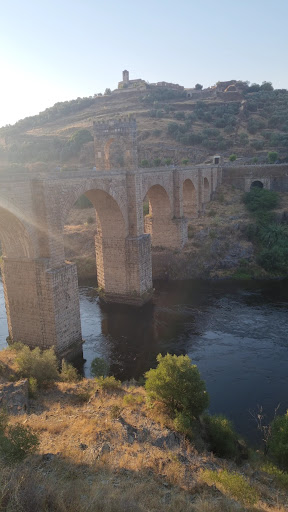
En el otro extremo está la llamada Torre del Oro, una torre defensiva construida en el siglo XVIII que formaba parte del conjunto defensivo de Alcántara.

Torre del Oro del Puente de Alcántara. Torre defensiva (Torre del Oro) en el extremo del Puente de Alcántara

La ciudad de Alcántara surgió mucho después de la construcción del puente, en época visigoda. Más tarde, los árabes la llamaron Kantara As-Saif, el Puente de la Espada. No se sabe a ciencia cierta el motivo de este nombre, pero existen varias leyendas que hacen referencia a este hecho. Algunas cuentan que hay una espada de oro enterrada en el puente. Otra dice que la espada del rey godo Rodrigo permanecía colgada del arco más...

   Read more

Page 1 of 7
Previous
Next