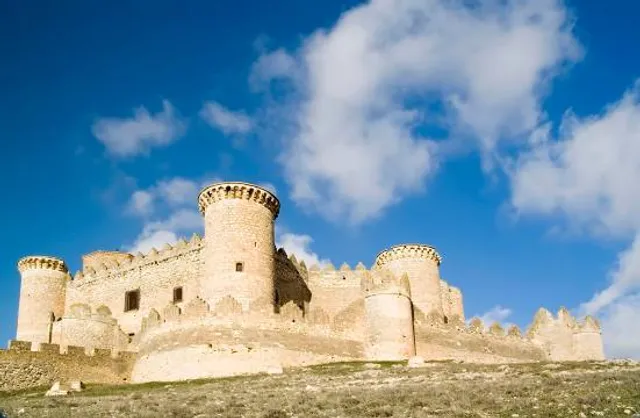
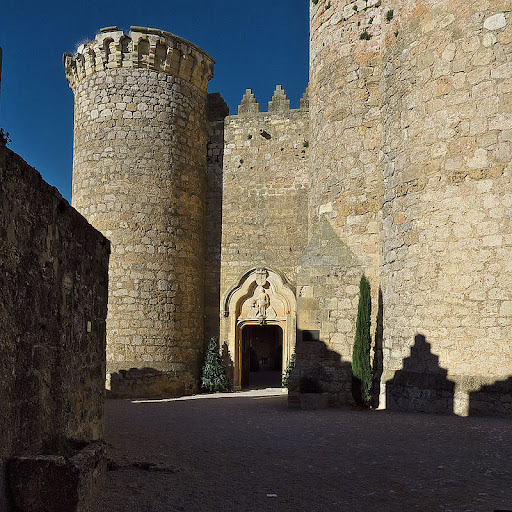
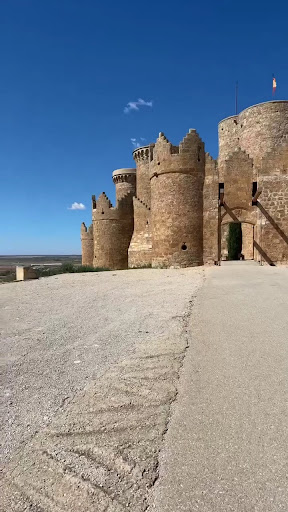
The Castillo de Belmonte is a medieval castle on the hill of San Cristobal, just outside the village of Belmonte in the southwest of the province of Cuenca in Spain. It was declared a historic monument within the National Artistic Treasury by a decree of 3 June 1931 and is now a Bien de Interés Cultural. It was built in the second half of the 15th century by order of Don Juan Pacheco, first Marquis de Villena, during a time of convulsions and infighting in the Kingdom of Castille and so Pacheco wished to build up his territory and build forts around it before worse problems arose. He probably took on Juan Guas as his architect, who had already worked for him on the Monastery of Santa María del Parral. It was begun in 1456 but remained incomplete on the death of Pacheco. His son Diego Lopez de Pacheco partly continued his father's work of his father, but mostly neglected the fortress.
The fortress was practically abandoned between the 17th and 18th centuries and was more or less ruinous by the early 19th century. The heiress of the house of Villena, Eugenia de Guzman, better known as the Empress Eugenia de Montijo and her architect Alejandro Sureda began a restoration project in 1857, keeping the exterior in the original style but updating the interior to modern tastes - for example, Sureda used bricks for internal galleries overlooking the inner courtyard. Montijo had spent more than 500,000 pesetas on the project by the time it ended with the fall of the Second French Empire in 1870.
The castle was then occupied as a French Dominican monastery for several year. After the Dominicans left, the empress' great-nephew the Duke of Penaranda, Hernando Fitz-James Stuart e Falco continued the restoration and even lived within the castle. It later served as a prison for the Partido Judicial de Belmonte, and as a Onésimo Redondo academy for the Francoist 'Frente de Juventudes'. It was abandoned and began to deteriorate again, before being made a cultural monument in 1931. It is now owned by the descendents of the empress' sister Maria Francisca de Sales Portocarrero. It was restored again in summer 2010 and opened...
Read moreBelmonte Castle, situated in the picturesque town of Belmonte, Cuenca, Spain, is a stunning example of medieval architecture, blending Gothic and Mudejar styles.
It was built in the second half of the 15th century by Don Juan Pacheco, the first Marquis of Villena, it stands atop San Cristóbal hill, offering breathtaking views of the surrounding landscape. The castle's unique star-shaped design, with six towers reaching 22 meters high, makes it a standout among European fortresses.
The fortress was practically abandoned between the 17th and 18th centuries and was more or less ruinous by the early 19th century. The heiress of the house of Villena, Eugenia de Guzman, better known as the Empress Eugenia de Montijo and her architect Alejandro Sureda began a restoration project in 1857, keeping the exterior in the original style but updating the interior to modern tastes.
Its rich history includes the abive periods of abandonment and restoration, notably by Empress Eugenia de Montijo in the 19th century.
It later served as a prison for the Partido Judicial de Belmonte, and as an Onsimo Redondo academy for the Francoist 'Frente de Juventudes'. It was abandoned and began to deteriorate again, before being made a cultural monument in 1931.
It is now owned by the descendants of the empress' sister Maria Francisca de Sales Portocarrero. It was restored again in summer 2010 and opened to the public. Today, it is a Bien de Interés Cultural, hosting guided tours and exhibitions that delve into its fascinating past.
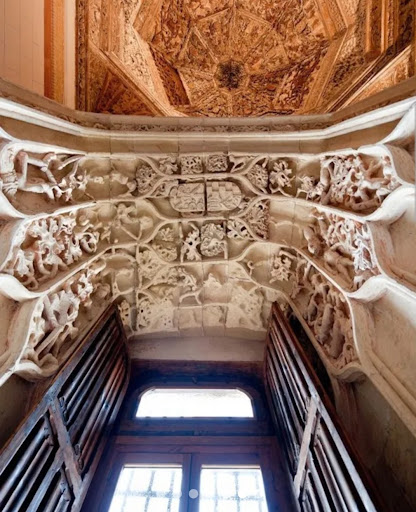
Visitors can explore its grand halls, admire the intricate Mudejar ceilings, and enjoy the panoramic views from its ramparts. The castle's strategic location in Castilla-La Mancha makes it an ideal day trip for history enthusiasts and those exploring the region's cultural heritage.
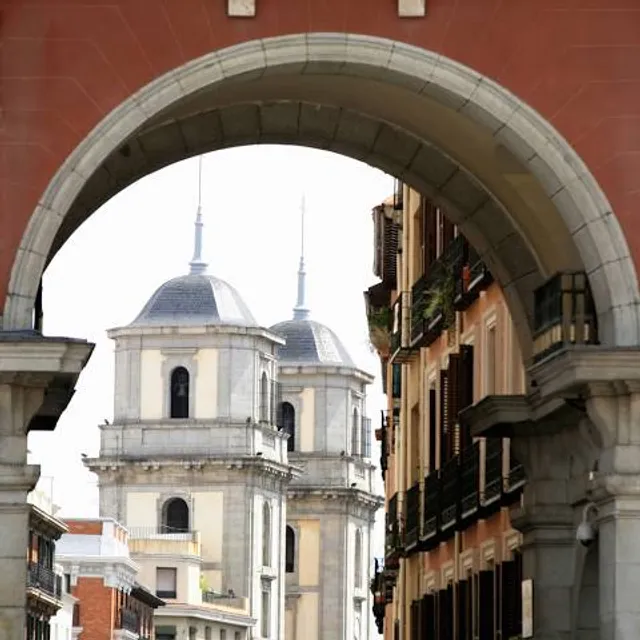
After visiting the castle, a stroll through the charming town of Belmonte offers a chance to enjoy local cuisine and...
Read moreFuimos al Torneo Nacional de Combate, ha realizar una visita en familia con niños de todos los rangos de edad.
La subida al Castillo está algo estropeada, hay que ir despacio con cuidado, cuenta con una zona muy amplia de aparcamiento.
El precio de la entrada en el Torneo lo encontramos correcto ya que se incluye el Torneo, el Castillo y el Parque, además hay pack para familias que implica un descuento. Debería implantar estás opciones a cualquier tipo de visita y evento ya que el precio es algo que si nos condiciona a las familias numerosas y agradecemos cierta flexibilidad.
Las instalaciones está muy cuidadas y limpias, a excepción de dos lugares que han sufrido vandalismo, lo cual nos entristeció mucho pero comprendemos que se trata de algo ajeno a la empresa.
El personal es muy amable, atienden con agilidad y comprensión. Trato cercano y profesional.
En la zona del Torneo había un mercadillo medieval donde poder realizar compras y también comer. La comida era poco variada pero si tenían precios razonables y uno de los puestos ofrecían ensalada, la relación calidad precio era correcta. Lo único que vi escaso fue la zona de asientos para la cantidad de visitantes que había, aunque la falta de asientos permitía ver el torneo desde cualquier punto del recinto.
En la zona del Parque, habitualmente hay un maestro de armas que explica el parque, pero durante el torneo no se ofrecían sus servicios, creo que deberían de mantenerlo también durante los eventos o plantearlo de alguna otra forma para que el visitante pueda ver alguna demostración, al menos las más representativas ya que la exposición es bastante extensa.
En el Castillo, la visita es libre con audioguía que tienes que descargar por medio de app, el problema de los audioguías es que es imposible hacer uso de ellas cuando vas en grupo o hay mucha gente. Sería interesante que automatizaran las locuciones en cada sala para cada cierto tiempo. Como alternativa la audioguía recomiendo comprar en la cafetería o en la tienda que hay dentro del Castillo la Guía Oficial por 10 euros. Sencilla de leer, completa y fácil de seguir.
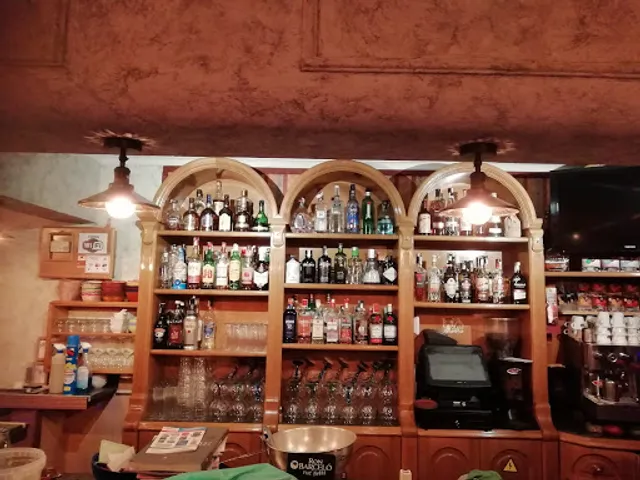
Continuando con el Castillo, hay cafeteria y tienda dentro, están bien, lo mismo que en todos los museos o zonas museolizadas, sería genial que en la cafetería ofrecieran un menú inspirado en la cocina tradicional medieval, básico y accesible. Hay baños en las distintas plantas y está limpios, cosa que me sorprendió gratamente y más teniendo en cuenta el bullicio que implicó el evento.
Para las personas con problemas de movilidad, hay zonas con escaleras de difícil acceso pero estan en bastante buenas condiciones lo cual, si la salud lo permite, se pueden recorrer perfectamente yendo con más cuidado y tomándose más tiempo.
En general, merece la pena visitar el Castillo de Belmonte y recomiendo su Torneo, todo el recorrido fue muy curioso, entretenido y con el suficiente contenido como para echar...
Read more