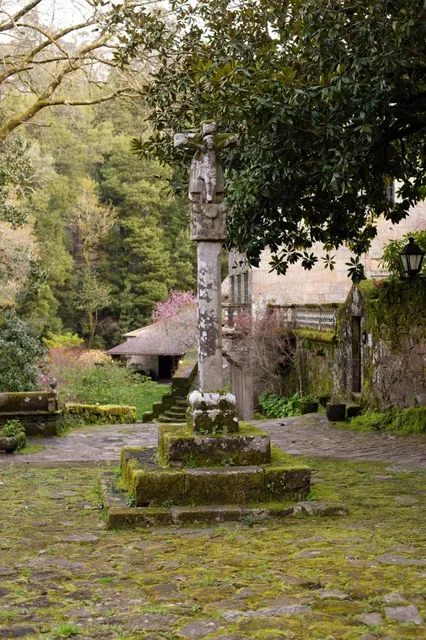
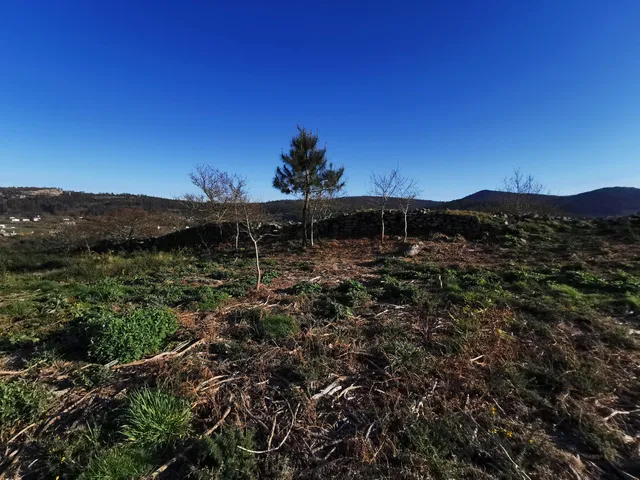
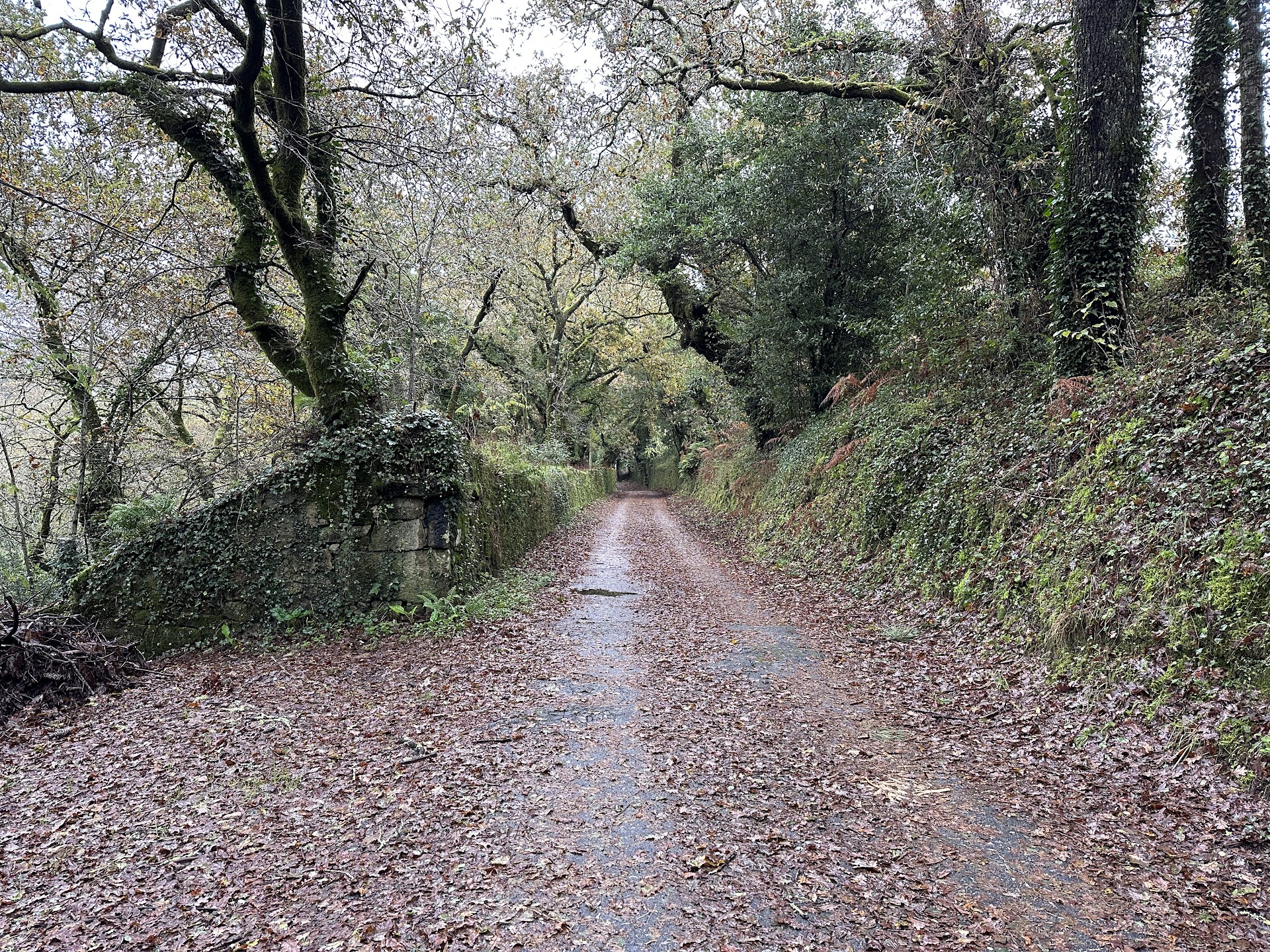
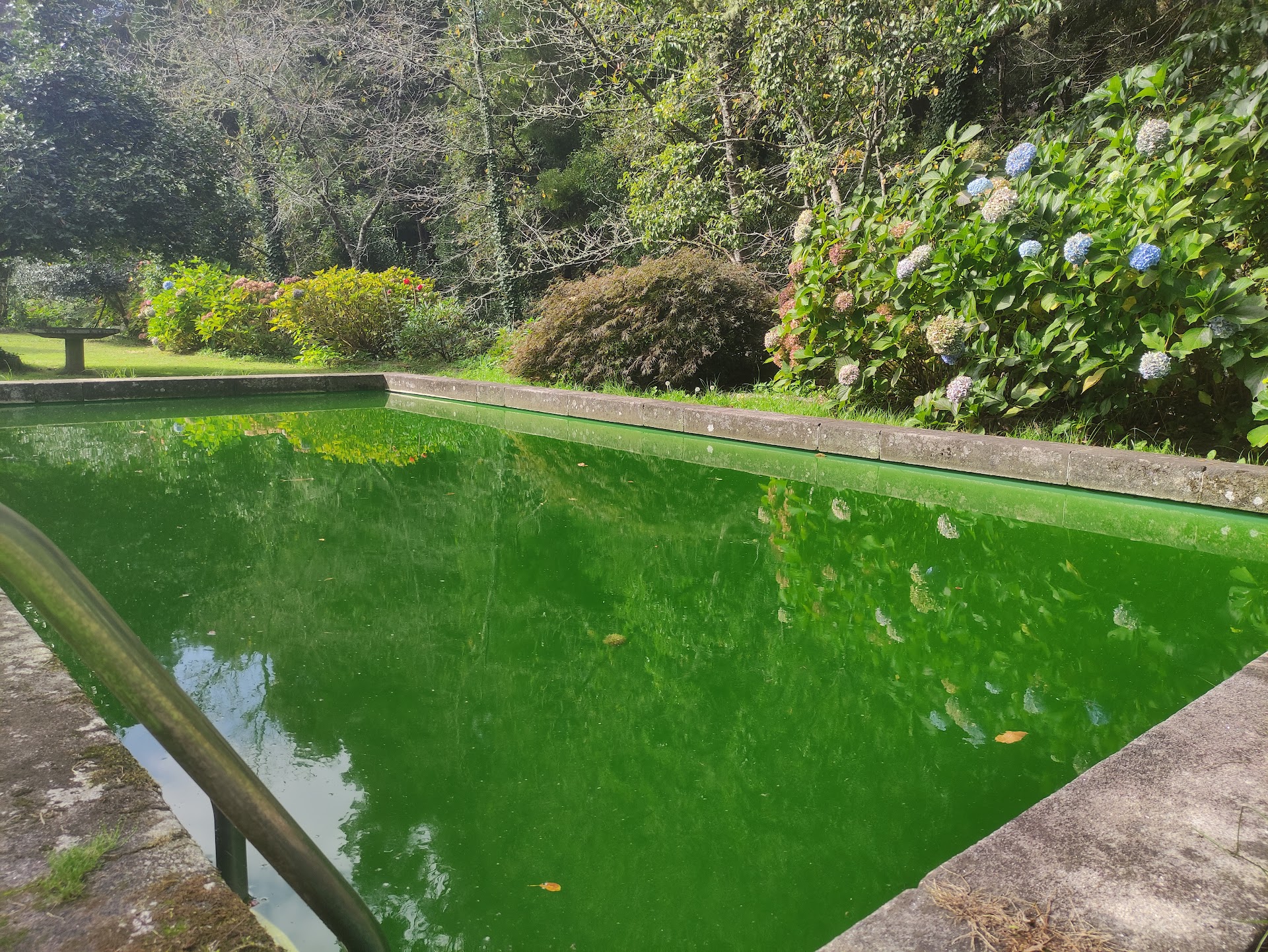
I only chanced upon this magical place while walking the Camino de Santiago and missed a turn that was only marked on a stone on the ground. he Pazo do Faramello is an early eighteenth century building in baroque civilian Compostelean style, with strong Italian influences that give away the Genoese origin of his founder, the Marquis of Piombino. The manor is located 12 kms of Padron and 10 km to Santiago de Compostela, the old Camino de Santiago Portugués (Southern Way of St. James) crosses the property and runs parallel to the river up to the Rua de Francos, small village documented from the XII Century as final lodging for the pìlgrims The estate covers an area of 126,000 m2 and the beautifully constructed main building exceeds 2.100 m2. Notable among the elite of the great Galician estate houses for its industrial origin, as it was founded after the Real Fábrica del Faramello paper factory, a pioneer and champion of the industry in Galicia for over two centuries. The old mills and its corresponding tools can still be visited. Built in terraces over the river canyon, the Manor House is surrounded by an ancient Atlantic forest in perfect condition and permanent recovery. This conservation effort is amply rewarded by the amazing biodiversity of the place; otters, owls, herons, wild ducks, trout, vermillion frogs, squirrels, ferrets, kingfisher, red foxes, endangered species like the tourquoise lizard das silvas find in Faramello a protection shelter. There are plenty of historical and literary references of Pazo do Faramello, its former stables housed the arsenal against French troops in the victorious riots of June 2, 1808 and it´s been a literary reference to some of the most illustrious Galician writers, two of them awarded with the Nobel Prize (Rosalía de Castro and Camilo J. Cela). Significantly the Manor House is one of the main settings of Alexandro Pérez Lugín´s novel “La casa de la Troya”, 1915, at the time one of the most widely read novels in Spanish. Remarkably, note that the legendary Celtic fort of Queen Lupa, dated from the 1st Century, is located on the fringes of the estate. In the early decades of the twentieth century, The Pazo do Faramello served as the summer royal residence of H.M King Alfonso XIII and Prince Louis of Bavaria in their visits to Santiago de...
Read moreOne of the highlights of the Camino de Santiago ! It has so much history : the lower part next to the river was a paper mill in early 1700's ; the chapel has rare religious art and the mansion itself is full of artifacts including an impressive silver collection and paintings etc. The grounds are equally impressive including landscaped terraces, managed woodland/river corridor,and events building for weddings etc.The original camino passes through the grounds and there's also a dam and waterfall. But the best is the host and owner, Gonzalo who will give you such a warm welcome and interesting tour for only 12€ including in English. A few of my group even wanted to marry him after !! Enjoy a drink with Gonzalo and don't be afraid to ask a question, he's really so willing to help and tell the history of this unique place. The best kept secret...
Read moreEl pazo es impresionante, nos gustó mucho. Lo que no nos gustó fue el trato recibido por parte del guía/propietario. Nosotros llegamos unos diez minutos tarde y no pudimos avisar con mucha antelación porque mi mujer, que está embarazada de 7 meses, se mareó en el coche (íbamos desde A Coruña) y, cuando llegamos, el guía ni se nos presentó ni nos saludó, lo único que nos dijo fue que al final de la visita podríamos ver la capilla que ellos ya habían visitado, sin embargo, al final no nos llevó a verla y nosotros no podíamos visitarla porque estaba cerrada. Durante la visita de los jardines nosotros intentábamos quedarnos siempre al final del grupo para que nuestro hijo molestase lo menos posible, pero era casi imposible oírle porque el grupo era muy numeroso y él tenía un pequeño micrófono que no servía de nada. Cuando llegó el momento de visitar la casa, nos dijo que era mejor que nosotros nos quedásemos fuera porque nuestro hijo de dos años estaba inquieto, por si rompía algo (entendemos, por lo tanto, que cuando él tenía dos años, le aconsejaban que no entrara…) y nos quedamos muy mal porque podría habernos pedido, más bien, que mi mujer y yo nos turnáramos para visitar la parte interior, cosa que nosotros decidimos hacer. Primero entré yo y cuando entró mi mujer ya no había nadie: el guía no nos había avisado de que al finalizar la visita de la casa saldrían por otra puerta para ir a tomar un vino en la parte de abajo del pazo, por lo tanto, nosotros estuvimos esperando un buen rato, solos, fuera de la casa sin saber dónde estaban. Cuando por fin pasó por ahí una pareja que se iba, preguntamos y nos dijeron dónde estaban todos los demás. Fuimos rápido porque mi mujer necesitaba ir al baño urgentemente y cuando llegamos vimos que ya estaban acabando la degustación, por lo tanto, dedujimos que llevaban allí bastante tiempo, pero, en ningún momento, al ver que no estábamos con ellos, él se acordó o se preocupó por nosotros. Me dijo que tomara algo, pero yo no tomé nada y fui a pagar la visita, mi mujer fue al baño, el señor de la tienda le regaló una chocolatina a nuestro hijo y luego le pedimos a un señor que nos sacara una foto en el jardín y nos fuimos. Como si todo esto no fuera bastante, mi mujer, hace unos días, escribió una reseña aquí en Google y él en su respuesta comparó el comportamiento de nuestro hijo de dos años con el de una bebé de pocos meses que estaba en el grupo y nos parece absurdo comparar las actitudes de niños de diferentes edades. Además, en su respuesta le escribió cosas que no...
Read more