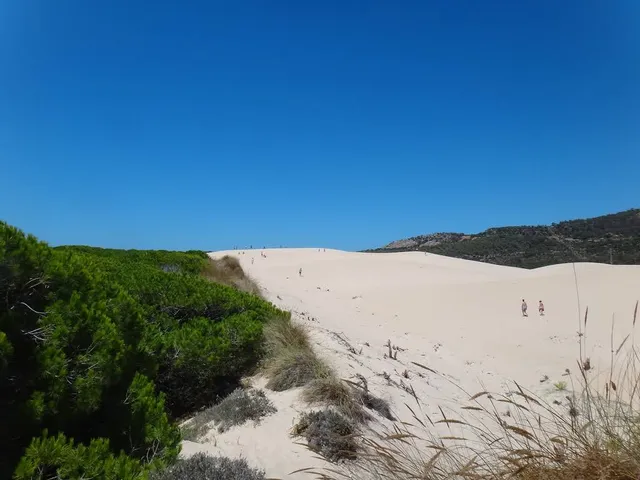
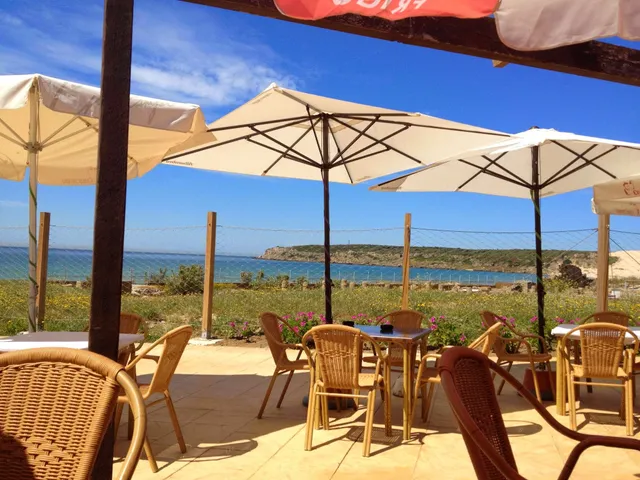
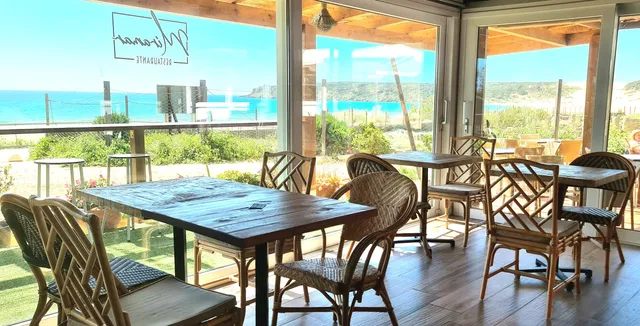
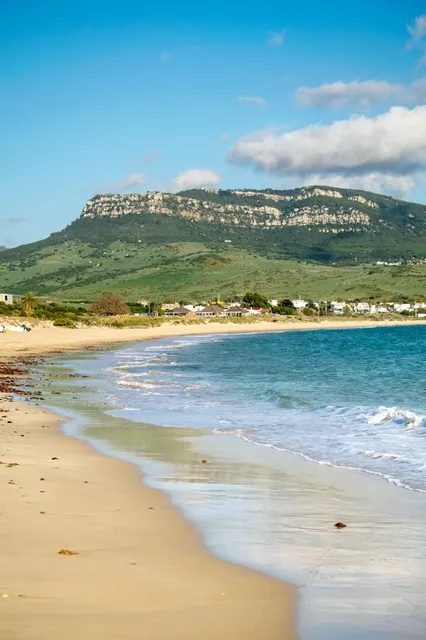
FUN-tastic!!! Definitely a family-friendly, kid-approved and unique thing to do in southern Spain, especially when you are near Tarifa or in Cadiz province.
There's a public parking place in the village that has signs to a “secret” or at least special passage behind a restaurant through the woods and into the dunes. They may charge 2 to 3 euros to park, practically all day.
Apart from climbing the sand dune of Bolonia and taking in the beautiful panoramic views from the top, what else can you see or do while here?There's Playa de Valdevaqueros--one of the most beautiful beaches in Andalucia. Playa Punta Paloma is a bit more pristine (less touristy) area further down (southwest) from Playa de Valdevaqueros into the protected/reserved park area.
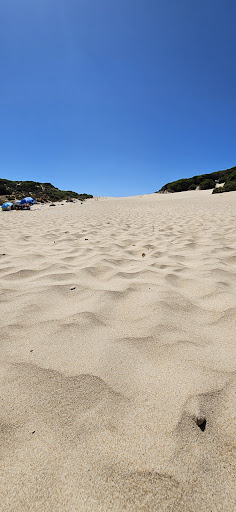
About 100 meters behind and in between the two beaches is the sand dunes of Valdevaqueros which is nice to see in the backdrop and good enough to get to the top of if you cannot make it to the more famous and imposing Dunes of Bolonia nearby.
If you are into trekking or hiking (senderismo in Spanish), there’s plenty of trail on the northern part of the protected park area. If you are fit and adventurous (and perhaps without kids like us) you can spend a day hiking over to Bolonia and discover Baelo Claudia–a well-preserved ancient Roman settlement.
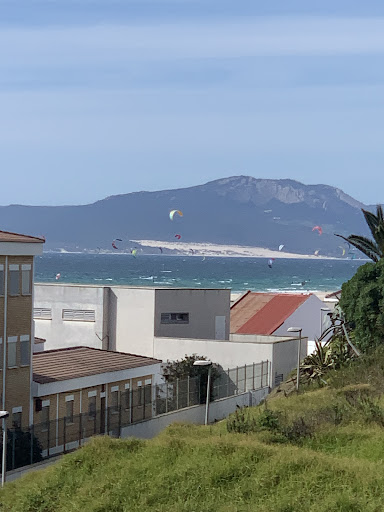
And of course, TARIFA–the windsurfing capital of Europe is a mere 15-minute drive/12.5-kilometers away, and beyond that, a little ferry ride away across the Strait of Gibraltar is Morocco, Africa.
This wass the first stop on our 22-day family camping road trip this year. . . de Bolonia.
BIG...
Read moreÚnica duna de treinta metros de altura y 200 de anchura, resalta dentro del vasto sistema dunar al que pertenece. Situado en la ensenada de Bolonia, dentro del Parque Natural del Estrecho, es una de las zonas menos transformadas y urbanizadas de la costa gaditana, albergando importantes valores naturales y paisajísticos. El conjunto, llamado barjanal por sus dunas en media luna perpendiculares al viento y con pendientes desiguales, es de los pocos transgresivos de Andalucía, es decir, de los pocos que siguen avanzando tierra adentro. Alimentada por el viento de levante, avanza hacia el pinar de pino piñonero repoblado con matorral y de alto valor ecológico. Aunque parte de las arenas de Bolonia están cubiertas por especies exóticas para evitar su avance, los acantilados azotados por el levante presentan vegetación original como el enebro costero andaluz, la sabina rastrera y la camarina, dando ésta última nombre al cercano faro. En otro cordón dunar del interior de la playa, aún embrionario, ponen color los cardos marítimos, azucenas y alhelíes de mar, que, junto al junquillo, crecen en las zonas menos castigadas por el viento. En las zonas más expuestas sólo crecen el barrón, gramas marinas y lotos. Desde el sendero Bolonia-Faro Camarinal se divisa la amplia playa de arena fina y dorada, poco transformada y frecuentada por surfistas, el faro con sus marmitas de gigante y el conjunto arqueológico Baelo Claudia. Declarado Monumento Histórico Nacional, esta ciudad-factoría romana sorprende por su estado de conservación. Fue importante en la época por sus conservas y salazones, origen de la salsa garum exportada al imperio. Saqueada por invasores germánicos y árabes, finalmente un terremoto la destruyó. También se recomienda el submarinismo en algunos puntos cercanos, destacando la presencia de formaciones...
Read moreWe saw it from far away. And it has very little to do with a “dune”. It’s more looking like a sand landslide. Some even compare it the the dune du pilat in france. This is does look quite the same. I once lost a bet because this sand dune was actually the tallest one but now I can say this 2 dunes cannot compete in the same category. Note for self : we did not climb it so we would have to come back to be 100% sure but this is 1st impression...
Read more