The magnificent 129 m tall horsetail fall Lakshapana Ella, also spelt Laxapana Ella, is one of the top 10 waterfalls of Sri Lanka concerning height. Lakshapana Falls is located 9 km west of Norton Bridge by road, which is a village at the road from Ginigathena Pass to Castlereigh Reservoir. The Lakshapana waterfall belongs to the village of Kiriwan-Eliya in the Ginigathena Division of Nuwara Eliya District. The small settlement situated closest to the waterfalls is simply known as “Laksapana Gama”, which translates to “Lakshapana village”. There is a guesthouse available in the village. Not surprisingly, its name is “Lakshapana Rest”. The montane region is known as Ambagamuwa Korale. Lakshapana Ella is situated at an elevation of 660 m above sea level. The eye-catching series of peaks of the “Seven Virgin Mountains” are not far from the Lakshapana Falls.
A stairway of several hundred steps leads from the car park to the pool at the base of Lakshapana Falls. It is possible to walk to the top of Lakshapana Falls, too.
There are various hypothesis concerning the origin of the uncommon name “Lakshapana”. The name is presumably derived from the Sanskrit term “laksha” with a long vowel “a”. In Sanskrit, this originally means “red varnish” or “red lacquer”. In a figurative sense, this became a term for reddish ferrous stone in many Indian languages. That’s why the name Lakshapana may refer to the obvious presence of iron ore (laksha) in the cliff of the waterfalls. But “Laksha” or “lakh” with a short vowel “a” is a common Indian term for hundredthousand, referring to the vast number of rocks and cascades above the main horsetail fall. Another hypothesis is that the name is derived from “Lassana pahana”, which means “beautiful lamp” in Sinhala.
An old Sinhala name of Lakshapana Ella is “Wedahiti Ella”, derived from “Wedda Hiti Ella” and meaning “waterfalls were Wedda people live”, Veddas being the indigineous tribes of Sri Lanka.
Much larger amounts of water of the Maskeliya Oya once flowed over Lakshapana Falls. But the construction of a dam has reduced the flow. The Laxapana Hydro Power Station was Sri Lanka’s first hydro-power plant, the power station is located at the old Waggama village. It originally to generated 50 MW of electricity and was upgraded to 100 MW. The waters of the Maskeliya Oya, a tributary of the Kelani river, rise from forests south of Fairlawn Estate.
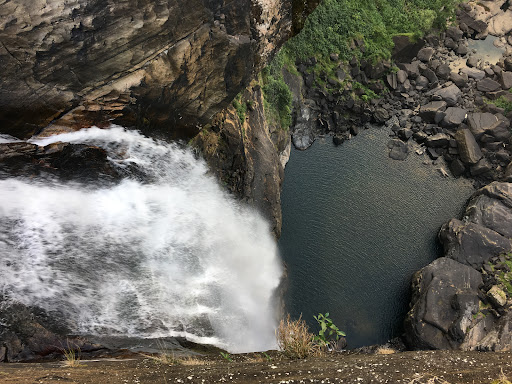
Similar to the legends of Kirindi Ella and Bopath Ella, there is a local belief in a hidden treasure in the bassin below the Lakshapana Falls. The local legend goes that in times of severe droughts, a golden receptacle appears in the deep pool. As soon as this phenomenon can be seen, rain will be sent by the gods to protect the treasure again, it will come in torrents inundating the areas below the falls in a devastating way.
Another typical Sri Lankan legend is that there are tunnels hidden behind the waterfalls, connecting Lakshapana with the Aberdeen Falls 5 km further north, as the crow flies. The Aberdeen Falls are situated in the neigbouring valley of the Kehelgamuwa river, another Kelani Ganga trivutary. There is a belief in a labyrinthic tunnel system from prehistoric times connecting all major caves and waterfalls of Sri Lanka. Again and again, there are claims that archaeological research confirmed the existence of the tunnels. But until now, nobody reached Aberdeen Falls starting at Lakshapana Falls via a subterranean way.
A more specific popular tale has ist, that Buddha mended his saffron robe at Lakshapana Falls when he was visiting the Siri...
Read moreLaxapana Falls, Nuwara Eliya Laxapana Waterfall is an enchanting waterfall in Nuwara Eliya, Sri Lanka. At 129 meters high, it is the 08th highest waterfall in Sri Lanka and also it is recorded as the 625th highest waterfall in the world. This is much-loved waterfall captivating all who visit her. This beautiful waterfall is formed by Maskeliya Oya. People have returned, generation after generation to take in the spirit and presence of this Special place.
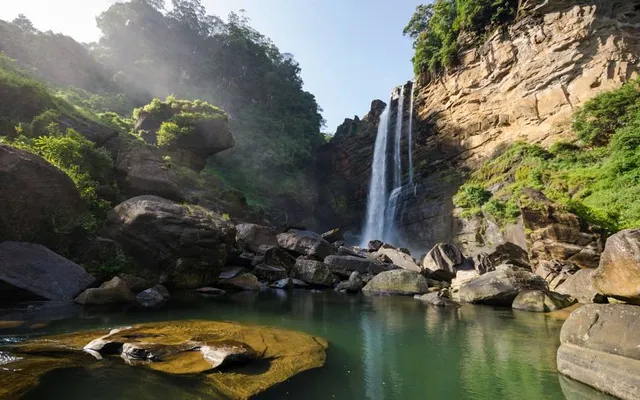
The name “Laxapana” derives from two Sinhala words, which is “Laxa” and “pahan or pashanav”. The literarily meaning of “Laxa” is “hundred thousand” and meaning of “pahan or pashanav(pana)” is “rocks”. So, the meaning of “Laxapana” is a “hundred thousands of rocks”. This Laxapana Waterfall was known as “Veddha Hiti Ella (Vedahiti Ella)” at early days, which means that indigenous local tribesmen’s lived place. And there are few legends of thisLaxapana Waterfall. One legend is that residents believe this place where Buddha mended his saffron robe when he was visiting Sri Pada. And also it is said that a golden receptacle appears beneath the bed of the water, when there is less water at drought times and locals have believed this wonder brings rain to this area. However, this amazing Laxapana Waterfall is located in an attractive location which has many hidden caves natural tunnels. It were used by early Sri Lanka’s inhabitants are contained at the surrounding mountains of this Laxapana Waterfall. However, travelers can enjoy many fascinating views of this waterfall.
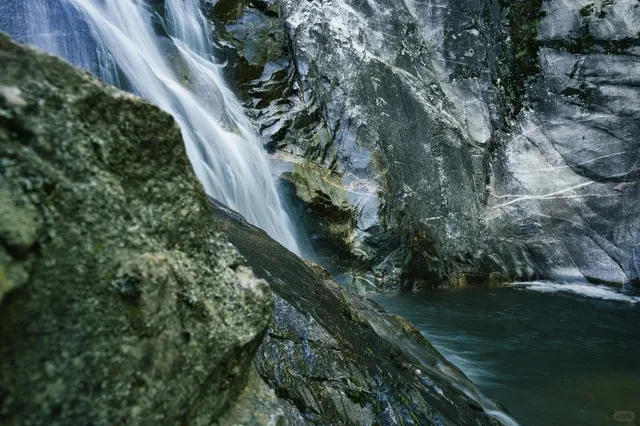
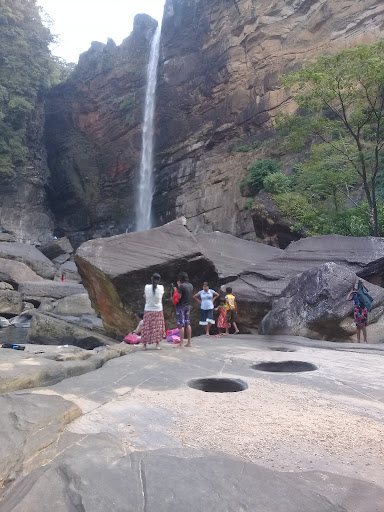
Especially at the cement step path to the base of this waterfall, travelers can enjoy a spectacular view of the surrounding Laxapana valley. Once travelers go down towards the lower slopes, they can hear a thunderous roar at a distance. This famous waterfall has plenty of flat rock pools at the wide base. Hence, Laxapana Waterfall is one of ideal locations to relax and revive in Sri Lanka. And the other most eye catching thing of this Laxapana waterfall is the white lace like waters fall down beautifully enveloping the base in a magical mist. Therefore, travelers those who travelers who wish to get a little wet and who love to have hiking, Nuwara Eliya and Ratnapura areas are some of best areas in Sri Lanka and this Laxapana Waterfall is one of the best destinations. And there are many other noteworthy things of bio diversity to see and enjoy there including Bambarakanda Waterfall, Bakers Waterfall, St. Clairs Waterfall and Diyaluma Waterfall. And there is wide range of eco-friendly affordable and best Nuwara Eliya hotels and Ratnapura Hotels available, out of endless selection of Hotels in Sri Lanka. So, let this pearl refresh and restore you, allowing a quality of nurturing and stopping time to be...
Read moreLaxapana Falls is a striking natural landmark in Sri Lanka, known for its breathtaking beauty and considerable height of 126 meters, making it the eighth highest waterfall in the country. Located in the Nuwara Eliya District, near the village of Kiriwan Eliya, the falls are fed by the Maskeliya Oya, which is a tributary of the Kelani River. This region is lush and green, enriched by the confluence of the Maskeliya and Kehelgamu Oya streams that form the majestic Kelani River.
For those planning a visit, accessing Laxapana Falls can be an adventure in itself. The area is accessible from multiple routes, including from the towns of Hatton and Ginigathhena. Visitors often embark on a hike to the waterfall, which can be approached via a lower or an upper entry point. The upper entry provides a panoramic view of the falls, while the lower path allows for closer appreciation of the water's power as it tumbles down into a striking pool. The hike involves navigating a series of steps and trails through dense flora, offering a rewarding experience for nature lovers.
The best time to visit Laxapana Falls is from September to December when the rainfall in the area is at its peak, enhancing the volume and beauty of the falls. However, visitors should exercise caution, especially during the rainy season, as the rocks near the waterfall can be slippery, and the water levels can be unpredictably high.
For those interested in photography, Laxapana Falls presents numerous opportunities to capture the diverse landscapes and the dramatic waterfall itself, with suggestions to use various lenses or a drone to get unique perspectives of the waterfall and its surroundings.
In summary, Laxapana Falls is not just a destination but an experience, combining the thrill of an adventurous hike with the tranquility of natural beauty. Visitors leave with not only spectacular photos but memorable experiences of one of Sri Lanka's...
Read more