Kalutara is historically important due to the fact that it was one of the 32 places indicated by Arahant Mahinda Thera to the king Devananpiya Tissa in the 2nd century B.C. as a place where one of the thirty-two saplings of the sacred Sri Maha Bodhi tree in Anuradhapura is planted, to which the King extended his patronage.
It is recorded in the Sinhala Maha Bodhi Wansa that until such time when the maritime provinces were subjugated by the Portuguese in 1505 A.D., the historic Kalutara Bodhiya exited intact. In the 16th century, this sacred site was turned into a Portuguese fort. Though no harm is supposed to have done to the Bodhi it was not venerated by the people during that period.
It was after the planting of a Bodhi in the lower terrace of Pahala Maluwa by an Indian Prince from the Pandya country named Wickrama Pandya in 1042 A.D. that the public began to venerate and consider the site as a sacred place. This prince from India became a viceroy in the Kalutara area.
After the Portuguese, the Dutch too used the present upper terrace or the uda maluwa area as a camp followed by the British as well, subsequently. During the British period, since the latter half of the 19th century, it was used as office premises with the residence of the Government Agent.
The development activities of the historic Kalytara Bodhi in the recent past began with the Kalutara Buddhist society which was instituted in 1931 through untiring efforts made by Sir Cyril De Zoysa. In 1942 with the commencement of development activities in the lower terrace, the pinnacle of the chithya was laid.
After Sri Lanka became independent, following a request made by Sir Cyril De Zoysa from the first Prime Minister of the country, Right Honorable D.S. Senanayaka, the then Assistant Government Agent of Kalutara, Mr. C.P. De Silva took steps to release the Kachcheri on the uda maluwa. Since it was felt that there should be a legal authority to facilitate the development activities, the Bodhi Trust pioneered by Sir Cyril De Zoysa, was established on November 11th, 1951. Thereafter, with the land around the sacred Bodhi Tree being entrusted to the Kalutara Bodhi Trust by the Government, the area witnessed a speedy development.
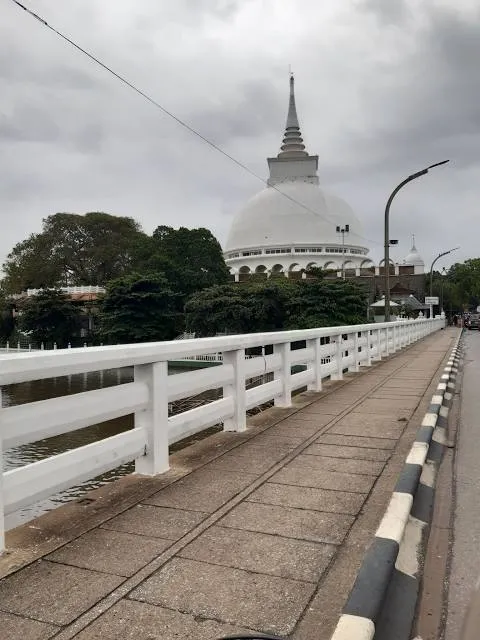
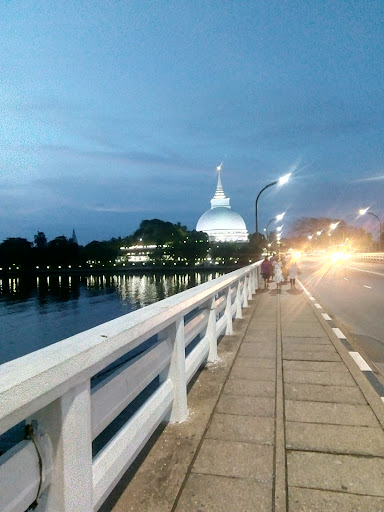
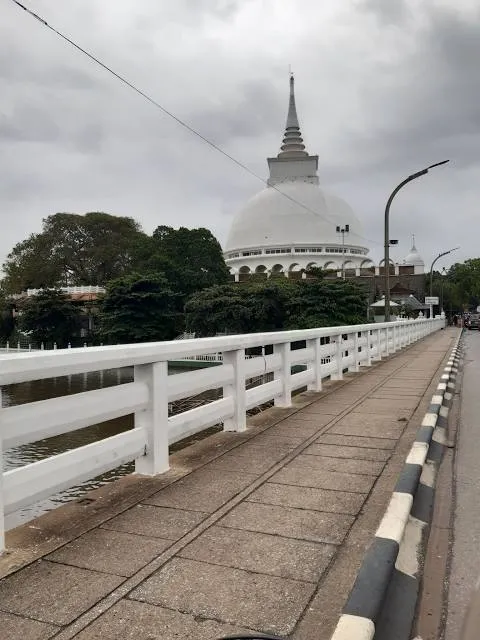
It was in 1964 that the Foundation stone was laid for the construction of the great chaithya on the uda maluwa following the structure of the “wata da ge”, In 1969 all the lands and buildings that belong to Kachcheri were entrusted to the Bodhi Trust. By 1976, construction work on the massive “Wata da ge” was completed and the the pinnacle was laid for the warship by the public.
The Kalutara Bodhi Trust holds the responsibility of providing security to the Kalutara Bodhi and maintaining the cleanliness and beauty of the place. It continues with the administrative activities too...
Read moreKalutara Bodhiya is an old Bodhi tree which is identified as one of the 32 saplings of Jaya Sri Maha Bodhi which was planted during the reign of king Devanampiyatissa in the 2nd century BC at Anuradhapura, Sri Lanka. According to ancient chronicle Sinhala Bodhiwamsa, 32 saplings of sacred figs, which were sprouted from Jaya Sri Maha Bodhi, were planted in various parts of the country as instructed by Arahant Mahinda Thera. Further the chronicle states that this Bodhi tree existed intact till the 15th century AD.
However it is said that the Buddhist public started to consider this place as a sacred place after a Pandyan prince named Wickrema Pandya planted a Bodhi tree at the Pahala Maluwa of the Kaluthara Bodhi premises in 1042 AD. Prince Wickrema Pandya served as a viceroy in Kalutara area during that period. After the Portuguese took over the control of Maritime Provinces of Sri Lanka in 16th century, the site of the Kalutara Bodhiya was converted into a fort probably due to strategic importance of its location.
After the Portuguese, the Dutch and the English, who succeeded them as colonial rulers of Sri Lanka, also used Kalutara Bodhi premises for administrative and military purposes. During the 19th century when the British government started to construct railroads in Sri Lanka, it was decided to remove this Bodhi tree as it was obstructing the initial plans to build the Kalutara Railway bridge. But it was later decided to construct the bridge without harming the Bodhi tree, due to the protests made by the Buddhist public, who were led by Sandanayake Upasaka, a Buddhist layman in Kalutara area.
The modern development of Kalutara Bodhiya as a religious place initiated when the Kalutara Buddhist Society was formed in 1931. The main objectives of this society were the welfare of the Buddhists and the development of Buddhism in Kalutara area. After Ceylon gained independence from Britain in 1948, the newly appointed government led by Prime Minister Rt. Hon. D. S. Senanayake, on the request made by Sir. Cyrill de Soysa, took measures to remove other establishments from the area to keep the Kalutara Bodhiya site only for religious purposes.
The Kalutara Bodhi Trust (KBT) was established by Sir Cyril de Zoysa, a prominent lawyer, senator and notary public, with the help of six other lawyers in...
Read moreKalutara Bodhiya
The Kalutara Bodhiya is an ancient Bo tree which was identified as one of the 32 saplings of the original Jaya Sri Maha Bodhi planted during the reign of king Devanampiyatissa in Anuradhapura during the 2nd century BC. It remains as a very important historical site to this day.
History
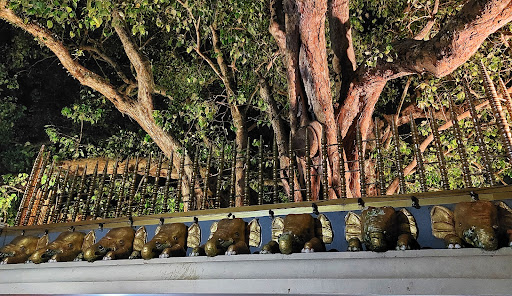
According to history that the Bo tree at Kalutara sprouted from a sapling of the Jaya Sri Maha Bodhi (The Great Resplendent Fig Tree Symbolising Victory) in Anuradhapura; which itself is a sapling of the very Bo Tree (Ficus religiosa) in Bihar, Madhya Pradesh, India underneath which Buddha attained enlightenment
The Kalutara Bodhiya Trust
Kalutara Bodhiya was developed as a religious place in modern times when the Kalutara Buddhist Society formed in 1931.The society was created so as to take care of the welfare of the Buddhists and the development of Buddhism in the Kalutara area. After the country gained independence in 1948, Sir. Cyrill de Soysa , a prominent lawyer, senator and notary public, requested the newly appointed government led by Prime Minister D. S. Senanayake to take measures to remove other establishments the Kalutara Bodhiya site so as to use the place only for religious purposes.
In 1942 construction commenced on the lower terrace; the pinnacle of the Bo shrine was laid. The first foundation stone was laid for the construction of the great shrine on the Upper Terrace in 1964. By 1976, the construction work on the massive stupa was completed and opened to the public.
The Kalutara Bodhi Trust (KBT) was established by Sir Cyril de Zoysa with the help of six other lawyers on November 7, 1951. Their objective was the “Protection and Nurturing of Historic Kalutara Bodhiya”. Sir Ernest de Silva became the first chairman. Presently the trust serves as a non-profit organization which provides services throughout Sri Lanka. In addition to its main objective, it also works to alleviate poverty and give humanitarian assistance to the needy sectors of the local population, and to achieve sustainable development and welfare of the society. In addition to that, KBT is also involved in conducting Blood Donation Campaigns and events to save cattle from death on every...
Read more