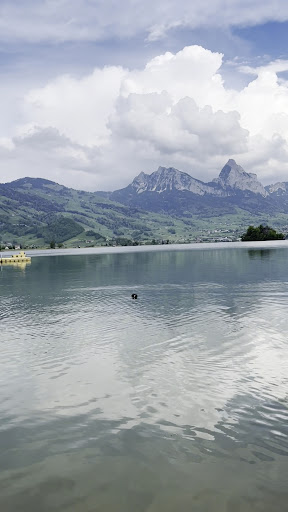
Lake Lucerne in Switzerland is a stunning body of water that is truly breathtaking. Located in the heart of the country, it is surrounded by the beautiful Swiss Alps, making for a picturesque setting that is truly awe-inspiring. The lake itself is large, with a number of towns and villages situated along its shores, each of which offers its own unique charm and character.
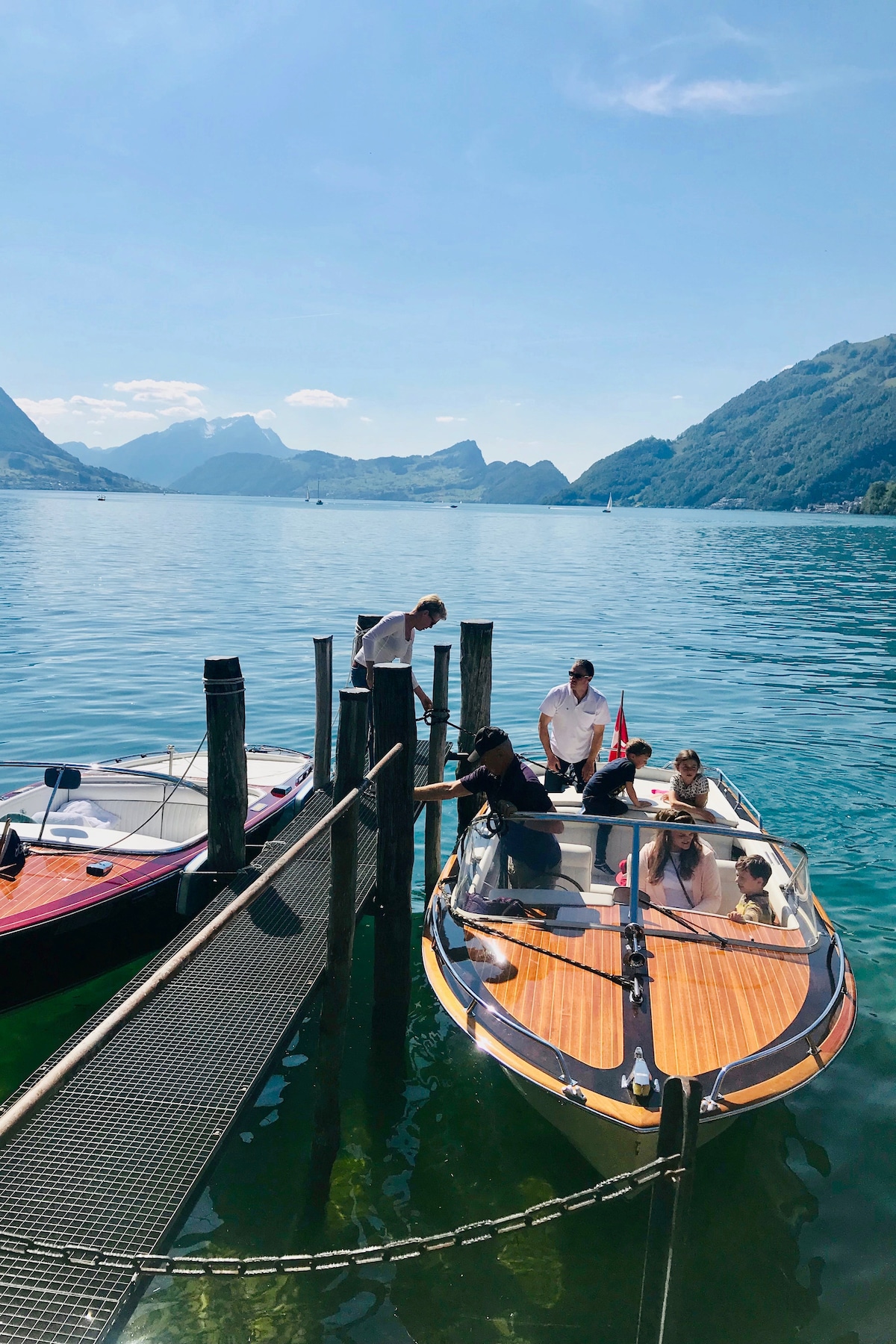
One of the most popular towns to visit is Lucerne, which is located on the lake's northern shore. This charming town is known for its well-preserved medieval architecture, including the famous Chapel Bridge, which dates back to the 14th century. Visitors can also take a boat tour of the lake, which offers unparalleled views of the surrounding mountains and the charming towns and villages that dot the shoreline.
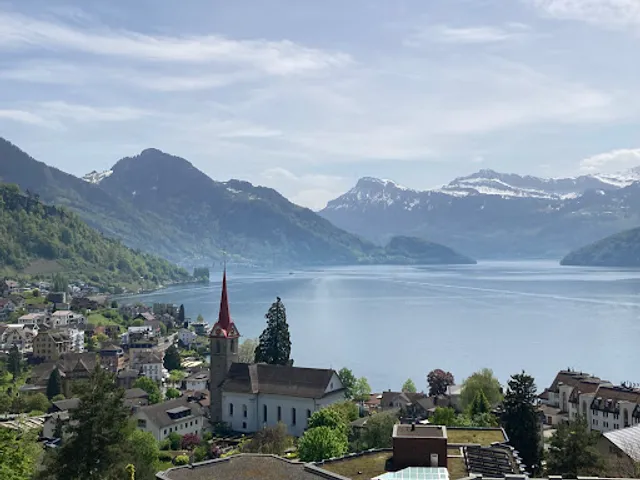
Another popular town to visit is Weggis, which is located on the eastern shore of the lake. This quaint town is known for its beautiful lakeside promenade, as well as its numerous hiking trails, which offer breathtaking views of the lake and the surrounding mountains.
Aside from towns, The lake also offers a range of water sports such as swimming, sailing, and windsurfing, which visitors can enjoy during the summer months. In the winter, visitors can go skiing or snowboarding in the nearby mountains.
Overall, Lake Lucerne is an amazing destination that offers something for everyone. Its natural beauty, charming towns and villages, and wide range of activities make it the perfect place to visit for those looking for a truly breathtaking and...
Read moreApproximately 38 km extension in north south direction with numerous side arms, max. depth 214 m, entire coastline 151 km. There are boat tours and rentals in almost all major towns, and the shipping company has one of the largest steam ship fleets in Europe with five steamships. Water sports are represented in almost all variants and the water is mostly cool and therefore very clear, which is why scuba diving is also possible. Lake Lucerne is the nucleus of Switzerland, here lies the Rütli meadow on which the four bordering on the lake have made their oath to cohesion and thus the confederation of Swiss was founded. Countless attractions also from the belle epoque around 1900 with nostalgic charm are accessible around the lake such as the Hametschwand elevator, the steepest cogwheel railway in Europe in Alpnach or the chimes at the Tell`s plate to name but a few. Many high peaks such as Rigi, Pilatus, Fronalpstock or Stanserhorn are directly connected to Lucerne, the largest town on the lake, by boat and cable car and are a great day trips, the views are spectacular. This lake is a huge natural wonder and of unique beauty, impossible to comprehend its fascination in a short vacation. Stay a few days...
Read morelake in central Switzerland and the fourth largest in the country.The entire lake has a total area of 114 km² (44 sq mi) at an elevation of 434 m (1,424 ft) a.s.l., and a maximum depth of 214 m (702 ft). Its volume is 11.8 km³.
Before the 16th century, the entire lake was known as Luzerner See "Lake Lucerne", as remains the English.
Lake Lucerne borders on the three original Swiss cantons of Uri, Schwyz, and Unterwalden (which today is divided into the cantons of Obwalden and Nidwalden), as well as the canton of Lucerne, thus the name Vierwaldstättersee (lit.: Lake of the Four Forested Settlements).
The Urnersee occupies the northernmost and deep portion of the great cleft of the Reuss Valley, which has cut through the Alpine ranges from the St Gotthard Pass to the neighbourhood of Schwyz.
Originally the lake was susceptible to variations in level and flooding along its shoreline. Between 1859 and 1860, the introduction of a needle dam in the Reuss in the city of Lucerne, just upstream from the Spreuerbrücke, allowed the lake level to be stabilised.
The culminating point of the lake's drainage basin, as well as Central Switzerland, is the Dammastock at 3,630 metres...
Read more