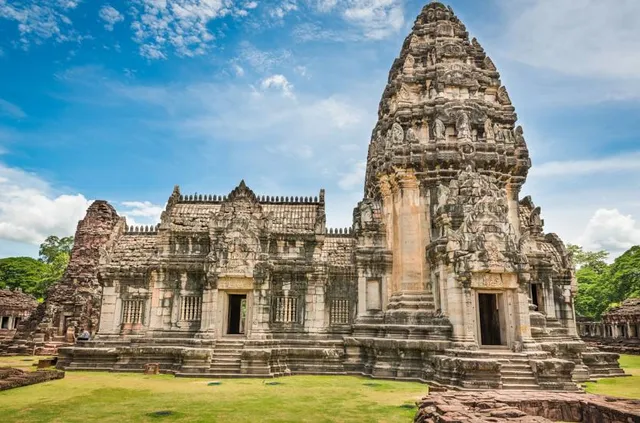
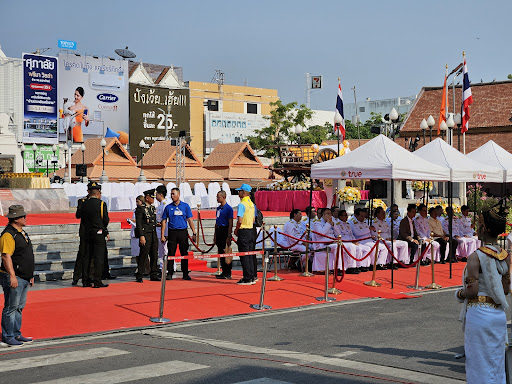
The province is located on the western end of the Korat Plateau, separated from the Chao Phraya river valley by the Phetchabun and Dong Phaya Yen mountain ranges. Two national parks are in the province - the Khao Yai in the west and the Thap Lan in the south. Both parks are in the forested mountains of the Sankamphaeng Range, the southern prolongation of the Dong Phaya Yen mountains. Nakhon Ratchasima, or Korat, is a large province on the north eastern plateau and acts as a gateway to other provinces in the Northeast. It is 259 kilometres ( 161 miles ) from Bangkok and has an area of around 20,494 square kilometres (7,913 sq mi), making it the biggest Thai province. The province is rich in Khmer culture and has a long history. The area around Khorat was already an important centre in the times of the Khmer empire in the 11th century, as can be seen by the temple ruins in the Phimai historical park. Still, Nakhon Ratchasima Province is one province where there is a sizable Northern Khmer population. A new walled city with a surrounding moat, designated as Nakhon Ratchasima, was built in the seventeenth century by order of the King Narai, as the easternmost command post, guarding the Kingdom's border and supervising its Lao and Cambodian vassals. It continued this duty during the Bangkok Period, although it was seized by deceit during Chao Anuwong of Vientiane's 1826 revolt against the King Rama III of Siam. Nakhon Ratchasima has long been the most important political and economic centre in the northeastern region. In the late nineteenth century, the railroad reached Khorat became the junction of two main rail lines in the Northeastern, Issan, region. In 1933 it was the stronghold of the royalist troops in the Boworadej Revolt, as they fought the new democratic government in Bangkok. In the 1950's, the Korat Royal Thai Air Force Base was built in Nakhon Ratchasima; from 1961 until 26 February 1976, this facility was also used as a base by the United States Air Force. A monument to Thao Suranaree ( real name: Khun Ying Mo; 1771–1852 ) is situated in front of the old Prau Chumpon gate. Also called The Great Heroine of Khorat, Kun Ying Mo was the wife of the Deputy Governor of Khorat during the reign of King Rama III. In 1826, Khun Ying Mo managed to save the city from an invasion by the Laotian army led by Prince Anouvong of Vientiane. King Rama III conferred the title of Thao Suranaree on Khun Ying Mo, as well as additional ones honouring her bravery. Roads Highway 2 ( Mittraphap Road ) is the main route that connects 9 districts in Nakhon Ratchasima including Muang district. This route also connects Nakhon Ratchasima to Saraburi and Khon Kaen provinces. As, Highway No. 24 links Si Khio district from the Highway 2 to Pak Thongcha, Chok Chai and Nong Bunnak districts and to Buriram province. Rail systems The railway system in Nakhon Ratchasima is on both north-eastern routes from Bangkok’s Hua Lamphong central terminal. Nakhon Ratchasima has 8 main railway stations. Bus service Mini-bus and bus routes operate in the city and nearby areas. There are non air-conditioned buses from the provincial town which go to every district. As for travel to nearby provinces, there are both air and non air-conditioned ones. Songthaew (public passenger pick-up vehicle) Songthaew or public passenger pick-up vehicle is the most popular mode of public transportation in all the town districts. These run on fixed routes. Taxis are plentiful, clean, safe, and inexpensive in Korat. They can be found at taxi stands in the city areas or hailed on the streets. There are also certain taxis that can be requested by phone, however, the fare is slightly higher than regular taxis. An increasing number of taxi drivers nowadays speak some English which may prove extremely useful for first-time visitors. The fare system is based on both distance and time. Fares begin at 30 Bath for the first...
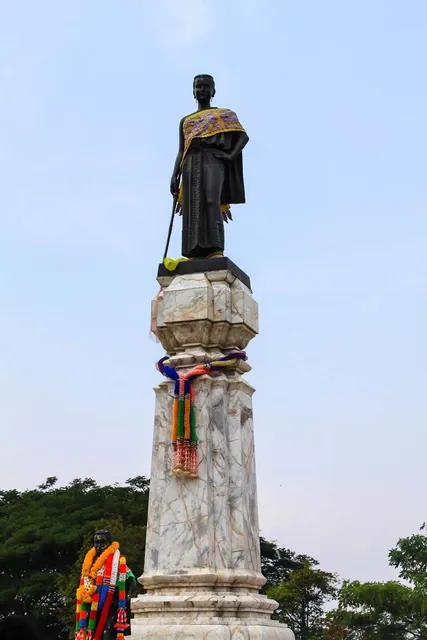
Read moreThao Suranari (Ya Mo) Monument is a significant landmark located in Nakhon Ratchasima, Thailand, dedicated to the legendary heroine Thao Suranari, also known as Ya Mo. This monument is not only a tribute to her bravery but also an important symbol of local pride and resilience.
Historical Significance: Thao Suranari is celebrated for her courageous role in defending the city during the 19th century, particularly during the invasion of the Lao army. Her story is deeply woven into the fabric of local history, making the monument a place of homage for residents and visitors. The narrative surrounding her life and deeds is an integral part of the region's identity.
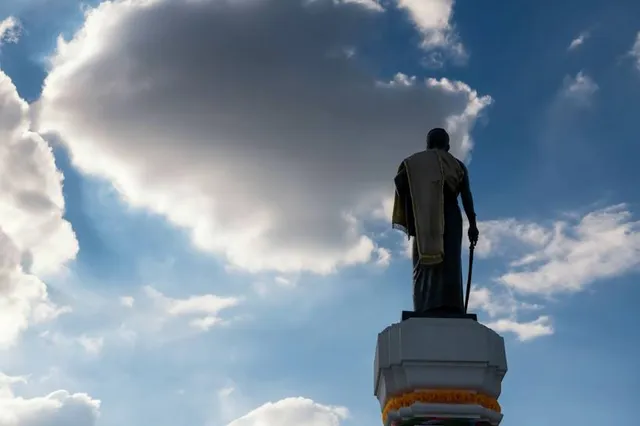
Impressive Design: The monument features a striking statue of Thao Suranari in a poised and dignified stance, dressed in traditional attire. Surrounding the statue are beautifully landscaped gardens that enhance the monument's aesthetic appeal. The area is well-maintained, providing a peaceful atmosphere for reflection and admiration.
Cultural Experience: Visitors to the monument can engage in a cultural experience by learning about Thao Suranari’s legacy through informative plaques and local stories. The site often hosts ceremonies and celebrations in her honor, allowing guests to witness traditional performances and community gatherings.
Accessibility: The Thao Suranari Monument is conveniently located in the city center, making it easily accessible for both locals and tourists. There are ample parking options nearby, and the site is equipped with basic amenities, including seating areas and restrooms.
Community Pride: The monument serves as a focal point for community pride and remembrance. It is a gathering place for locals on special occasions, reinforcing the bond between the community and its history.
Overall Impression: Thao Suranari (Ya Mo) Monument is a must-visit for anyone traveling to Nakhon Ratchasima. Its historical significance, stunning design, and cultural relevance make it a captivating destination. Whether you're interested in history, culture, or simply want to enjoy a serene environment, this monument offers a meaningful experience that celebrates the bravery and spirit of the...
Read moreภาพปี 2566 เทียบกับ ภาพเก่าเมื่อ 59 ปี และเมื่อประมาณ 74-78 ปี ที่แล้ว ณ “อนุสาวรีย์ท้าวสุรนารี” วีรสตรีไทย ศรัทธาของชาวโคราช และคนไทยทั้งประเทศ ตั้งอยู่กลางเมือง ที่หน้า “ประตูชุมพล” (ประตูเมืองนครราชสีมาด้านทิศตะวันตก) จ. นครราชสีมา อนุสาวรีย์ท้าวสุรนารี สร้างเสร็จเมื่อ พ.ศ. 2477 เพื่อรำลึกวีรกรรมปกป้องบ้านเมืองอย่างกล้าหาญยิ่งใหญ่ และยกย่องคุณความดีของ “คุณหญิงโม” (ท้าวสุรนารี หรือ ย่าโม) เป็นอนุสาวรีย์ของ “สตรีสามัญชน” คนแรกของไทย พ.ศ. 2369 เจ้าอนุวงศ์แห่งเวียงจันทน์ ยกทัพยึดเมืองโคราช “คุณหญิงโม” ได้รวบรวมชาวบ้านสู้และต่อต้านเป็นผลให้เจ้าอนุวงศ์ ไม่สามารถยกกองทัพไปตีกรุงเทพฯ ได้ พ.ศ. 2370 พระบาทสมเด็จพระนั่งเกล้าเจ้าอยู่หัว (ร. ๓) ได้สถาปนาเป็น "ท้าวสุรนารี" พ.ศ. 2395 "ท้าวสุรนารี" ถึงแก่อสัญกรรมในเดือน เม.ย. (อายุ 81 ปี) พ.ศ. 2476-2477 ศาสตราจารย์ศิลป์ พีระศรี เเละ พระเทวาภินิมมิต ร่วมกันสร้างอนุสาวรีย์นี้ หล่อด้วยทองแดงรมดำ สูง 1.85 ม. หนัก 325 กก. อยู่บนไพทีสี่เหลี่ยม ย่อมุมไม้สิบสอง สูง 2.50 ม. แต่งกายด้วยเครื่องยศพระราชทาน ท่ายืน มือขวากุมดาบ ปลายดาบจรดพื้น มือซ้ายท้าวเอว หันหน้าไปทางด้านทิศตะวันตก พ.ศ. 2498 พระบาทสมเด็จพระเจ้าอยู่หัวรัชการที่ ๙ และสมเด็จพระนางเจ้าพระบรมราชินีนาถ เสด็จทรงวางพวงมาลา ณ อนุสาวรีย์ท้าวสุรนารี เป็นครั้งแรก และ ครั้งที่ 2 ปี 2507 พ.ศ. 2510 ได้ซ่อมฐานอนุสาวรีย์เพื่อบรรจุอัฐิของท่าน “ประตูชุมพล” ใช้ตรวจการณ์ มีบันไดไปหอรบ เดิมมีกำแพงและคูน้ำล้อมตัวเมือง เพื่อป้องกันภัยจากข้าศึก พ.ศ. 2480 อนุสาวรีย์ท้าวสุรนารี เเละ ประตูชุมพล พร้อมด้วยแนวกำแพงเมืองนครราชสีมา และใบเสมาที่ยืดออกจากประตูชุมพล เป็นโบราณสถานแห่งชาติ เชื่อกันว่า ถ้าลอดประตูชุมพล 1 ครั้ง จะได้กลับมาโคราชอีก ลอด 2 ครั้ง จะงานหรืออยู่โคราช ลอด 3 ครั้งจะได้คู่ครองเป็นชาวโคราช ทุกปีวันที่ 23 มี.ค. ถึง 3 เม.ย. มีงาน บริเวณหน้าศาลากลางจังหวัด
บันทึกภาพเมื่อค่ำวันพฤหัสบดีที่ 9 กุมภาพันธ์ 2566, 19:13-19:20 น. ภาพเก่าขาวดำ เมื่อ ไม่ทราบปีที่ชัดเจน แต่ ประมาณ พ.ศ. 2488-2492 และมีภาพเมื่อปี พ.ศ. 2507 อนุสาวรีย์ท้าวสุรนารี (ใจกลางเมือง ระหว่าง ถ. ราชดำเนิน กับ ถ. ชุมพล) อ.เมืองฯ จ. นครราชสีมา 14°58'29.1"N 102°05'53.0"E (14.974750, 102.098056), altitude 186 m. Post: Jan 31,...
Read more