Important zona arqueològica dedicada a la medicina antigua
hen the Asklepieion was first established at the beginning of the 4th century B.C. the city of Pergamon was located ca. 3 km to the NE. By the time the sanctuary had reached its peak in fame and monumental appearance in the 2nd century A.D. the city of Pergamon had expanded until its SW edge was ca. 500 m from the sanctuary.
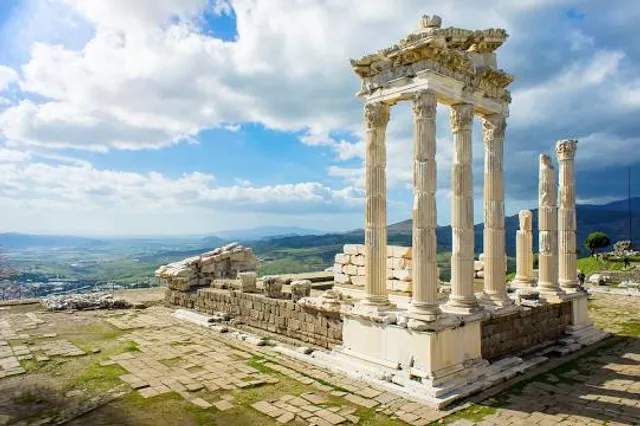
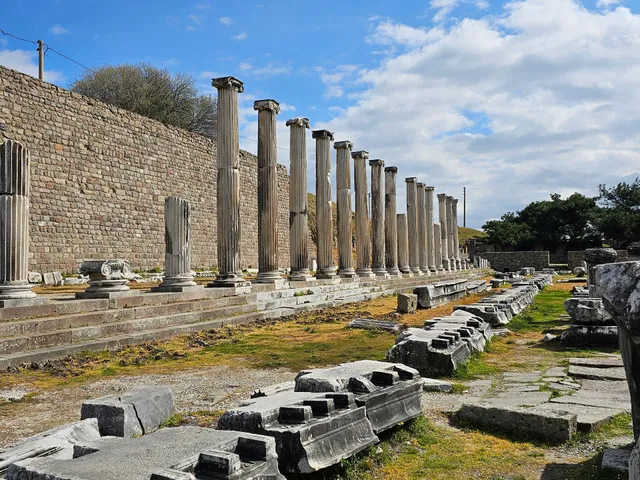
A colonnaded and paved sacred way, the Via Tecta, linked the city to the sanctuary. The sacred way reached the center of the E side of the temenos at a forecourt and monumental propylon. Along the eastern side of the sanctuary the library is N of the propylon and the circular temple of Zeus Asklepios (diameter 23.85 m) and the two-story rotunda treatment center (diameter 26.5 m) are aligned S of it.
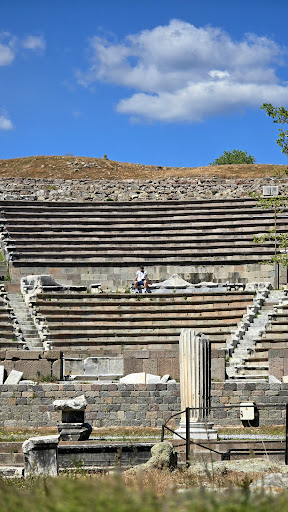
The two-story circular treatment center at the SE corner of the rectangular temenos is counterbalanced by the theater at the NW corner. The other three sides of the large central court (110 x 130 m) of the sanctuary consists of stoas or colonnaded walkways. A complex of luxurious public latrines at the SW corner of the temenos counterbalanced the library at the NE corner. At the center of the W stoa there was an access to the adjoining gymnasium.
A vaulted subterranian passage led from the large treatment center at the SE to the center of the temenos, where the sacred spring formed the nucleus of the sanctuary. The central plaza-like area of the sanctuary also contained other fountains, mud baths, and small temples and altars. It was at the nucleus of the temenos, in the area of the sacred spring, that the earlier unknown cult center was located and the original Hellenistic Asklepieion developed.
Description:
At ca. 400 B.C. the Pergamene Asklepieion was established at the existing religious sanctuary of an unknown deity located at a spring ca. 3 km SW of the city. The early Asklepieion consisted of a number of temples, including the first temple of Asklepios Soter, an early treatment building, fountain house, and several altars. In the late Hellenistic period the sanctuary expanded to the S and took the form of a large rectangular court surrounded by stoas, temples, and an enlarged treatment building. A gymnasium and stoa was also constructed to the W of the main complex.
The fame and prestige of the Asklepieion grew rapidly during the Roman period and reached a peak in the 2nd century A.D. when the sanctuary gained the monumental appearance that is reflected in the remains visible today. In addition to the monumental building program of the 2nd century A.D. and the fame of the sanctuary as a spa and healing center, which was second only to the original Asklepieion at Epidauros, the Pergamene Asklepieion was also renouned as the school of Galen, the most famous physician of the Roman period.
Even after the introduction of Christianity at Pergamon, the Asklepieion continued to exist as a medical and...
Read more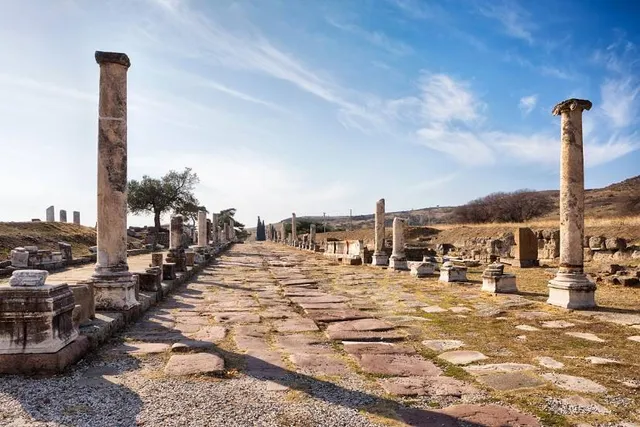
 Learn more insights from Wanderboat AI.