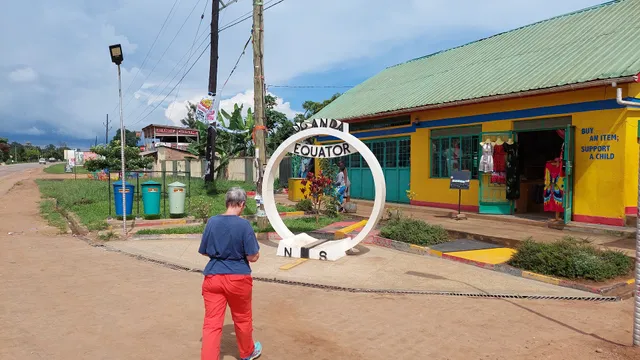
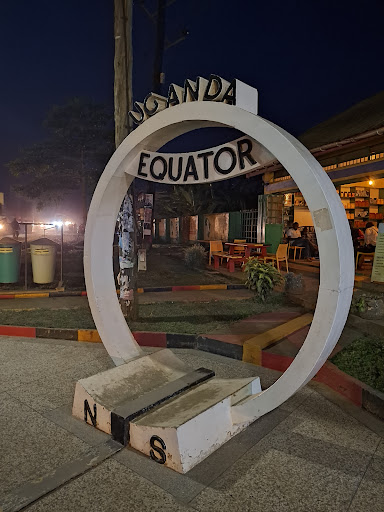
I see so many photos of people posing at the equator line in Uganda - at both levels now vastly different and built up - but I wonder how many know the history behind the creation of the symbols so for what it's worth here it is:
My father Geom. Giulio Galli was employed by Stirling Astaldi (Africa) Ltd, an Anglo Italian civil engineering company responsible for many works in Africa from the 1940s onwards.
Leaving war torn Italy to join this company in 1948, and after a stint in Kenya reconstructing 45 kms of the Miritini to Samburu route, dad was moved to Uganda where as Site Agent from October 1950 to 1954, he and his team completed the construction of the main road from Kampala to Masaka – 140 kms in the SW of the country.
It was during the construction of this road that crosses the Equator at about 80 kms from Kampala that he and two of his team of surveyors decided to carry out topographical work and calculations to determine at what point their road crossed the Equator Line. This done, he ordered the construction of the first of two-3-metre diameter concrete circles to stand opposite each other, on either side of the road, connected by a concrete white line to mark the crossing, in place of the meagre signpost they had found. These are the markers that have become part of the Ugandan landscape, at the Masaka and Kasese/Katunguru (1957) levels.
As a family living and growing up in Uganda in the 50/60s (Masaka/Mpigi/Kampala, Muhokya/Kasese) and Kenya in the 60/70s (Eldoret/Nairobi), we learned and enjoyed much from the natural beauty and local cultures.
My father’s professional service in Africa spanned 40 years. He was hardworking, honest and hugely respected by expat and local workers alike. Before he died in 2003 he’d written these thoughts about a continent he never forgot and always talked about with love :
“..for many years I lived in the bush with my family, working to construct and manage networks of communications and housing schemes that would improve the quality of life in remote areas. Even after transfers to cities, the goals remained the same. That was the modus operandi of those that took to Africa in the 1940s, who had the tenacity to stay and who loved it above all. That my life turned out to be a wonderful adventure in the process of pioneering work that I thoroughly enjoyed has been a privilege, particularly as I had the full support of my wife and family, not least because we were all enriched by the many different cultures we encountered. To have been asked to work in Africa, to be associated with it, beyond my point of voluntary retirement at 74 years of age, has been beyond my wildest dreams and immeasurably satisfying. I would not wish my life to have been otherwise”.
The photos shown were taken by my father and are the property of the Galli family and shared for...
Read more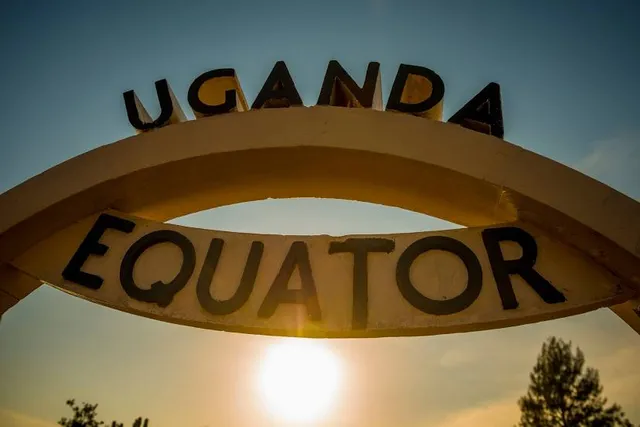
 Learn more insights from Wanderboat AI.