The Oriental Museum: A Journey Through Time and Legend
As I crossed the threshold of Durham’s Oriental Museum, I felt as if I had stepped into another world—one where time bent and history whispered from every artifact. The air was thick with the scent of polished wood and the quiet hum of stories long forgotten, waiting for the right traveler to uncover them.
My journey began in the dimly lit corridors of ancient Egypt. There, under the soft glow of display lights, the gilded face of a pharaoh’s mask watched me with an eternal gaze. A sarcophagus, its engravings still sharp despite the weight of centuries, seemed to challenge me: Do you dare unlock my secrets? I moved on, resisting the lure of the afterlife, my pulse quickening with the anticipation of what lay ahead.
From the sands of Egypt, I ventured eastward into the heart of China’s dynasties. The rustling silk robes of emperors and warriors stood frozen in time, their delicate embroidery still vibrant with the colors of an empire long past. A jade dragon coiled on its pedestal, its carved scales gleaming as if ready to spring to life at the touch of an unwary hand. The shadows flickered across an ancient scroll, ink strokes flowing like rivers across parchment, whispering the wisdom of sages.
Deeper still, the museum’s winding path led me into the mysticism of Japan. Samurai armor stood like silent sentinels, their battle-worn plates hinting at wars fought and legends forged. Nearby, a collection of delicate netsuke—miniature carvings no larger than a coin—told their own tales of gods, demons, and mischievous spirits. A golden Buddha sat serenely, his half-smile knowing, as if he had already foreseen the journey I had yet to complete.
Yet the museum’s adventure was not just one of the past; it was a journey into the craftsmanship, beliefs, and artistry that shaped civilizations across Asia. The very walls seemed to hum with unseen energy, urging me to slow down, to listen—to truly see.
And so, as I stepped back into the present, blinking at the Durham sunlight, I carried with me more than just the memory of artefacts and exhibitions. I carried fragments of history itself, pieces of a world far greater than my own. The Oriental Museum is not merely a collection—it is a gateway, an odyssey through time. For those willing to listen, to look, and to dream, it is an adventure...
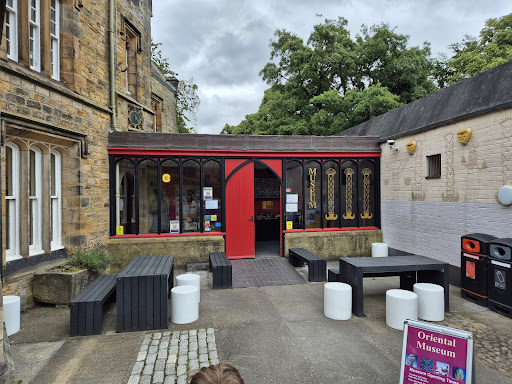
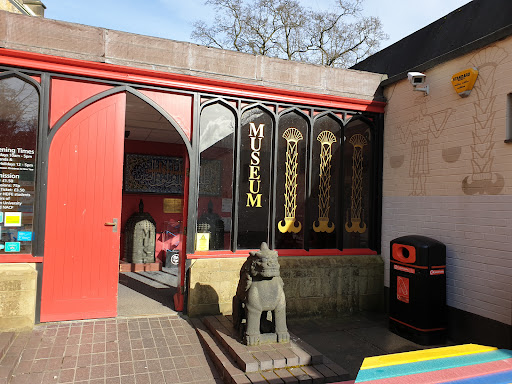
Read moreOne way of introducing this museum would be to describe it as being similar to the TARDIS: much bigger on the inside than it appears on the outside. After driving up to the front and having to park in another car park because there were several school minibuses occupying the larger parking spots, I approached the front door is expecting a small exhibition that could be easily navigated in 30 minutes. Several hours later, and I left despite wanting to stay longer.
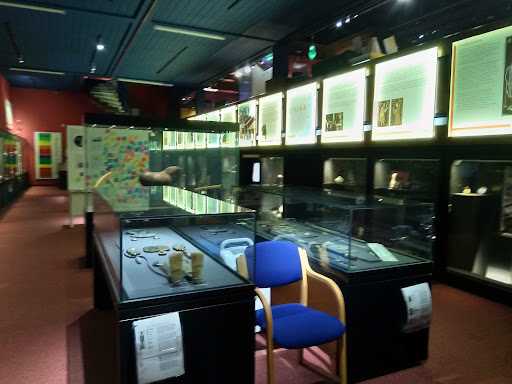
The scale and scope of the museum is extraordinary as it spans thousands of years and takes you from Egypt to India, China to Japan by way of Korea and the Himalayas. The sheer range of exhibits (along with accompanying information on laminated sheets) is impressive, but perfectly fits an establishment linked to a world renowned university.
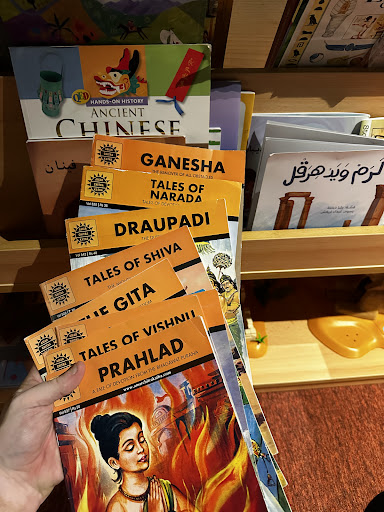
While much of the content would be of interest to scholars, it seems a great deal of time and attention has gone into making it as user friendly as possible so there you don't have to go far until you find something aimed at schoolchildren, whether it's clothes to try on, an outline of a kimono to colour in, or a 'glitter tube' to make the nature of time slightly more easier to understand.
Following on from one type of inclusivity to another, the museum spanned several different floors and there is a reasonably large lift allowing wheelchair users to see every part of the museum; the doors are wide and the exhibits are spaced out so there is no problem to get around and worry about damaging some priceless artefact!
All in all, it's a fascinating place which I'll visit again and the fact it's on the Durham University campus and quite close to the Botanical Gardens means a full day can be had in this part of the world, stopping for lunch at the gardens (there isn't any food here, though there is a decent gift shop) for a full cultural experience and spending time inside and in the fresh air! If that weren't enough, it's very reasonably priced so good for families, school parties or adults wishing to increase their knowledge of everywhere from the middle east to the Japanese...
Read moreBefore I came up to Durham, I booked my tickets for Friday 6th Augustus MMXXI and was surprised to find out they were free, which contradicts some of the reviews that say it costs £1.50 entrance, which it does not. You do need to book a slot however and I was disappointed that I was forced to wear a face masque for two hours despite having asthma. But alas, the museum itself presents some very impressive artefacts and I was especially pleased to see an exhibit on Korea, which unfortunately does not receive the attention in the history books that it should. As an Egyptologist, the Ancient Egypt section, albeit a bit too small, was the most impressive part for me. As a Jew, I was happy to see a very small exhibit on some Jewish religious articles, but it was one glass case and presents things that we use today, whereas the one thing I would really like to ask the museum as a recommendation is to add a section about Ancient Israel and Judah, as it fits within the "Oriental" bracket and is a time period that really should be focused on more in the modern world in order to not confuse the common people about their image of Jews today, which is worrying to say the least. I recommend that you leave a donation to the museum, and to also read the interesting information instead of just...
Read more