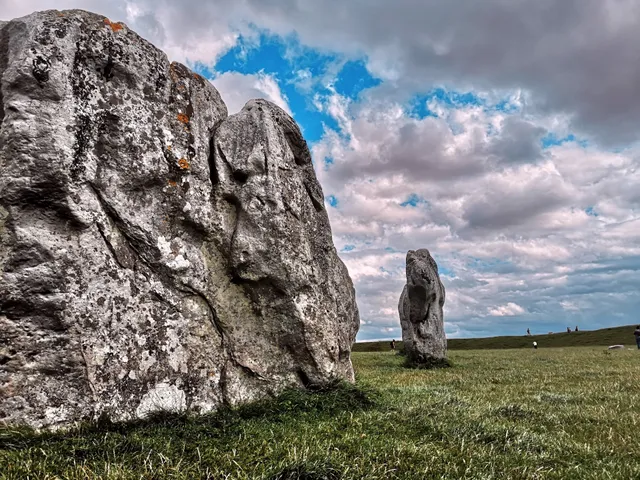
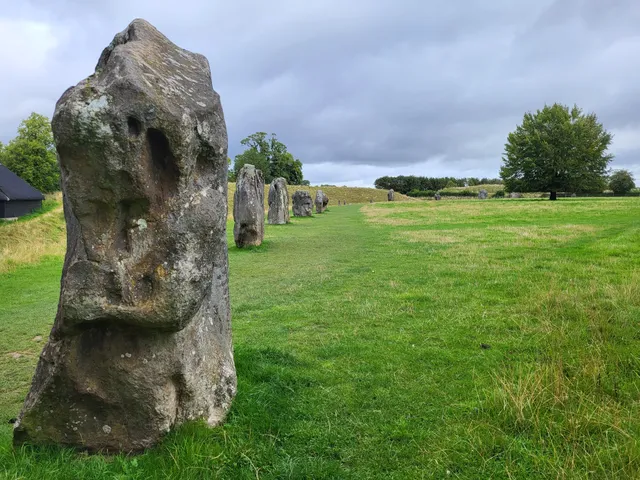
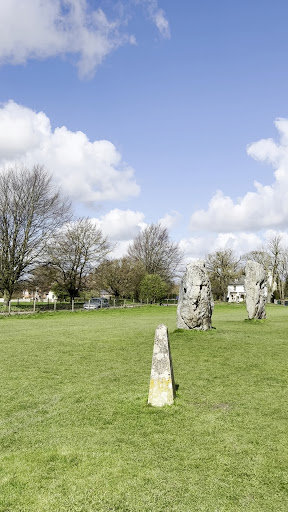
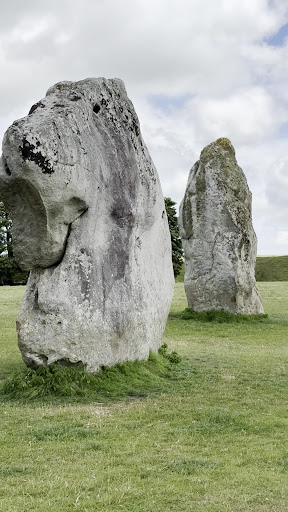
A Neolithic henge monument containing three stone circles, around the village of Avebury in Wiltshire, in south-west England. One of the best-known prehistoric sites in Britain, it contains the largest megalithic stone circle in the world. It is both a tourist attraction and a place of religious importance to contemporary pagans.
Constructed over several hundred years in the third millennium BC, during the Neolithic, or New Stone Age, the monument comprises a large henge (a bank and a ditch) with a large outer stone circle and two separate smaller stone circles situated inside the centre of the monument. Its original purpose is unknown, although archaeologists believe that it was most likely used for some form of ritual or ceremony. The Avebury monument is a part of a larger prehistoric landscape containing several older monuments nearby, including West Kennet Long Barrow, Windmill Hill and Silbury Hill.
By the Iron Age, the site had been effectively abandoned, with some evidence of human activity on the site during the Roman period. During the Early Middle Ages, a village first began to be built around the monument, eventually extending into it. In the late medieval and early modern periods, local people destroyed many of the standing stones around the henge, both for religious and practical reasons. The antiquarians John Aubrey and William Stukeley took an interest in Avebury during the 17th and 18th centuries, respectively, and recorded much of the site between various phases of destruction. Archaeological investigation followed in the 20th century, with Harold St George Gray leading an excavation of the bank and ditch, and Alexander Keiller overseeing a project to reconstruct much of the monument.
Avebury is managed by the National Trust. It has been designated a Scheduled Ancient Monument, as well as a World Heritage Site, in the latter capacity being seen as a part of the wider prehistoric landscape of Wiltshire known as Stonehenge, Avebury and Associated Sites.
Avebury Henge and Stone Circles are believed to have inspired J.R.R. Tolkien's depiction of the Ents, the humanoid trees in The Lord of the Rings. The large beech trees near the eastern entrance of the henge are a popular local legend as the inspiration for...
Read moreThis is an archeological site worth to visit. I was impressed by the immersing landscape created by this Neolithic remains. It was said that as late as the fourth millennium B.C., Neolithic communities were well established in the area around the current Kennet River. It is during this period where the beginnings of monument building, with the construction of several of the region's long barrows, including that at West Kennet, started. It was during the late Neolithic stage that took time between 2800–2200 B.C., that the remarkable complex of ceremonial monuments centred in Avebury was created. This became an archaeological landscape that is equal in scale and is wider than the nearby Stonehenge. The constructions at the Avebury henge & stone circle was an integrating part of the West Kennet Long Barrows, the artificial mound of Silbury Hill, the circle stone/wood construction at the Sanctuary, and the Wayland Smitty Long Barrows. The role of the Avebury henge & stone circle are often assumed to be a centre of gathering and worship. The fact is that this monument has not much archeological remains, thus it was kept 'clean' or sacred space within the landscape. The Avebury henge & stone circle consists of stone circle on inside a massive earthwork of 400 meters, broken by 4 entrances, and within this circle there are 2 smaller circles on the north & south side, titled the obelisk & the cove. There was totally 227 erected stones within this complex, however most of them are not seen anymore, either being broken,...
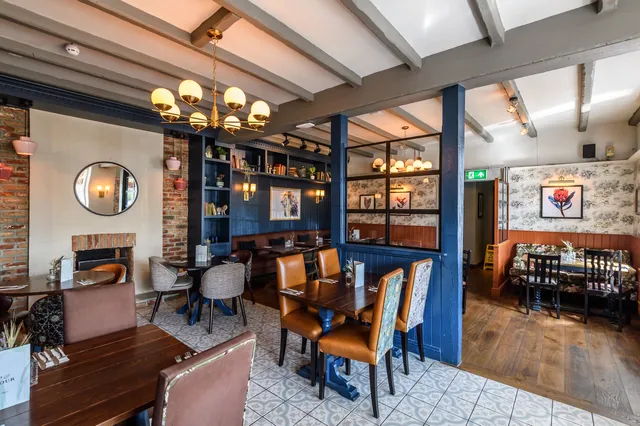
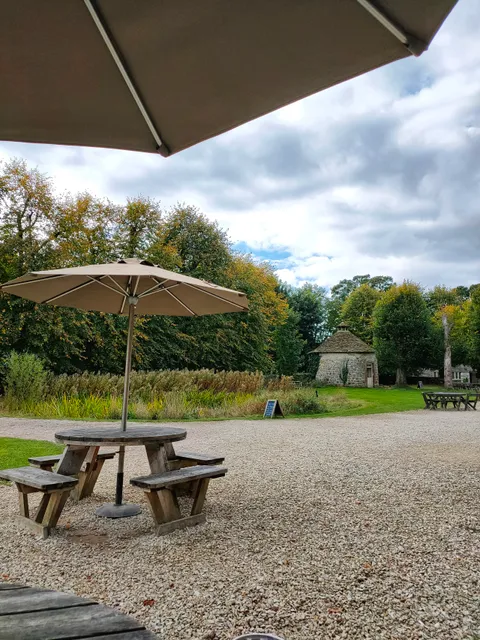
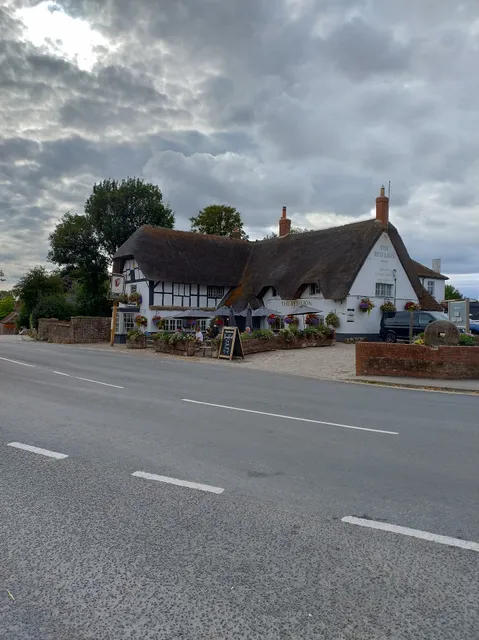
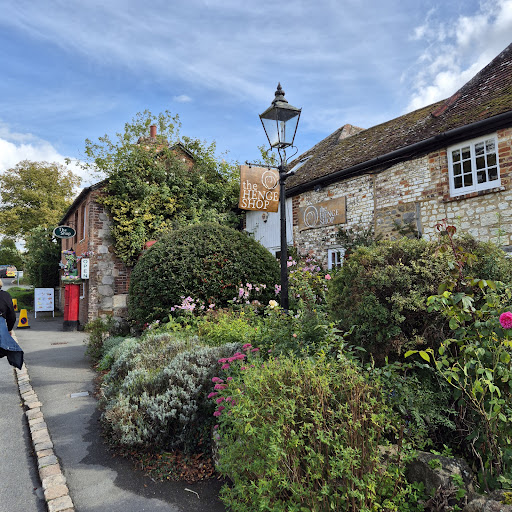
Read moreAvebury is a truly magical place. I've been many times. Parking is quite limited and I've been lucky enough not to go on very busy days. Though I visited Tues 16th sept at around lunchtime and there were only a few spaces, though people are always coming and going . If you just want to walk around the stones you can be in and out in half an hour but there is much more to see. If you walk clockwise around the stones from the second entry point your final destination will be the pub. Haven't been there in a while but I've always enjoyed it before. There are a couple of shops, national trust , which is lovely but not many henge bits to buy, and The Henge, also a nice shop but seems more touristy these days but still has plenty of crystals and books related to the stones and similar. There are toilets and a cafe. Also a couple of little museums. There are steps and uneven ground at times. Can be muddy so be aware. Whilst the stones circle is free to visit the car park is expensive- £8. There is no choice of how long you stay, just a flat out fee which i think is disappointing. It's free to National Trust and English Heritage members. I've always thought it better than Stonehenge as you can get up and personal to most of the stones and the trees that have exposed roots are a wonder to behold. However, the attractions can be expensive for non members and the high parking cost could put people off. There are other places, such as west kennet long barrow and Silbury hill to visit so you can make a...
Read more