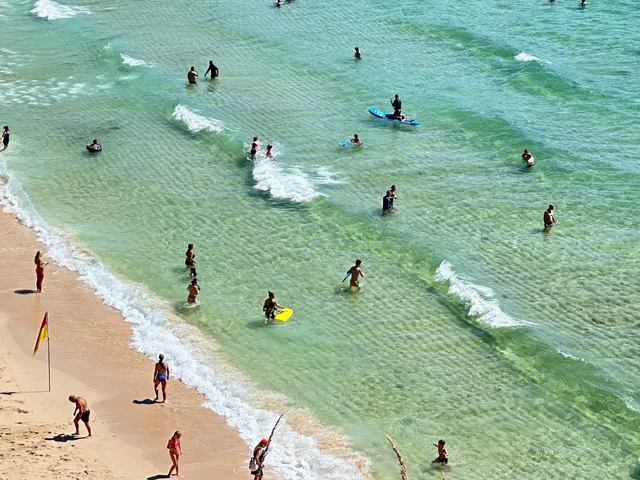
Cape Cornwall is a small headland four miles north of Land's End near the village St Just. The cape is the point at which Atlantic currents split, either going south up the English Channel, or north into the Bristol Channel and Irish Sea. A Cape is a headland where two oceans or channels meet. in this case the English Channel and St Georges Channel. It is the only cape in the Duchy of Cornwall. Swimmers beware of strong currents.
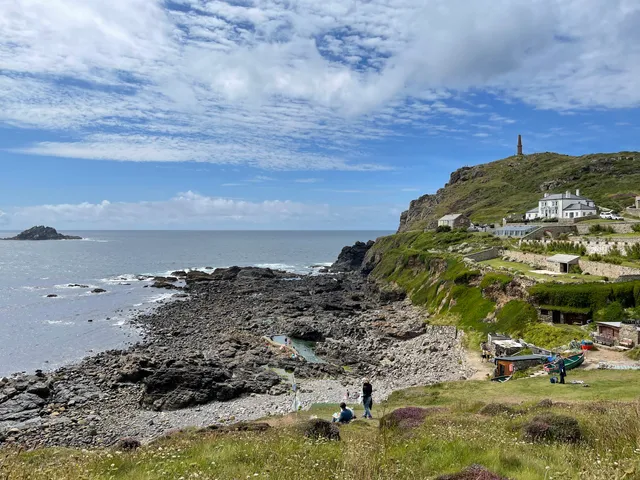
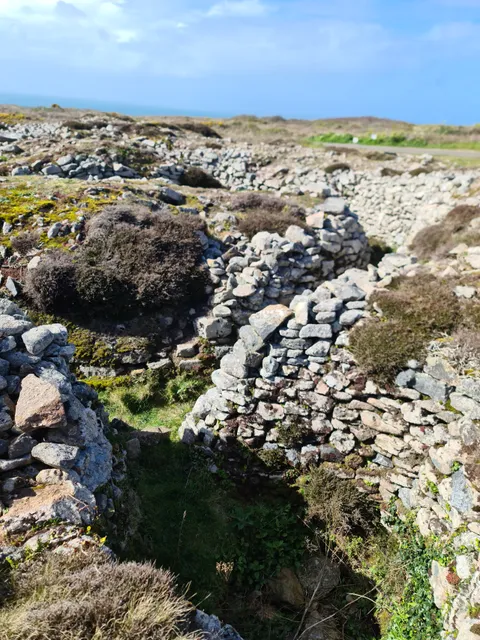
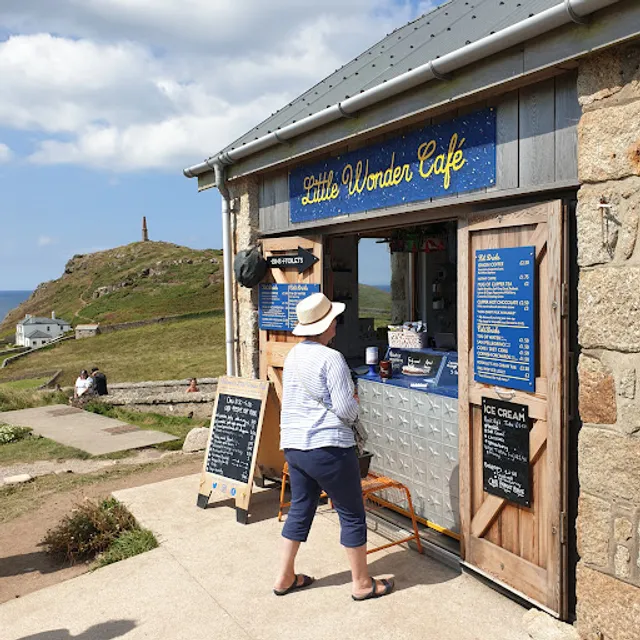
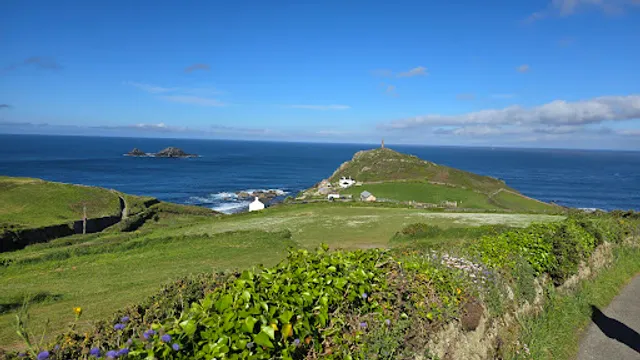
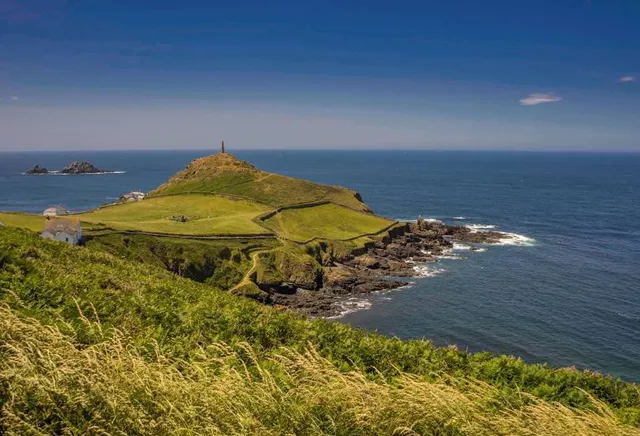
Thought for a long time to be the most westerly point in England, it was later shown that Lands End was in fact further west. In 1987 Cape Cornwall was purchased for the nation by the H. J. Heinz Company, to commemorate a century of the company's operations in the United Kingdom. The site is now owned and maintained by the National Trust. Heinz's donation is commemorated by a Heinz Baked Beanz label-shaped plaque set into the base of the 1864 chimney and is often refered to as the Heinz monument. The remains of the mine are included within the Cornwall and West Devon Mining Landscape, a World Heritage Site since 2006. There are a number of very good walks in the area. Just off shore, the Brison Rocks wrecked a number of ships, and were also said to have been used as a spartan prison at one time. The rocks are also an important breeding ground for sea birds. There is a National Trust car park from which there is a walk down a hill either to Priest Cove or to the base of the cape. The beach at Priest Cove is rocky, with a small rock pool, and is dominated by the bulk of Cape Cornwall which forms its western headland. The whole area has numerous ruins of the mining industry. And the Cape is recognisable by the old chimney on its summit, a relic from the tin-mining days when mine shafts extend out under the sea for hundreds of metres. There are two paths to the top, a relatively easy one and a steeper one. From the top are fabulous views of Kenidjack, the offshore Longships and the distant Wolf Rock lighthouses and St Helen's Oratory. The chimney stack (Listed Grade II) of Cape Cornwall Mine, which crowns the summit of the cape, is one of a number of mining structures that serve as prominent sea-marks along this rugged stretch of coastline; the white building was the mine’s count house. It is from 1850 and was built to serve the boilers of the Cape Cornwall mine which extracted tin and copper from beneath the sea bed between 1836 – 1879. There was once a bronze age burial site here, beside an earlier Iron Age hill fort. Around the 4th century AD, it was the site of one of the first Christian chapels in west Cornwall, St Helen’s Oratory. The site is now occupied by a ruined farm building. The site has been used since the Roman times, and here was found an ancient chi-rho cross. Snacks and soft drinks are available during the summer months, and note that the footpaths to the summit of the cape are not...
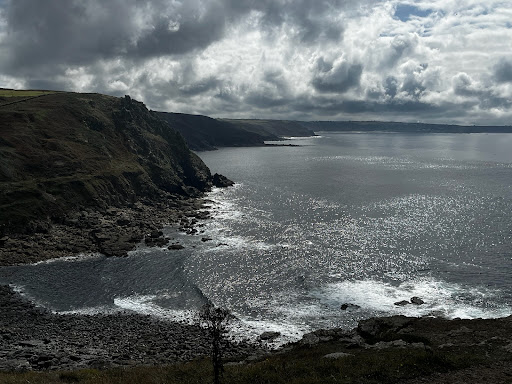
Read moreCape Cornwall is a hidden gem on the Cornish coastline, offering a breathtaking vista that captures the essence of Cornwall's rugged beauty. As you stand at this majestic cape, the panoramic view extends across the dramatic cliffs and turquoise waters, leading your eyes to the iconic Land's End in the distance. The sight of the Longships Lighthouse standing sentinel against the waves adds a timeless charm to the landscape.
The sheer cliffs drop into the churning Atlantic, creating a sense of awe and wonder. The coastline, dotted with wildflowers and windswept grasses, paints a picture of untamed natural beauty. The air, fresh with the scent of sea salt, invigorates the senses, while the sound of waves crashing against the rocks provides a soothing, rhythmic backdrop.
Cape Cornwall offers not just a visual feast, but also a sense of tranquility and connection with nature that is hard to find elsewhere. Whether you're a seasoned hiker or simply someone who appreciates a stunning view, Cape Cornwall's beauty is bound to leave an indelible mark...
Read moreWe were visiting the nearby mines, and decided to pop over to see Cape Cornwall. The hike to the top can be a bit challenging, so be sure to wear sturdy hiking shoes and bring hiking sticks if you use them. It makes it so much easier to maneuver the rocky steps. On a clear day, the views from the top are amazing!
The parking attendant, Anne, was a delight. Such an enthusiastic person. She should win an award for the friendliest National Trust attendant.
The parking lot did have toilets. But the cafe was not open the day we visited. However, Anne led us to the perfect place, Moomaid, in St. Just, even instructing us on where to find free parking. As I said, she really was a gem.
I'm not sure what is implied by purchasing tickets. One merely parks in the lot, then takes the walk down the lane to get to the hike to the top. There is no...
Read more