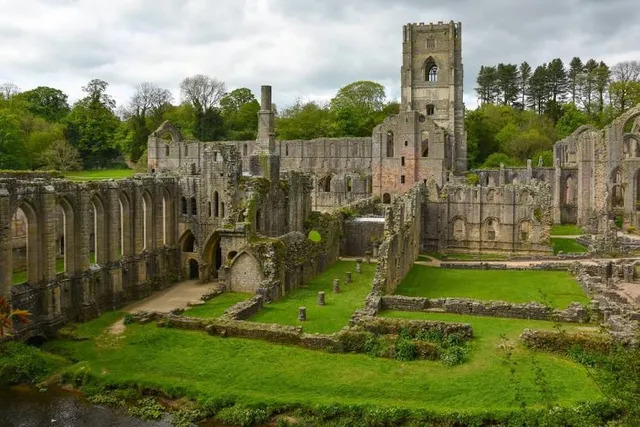
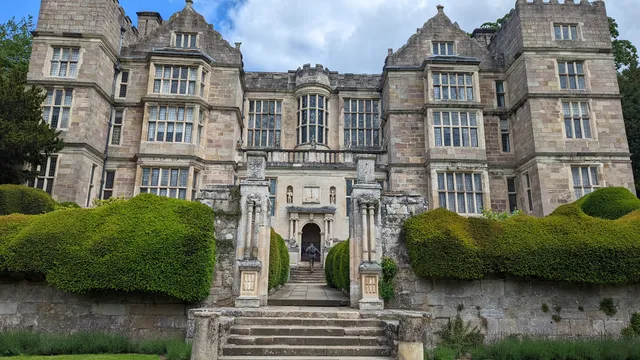
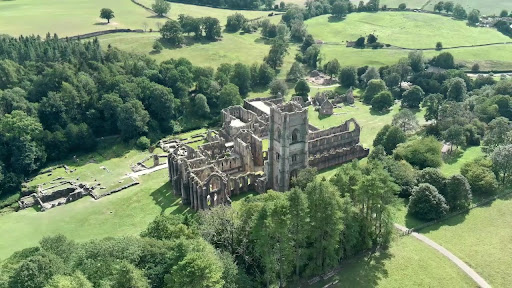
To the south west of Ripon, lie the ruins of Fountains Abbey, the largest preserved Cistercian monastery in England. After the usual National Trust pay wall (visitor centre), you glimpse the imposing Hubert tower (a later addition to the abbey in the 1500's), before descending to the River Skell via Fountains Hall (built in the 1700's from the ruins of the Abbey).
In 1132, a group of Monks from St. Mary's Abbey in York (Ruins can be found in the Museum Gardens), left the monastry to create a new prayerful community without the distractions of the City. They were given land in the valley of the River Skell, where all of the resources needed to build a church could be found.
After the first year, they were at their witts end due to failed crops and the living conditions they experienced, so they wrote a letter for help from the leader of the Cistercian Order in France. On meeting with the monks at Fountains, they adopted them into the order and encouraged them to adopt a strict Benedictine prayer regime.
Alongside this, the monks developed farming, sheep herding, lead works, mill, tannery, stone masonry and carpentry. All of these skills helped them to develop the Abbey, recruit new incumbents and expand their farming land. However, these successes were also mixed with failures. The sheep were infected with disease, crops failed, and the black plague devastated the workforce and the tenants who farmed the land (reduced taxation/rents).
The main issue the Abbot had to contend with, was in accepting payment prior to the delivery of goods. As the production of goods were reduced, it meant that creditors called in debts, resulting in the monastery being taken over by the crown. The dissolution of the monasteries by Henry VIII in the 1500's, meant that he saw the institution as a means to enrich himself, often appointing political Abbot's, who were only too keen on pleasing the King.
The Abbey had great material wealth that could be plundered, an income that could be taxed, and lands that could be acquired. Being unable to practice religion on the site, led to its physical demise, as prospectors were commissioned to smelt the lead, remove building materials, and remove valuable artefacts.
We found the scale of this site awe inspiring. How during the dark ages of medieval England did a facility of such magnitude get built and survive for 400 years, it is staggering. No wonder then, that the Abbey Ruins are part of the UNESCO world Heritage site, alongside the Georgian water gardens of Studely Royal Park. There was once a large house at Studely that was twice destroyed by fire, with the remains of the garden an example of landscape design that worked with the topography of the landscape to create a built environment that enhances the aesthetic value of...
Read moreAbsolutely beautiful place to look around, plenty to see and loaded with amazing history. The Abbey is gorgeous and well worth the visit. Although this place has lovely nature and amazing buildings to explore, a lot of improvements need to be made.
I am partly disabled and have a lot of health conditions and it took me 3 hours to get from the fountain hall to the Studley royal park, which is fine as I find it hard to walk and I have to keep stopping to get my strength back. But I was shocked to see that not 1 but 2 of the cafes had no meal type food. I'm on a strict diet for health reasons and prefer not to have cakes, sugary snacks etc but I was forced to after 3 hours of walking as I was knackered and starving. The first cafe we went in had a few cakes and a small freezer of ice cream lollys, it was only a small cafe so we thought fair enough.
But after walking a really really long walk in boiling heat just to get to the studley royal tea room to see that they also had nothing for dinner and just cakes was ridiculous. It was 1pm and still busy, the fridges were empty apart from cans of pop and water. It was £16 for 2 cakes and 2 cans of diet pepsi - ridiculous prices! So we had to pay loads for a quick snack that we would rather not have had in the first place. We then hoped the restaurant back near the visitor centre would have a normal meal in, not just snacks and cakes. We were shocked when we found out there was no quick exit and we would have to walk the whole way back round when I could hardly walk because I was that exhausted, bearing in mind we were told at the entrance that it all loops round and there were shorter paths leading to the exit in case we didn't want to look around the whole thing. At this point, it was 2.30pm and the gates shut at 4pm. That means we had 1.5 hours to do a 3 hour walk. Everyone walks at different paces and some are slower than others!
As the man could see we weren't happy, he then decided to tell us there was a mini bus that could take us back to the entrance near where we were parked. We got that luckily, even though people kept trying to push in and saying they were there before us when they came way after. We finally had dinner at the restaurant but they didn't have what I asked for, and decided to only tell me once I'd paid and they had to refund half of it. I had no idea why the main restaurant was right near the entrance, as nobody feels like having dinner at 10am at the start of the journey. It needs to be more accessible as even some disabled toilets were up steep hills. Really not happy with the communication from staff and you shouldn't have to walk all that way just to walk all...
Read moreVery impressive National Trust site - certainly in my top 10 list for England. Awesome structures of a huge ruined abbey set in a crag sided valley, the stream of which has been landscaped further downstream into the ornamental lakes at the Studley Royal sites.
Free parking for members, and a very well appointed visitors centre starts the visit. There are plenty of clean modern toilets here, along with a huge cafe/restaurant along with shops selling garden supplies and tourist stuff. The ticket office is large and well designed with very helpful, well informed, enthusiastic and friendly staff who hand you a beautiful drawn 3D map of the site and suggest walking routes to get round the sites. It's actually quite spread out so sensible footwear is a good idea. Mercifully (for me on a very hot day!) from the visitor centre it is mostly downhill, with a regular minibus from the Studley Royal cafeteria by the lake to take you back up to the car parks.
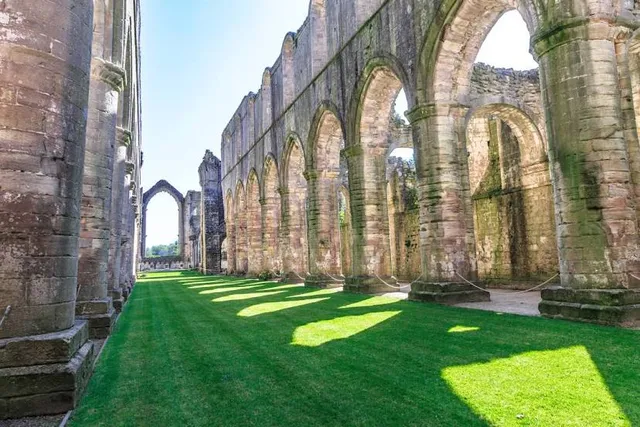
The actual abbey is so awesome as to almost defy description both in scale and how impressive the architecture is. Certainly as large and beautiful as any British cathedral, the ruins are very well looked after and you are encouraged to explore. An excellent interpretation centre is based in the Lodge that you pass going down to the valley explains the history of the abbey in great detail and is very well done. Fountains Abbey and the associated buildings covers a surprising large area, but before the dissolution of the monasteries under Henry VIII this was a very important religious site with many satellite monasteries in Northern England and Scotland that it managed and administered.
The walk down to Studley Royal following the valley is so beautiful it seems almost heavenly as the landscaped lakes come into view amid the trees. The parkland the the paths are very well maintained with a lot of interesting plants everywhere, such as several species of wild orchids just growing in the grassed areas.
There was far too much to see in a morning, so I will have to return and see more. But really, if you like historic sites, Fountains Abbey should be on your bucket list. Very highly...
Read more