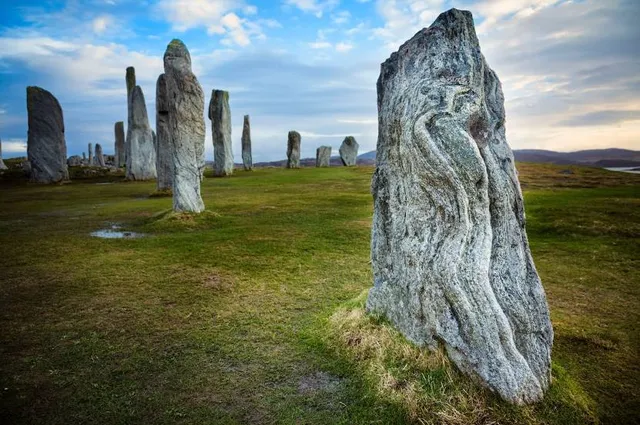
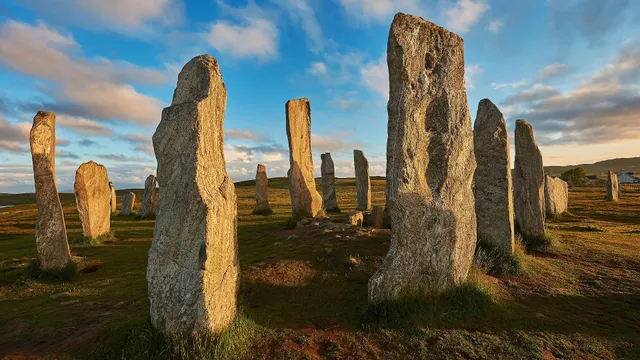
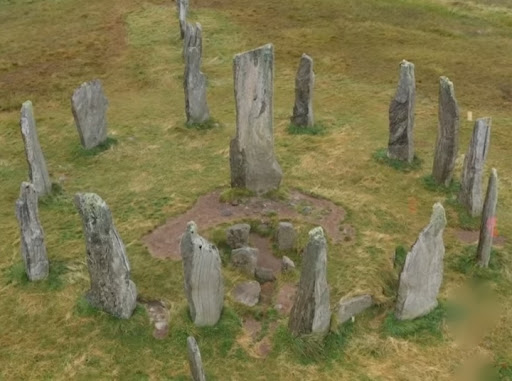
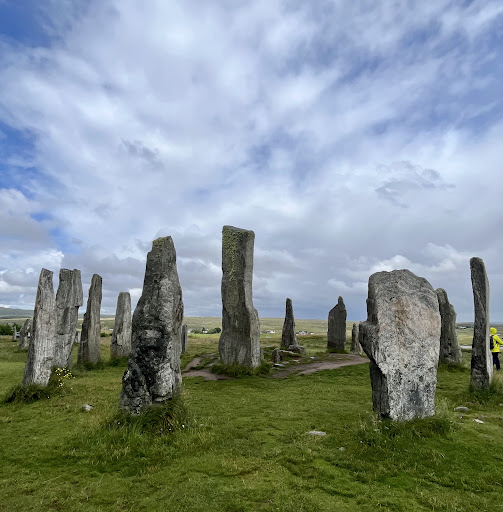
The stone circle, located in the Outer Hebrides, is over 5,000 years old and predates Stonehenge. It was constructed by people using primitive tools, and its purpose remains uncertain.
However it is believed to have been a center of religious activity in prehistoric times. The stones are thought to have lined a processional way in ancient times, adding to their intrigue. Some suggest the stones may have been aligned to mark lunar precession on the landscape.
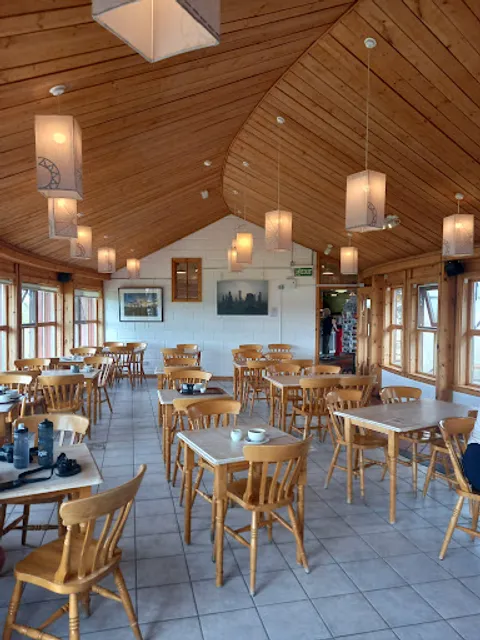
Visitors can reach the site via narrow roads, approximately a 40-minute drive from Stornoway. Upon arrival, the visitor can find facilities for refreshments and souvenir van, and parking along the waterside wall, which was sufficient for campers. The facilities included portaloos too.
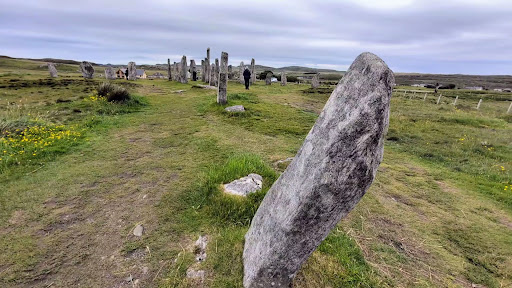
From the entrance, a short walk up a gravel path leads to the stone circle, with benches along the way for resting.
Admission is free, and visitors can wander freely among the monoliths, which vary in size and shape and cover a surprisingly large area. Interpretation boards provide information about the history of the site, as well as the surrounding geology and wildlife.
The visit to this wonderful place is memorable, situated on a windswept hill surrounded by moorland and peat bogs, with stunning views of the nearby loch. Although the main path is grassy, the ground can be boggy and waterlogged, so sturdy footwear is recommended.
Despite the redevelopment work, the site remains a must-visit destination for those interested in ancient history, stone circles, or breathtaking landscapes. The experience is unforgettable, especially during moonrise, when the atmospheric surroundings enhance the site's mystical allure. Many express a desire to return in the future, particularly once the visitor...
Ā Ā Ā Read moreCallanish Stones - What a sight! šš«¶š» Located just outside the town of Callanish on the Isle of Lewis in the Outer Hebrides lies a fascinating archaeological site, intriguingly positioned overlooking the waters of Loch Roag and juxtaposed against the ridge known as the Old Woman of the Moors. These Standing Stones of Callanish form a cross shape, with a central circle of thirteen stones and a larger monolith at its focal point.
The origins of this prehistoric site are shrouded in mystery, but experts have determined that it dates back to the late Neolithic period, around 2900 to 2600 BC, serving ritualistic purposes. The stones were sourced from Lewisian gneiss and stood for over a thousand years before falling out of use.
Local myths attribute various stories to the stones, calling them āfalse men,ā former giants transformed by enchanters or beings associated with the Summer solstice and Celtic polytheism.
Some researchers propose the stones as a prehistoric observatory, highlighting specific patterns related to the Sun and the Moonās rising and setting points. Others suggest more mundane reasons, such as power, prestige, and symbolism of death, with some still acknowledging the stonesā astronomical significance. Over the years, the Standing Stones of Callanish have inspired artists and appeared in various cultural works, further adding to their allure. The siteās captivating beauty and enigmatic history continue to draw visitors from far and wide, leaving them in awe of the stonesā...
Ā Ā Ā Read moreThis impressive stone circle is a must-see if you're visiting the Outer Hebrides. All the more awe-inspiring because it is over 5000 years old, predating Stonehenge, and was built by people working with the most primitive of tools. It took us about 40 minutes to get here from Stornoway, travelling along narrow roads. The visitor centre is being completely redeveloped (it's expected to reopen in 2026), but at the time of our visit in late October, there were a couple of portaloos at the entrance, and a van where we could get refreshments and souvenirs. It was only a short walk from here up a gravel path to the stones. There's no entrance charge, and you can wander freely among them. Interpretation boards told us a little about their history, and also the geology and wildlife of this area. The monoliths, of varying shapes and sizes, cover a surprisingly large area. Some of them look as though they might have lined a processional way. Be advised that you need sturdy footwear to get close to them; although we were walking on grass, the ground was very boggy and waterlogged. Nobody really knows why these stones were raised, but they are believed to have been a centre of religious activity in prehistoric times. Walking among them was an unforgettable experience, made all the more so by their stunning setting on a windswept hill, surrounded by moorland and peat bog, with wonderful views down to the loch. It was well worth coming to this special place; I'll definitely...
Ā Ā Ā Read more