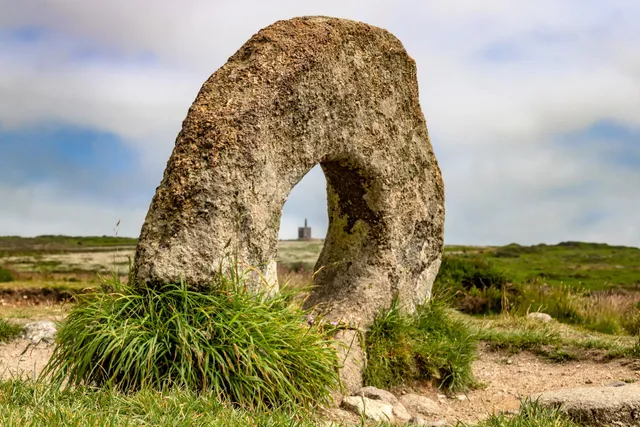
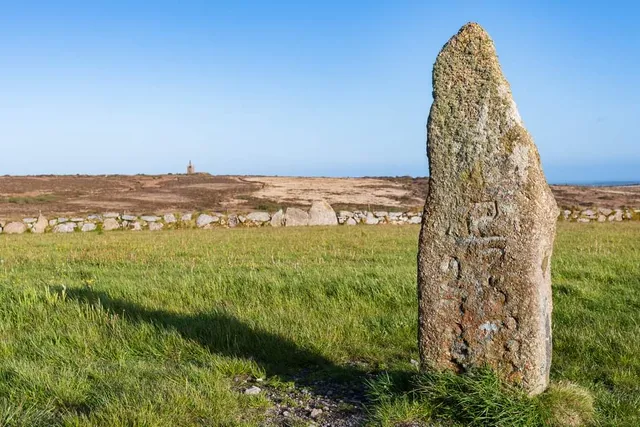
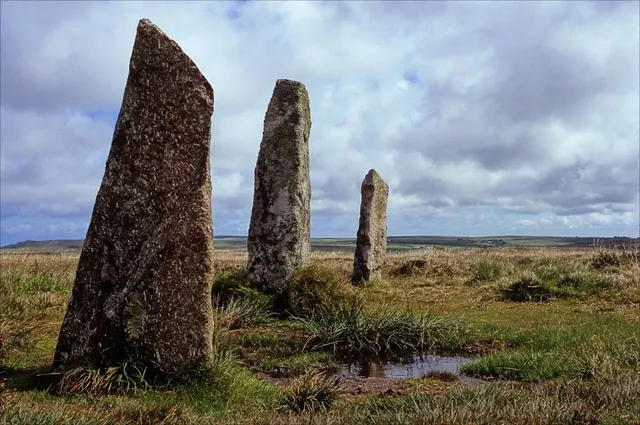
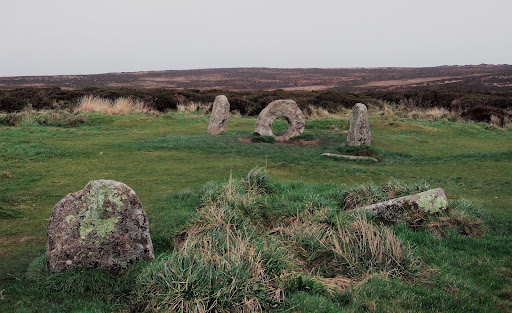
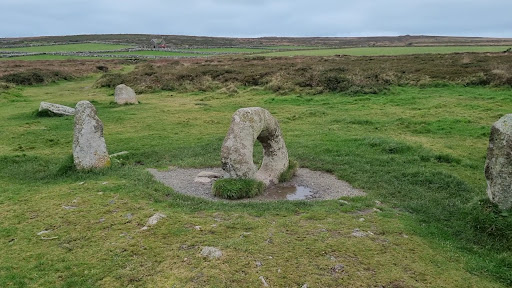
Mên-an-Tol (Cornish for 'stone with hole') is a megalithic structure and stands near the Madron to Morvah road in Cornwall. Limited parking on the road and a short footpath walk to the site. Other antiquities in the vicinity include the Mên Scryfa inscribed stone about 300 metres to the north and the Boskednan stone circle less than 1 kilometre to the northeast. Mên-an-Tol consists of three upright granite stones: a round stone with its middle holed out with two standing stones to each side, in front of and behind the hole. When seen at an angle from one side, the stones form a three-dimensional "101". The two side stones are both about 1.2 metres high. The westernmost stone was moved and brought into a straight line with the other two stones sometime after 1815. The holed stone is roughly octagonal in outline. It is 1.3 metres wide and 1.1 metres high; the circular hole is 0.5 m in diameter. The only other holed stone in Cornwall of this type is the Tolven Holed Stone which is in a garden near Helston. There is one other standing stone nearby, and six recumbent stones, some of which are buried. A cairn exists as a low stony mound just to the southeast. There are two other early Bronze Age barrows or cairns between 120 and 150 metres to the north. Mên-an-Tol is thought to date to either the late Neolithic or early Bronze Age making it around 3,500 years old or more, and the holed stone could originally have been a natural occurrence rather than being deliberately sculpted. The distribution of the stones around the site has led to the suggestion that the monument was actually part of a stone circle. In 1749 the site was first archaeologically investigated and a site plan was drawn. This shows that the megaliths were not in a line like today. It is also reported that farmers had taken away some stones from the area. In the 19th Century the local antiquary published several drawings of the site, and made the first suggestion that the stones could be the remains of a stone circle. In 1932 the first modern archaeological report was written. It was believed that the position of the stones was not as the prehistoric arrangement, but had been significantly changed. It was also thought that the holed stone might be part of a destroyed tomb. In 1993, the Cornwall Historic Environment Service published a detailed report with the latest research results. They suggested that the standing stones originated from a stone circle which consisted of 18 to 20 stones. The holed stone, however, could be part of a nearby portal tomb. It is also possible that the holed stone stood at the center of the stone circle and served to frame specific points on the horizon. Such a use of a holed stone is not known in other sites. Local folklore claims that Mên-an-Tol is supposed to have a fairy or piskie guardian who can make miraculous cures. In one story, a changeling baby was put through the stone so that the mother could get the real child back. (Evil piskies had changed her child, and the ancient stones were able to reverse their evil spell). If is said that local farmers with back or limb complaints would crawl through the hole to relieve their pain. I tried it but found that I wasn’t narrow enough!! Local legend also claims that if, at full moon, a woman passes through the holed stone seven times backwards, she will soon become pregnant. Another legend is that passage through the stone will cure a child of rickets (osteomalacia). For centuries, children with rickets were passed naked through the hole in the middle...
Read moreVery clean site. If you are coming from the north lane you must cross a small creek via a stone crossing and a wall. Not suitable for Cars or wheelchairs, mountain bikes just about. Good walking shoes required.
We came from the south with mountain bikes (not suitable with mountain bikes going from north to south as most of it is steep up hill dirt track) across a small creek. Bikes had to be carried across and through a small boggy but (4m) you will get muddy shoes on a wet week.
The views are lovely. The stones are said to be 3500 years old and have healing properties. For various ailments and fertility cures. It is said to cross through the hole 9 times towards the sun. We were told by a local.
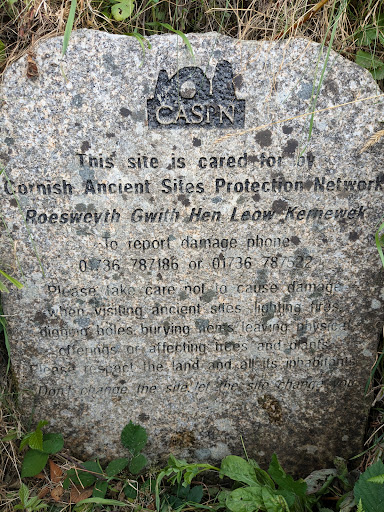
Of course please be mindful this is a historic site, treat it with the respect it deserves.
If you look at the site more closely it is part of a small stone circle some of it is obscure. Research it a little before going and appreciate the history. Not far of the site towards the old mine to the south are more stone circles and sites of value. It is an afternoon of exploring. If you did use the car park along the lane and follow the road south again several small sites of historical worth. You can see them from the road. Stone circles and mounted...
Read moreBeautiful place reminiscent of past 4000 years peeping to Neolithic times, Mên-an-Tol stands near the Madron to Morvah road in Cornwall, UK and is about three miles northwest of Madron. Other antiquities in the vicinity include the Mên Scryfa inscribed stone about 300 metres to the north and the Boskednan Stone Circle nearly one kilometre to the northeast. Locally known as the "Crick Stone", in Cornish, Mên-an-Tol, literally means "stone with a hole". People crawl through the Holed Stone to stay blessed as per old beliefs. The place is all about ancient landscape, hillside Neolithic enclosure, Bronze age barrow burials and evidences of later events. The place with greenary and long history is indeed mesmerising. Visit to feel the past meeting the present...
Read more