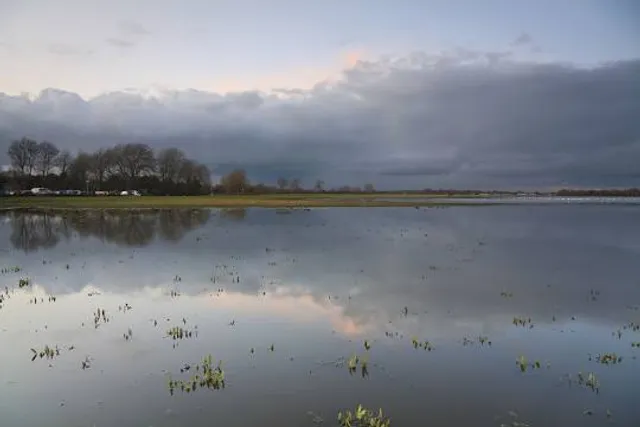
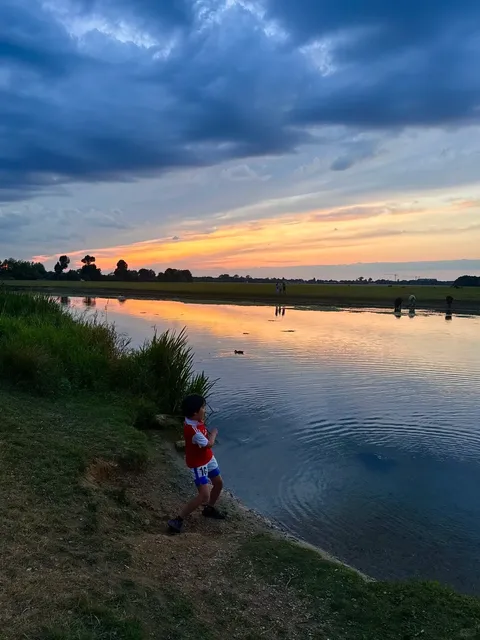
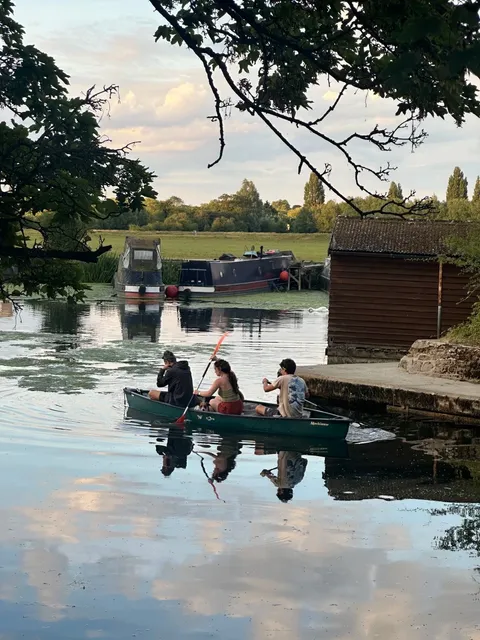
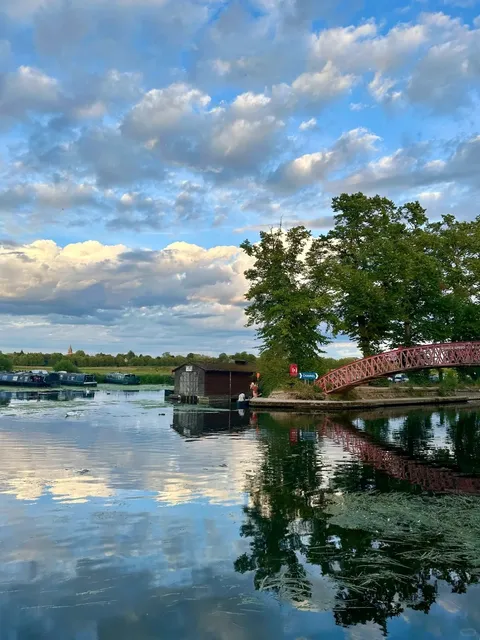
I keep forgetting how extensive Port Meadow and Wolvercote Common are. Wikipedia indicates that the former covers 300 acres (120 ha) whereas the latter is only 50 ha - depending on the exact boundaries chosen, which are continually in dispute. Visitors can quite easily stand in the middle of this vast green space and find almost everyone else is so far away they look the size of insects.
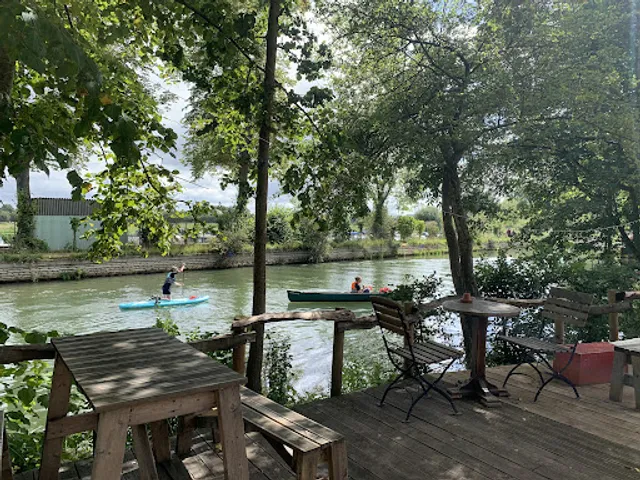
The river banks on both sides of the Thames by Port Meadow are entirely natural unlike those further downstream in the city. They provide an invaluable yardstick of the scale of the changes that have taken place to the riverbanks elsewhere in the city - usually having to be reinforced by sandbags and cement.
Over the last few years there seems to have been a significant increase in the number of canal boats by Iffley nature reserve and the Oxford canal by Hythe Bridge Street. Bu it is doubtful they will be strung out along Port Meadow’s riverbanks because so many other groups of people use them.
Port Meadow is on a similar scale to Shotover Countryside Park (when it includes Brasenose Woods and, more recently, the half dozen farmers’ fields north of the Horspath road).
These are two huge green assets to the city and yet there are those who might object to such a comparison because they regard Port Meadow (in the northern part of Oxford) as much more archeologically, historically, culturally, and mythologically, significant than Shotover (in the east of the city).
Perhaps the Reverend Charles Lutwidge Dodgson’s ‘Alice in Wonderland’ is much more popular than Tolkein and CS Lewis both of whom knew Shotover well.
Or perhaps Shotover should just be compared, like for like, e.g. with Wytham Woods?
Port Meadow is undoubtedly an incredible sight so close to Oxford city centre. There are few other modern cities which have such a vast amount of greenery reaching almost into the city centre.
Aesthetically, Port Meadow provides fantastic views of the Thames valley and surrounding hills from Beckley to Shotover, Hinksey and Wytham.
The question arises as to why this meadow hasn’t been developed. Is it because Oxford is on a flood plain which means building on it would be self defeating and financially ruinous? Or is it because the legendary King Alfred the Great supposedly gave those who defended the city from Danish invaders, the right to graze their animals on the meadow for free and in perpetuity? If the latter, could these people have been the city’s first environmentalists?
The meadows’ reputation has also been enhanced because over the last 4,00 years, it has supposedly never been ploughed. But this ‘fact’ suggests that commoners controlled the land for a long time before King Alfred gave them title to it.
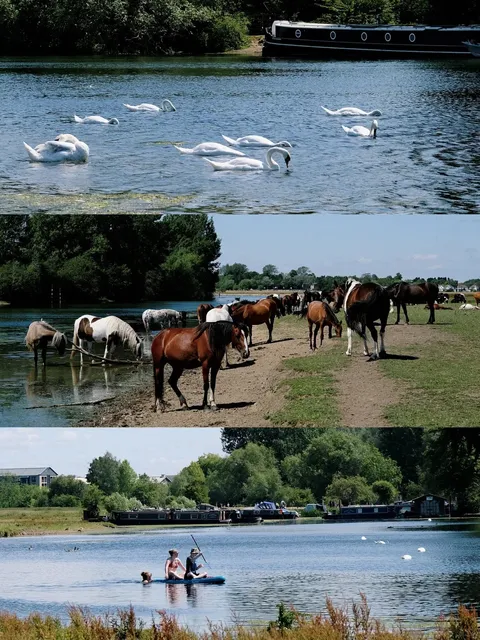
The grazing of Animals on the meadow has undoubtedly ensured the area remains a meadow. The four legged lawn mowers ensure that no trees can intrude on the meadow. It is easy to appreciate what Port Meadow would look like if grazing was stopped by looking at Burgess Field on its eastern flank .
Port Meadow exists in the gap between the Thames in the west and the railway lines to the east. Burgess Field, which used to be the city’s rubbish dump, has been ecologically restored. But, no matter how beautiful Burgess wood becomes it will always be (like Shotover) the poor relation to the majestic, iconic, Port Meadow. But it’s Burgess (and Shotover) which is combatting climate change whilst Port Meadow does...
Read moreSuch a pretty walk by the canal. There are a few free car parks which are handy. We use the Godstow car park which gives us a nice long walk down the canal and gives us the opportunity to see the geese and horses in the meadow. You can walk the whole way down the canal, cross a bridge and come up the other side if you want a longer walk. As you're coming up the other side to come back to the car park you can stop at The Perch pub for drinks, it has a nice beer garden and is really accessible from the canal. Or I would recommend The Trout which is a short walk from the car park. It has lovely seating outside along the canal. The walk took us 2-3 hours which involved stopping to pet the horses and have a drink. Oh also the walk is completely flat so not too tiring for a chilled...
Read moreThis park is not just a green space; it’s a world apart. I wandered in, expecting a brief visit, and somehow lost myself for a few days. Time seemed to stretch, bending to the rhythm of rustling leaves and the quiet hum of nature.
There’s a subtle magic here—paths that twist unexpectedly, drawing you deeper, and vistas that surprise you when least expected. For a while, I forgot where I was or even who I was meant to be. The disconnection was unsettling at first but then soothing.
By the end of my accidental retreat, I emerged refreshed, as if the park itself had quietly reordered my thoughts. It gave me more than I expected—an unplanned journey of renewal. For anyone in need of escape, even unknowingly, this place may hold the answers you didn’t know you were...
Read more