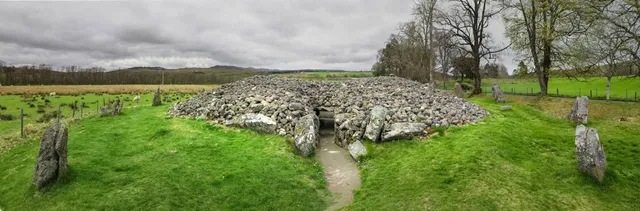
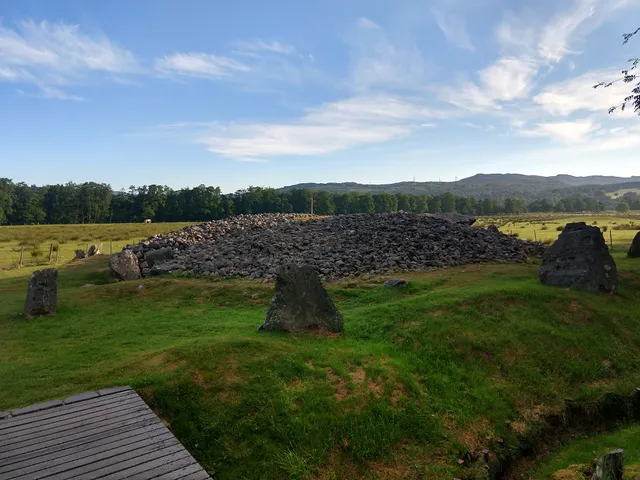
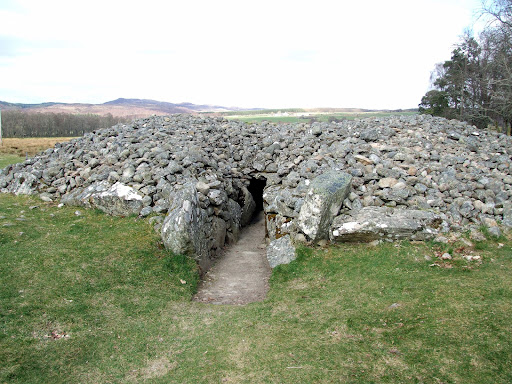
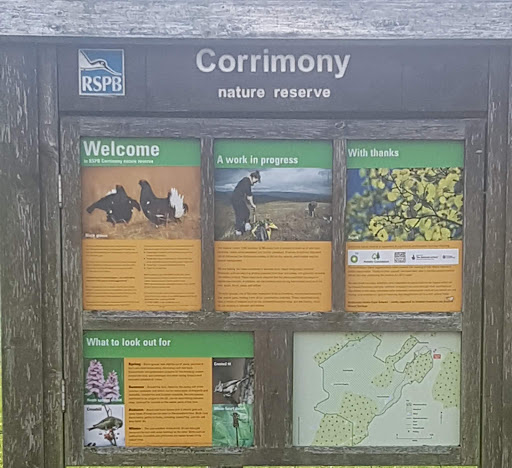
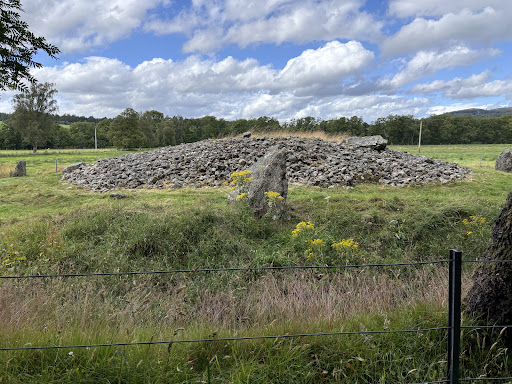
Off the beaten track, some 15 miles from the famous Loch Ness in Scotland is the less famous burial cairn at Corrimony. It is a large circular mound of weather-worn pebbles and boulders, within a kerb of larger stones set on edge. At the centre of the cairn is a round chamber, which would once have had a corbelled roof completely enclosing it. A long, low passage runs from the edge of the cairn through to the chamber – the roof of the passage at Corrimony is very well preserved. Like the Clava Cairns near Culloden Moor, its passage faces towards the south-west – possibly aligned with a celestial event. The whole cairn is surrounded by a setting of 11 standing stones, forming a circle around it. The cairn’s roof was probably capped with the large slab now lying on top of the cairn. The slab is decorated with a series of cup-marks, which are typical of prehistoric rock art. Similar markings were found at Clava Cairns. Excavation in the chamber revealed traces of a crouched burial, probably a woman, beneath an area of stone floor. No artefacts were found with the burial, but a bone pin was found elsewhere in the cairn. The similar Clava Cairns have been dated to about 2000 BC. It’s probable that Corrimony dates to about the same time, so about as old as the pyramids of Giza. Clava-type cairns such as this one appear to have been built in places that were suitable for settlement, on good land. Earlier burial monuments tended to be at the edge of agricultural land and set apart from settlements. This probably reflects changes in society and attitudes towards the living and the dead. Nearby is an RSPB nature reserve. The cairn is free to view and enter, and there is road side parking at the site. There are no facilities here and little information about the site. That said, if you are nearby its worth a look and to get up close and personal with this bit of Scotlands...
Read moreCorrimony Chambered Cairn is an ancient grave site with an unusually well preserved entrance passage. The cairn is believed to be around 4,000 years old.
The grave site (approx. 60ft in diameter) is a doughnut shaped structure covered by large weathered pebbles and is surrounded by 12 standing stones. In the centre of the cairn is a circular burial chamber, which can be reached via a low passage.
To enter the through the passage you will need to crawl on your knees. Personally, I consider it more respectful of an ancient burial site if you didn't.
The top of the burial site was originally sealed with a large flat stone, know as a 'capstone'. This was believed to be removed in 1830 and the central chamber is now open to the elements.
The Corrimony Chambered Cairn was subject to a archaeological excavation in 1952. The traces of the remains of a single female were found in the burial site and therefore it is possible that the grave is of a high status female. No grave goods were found.
The history of the 12 standing stones around the edge of the cairn is interesting. Traditionally 12 stones stand around ancient sites similar to this with their position, plus the position of the grave entrance thought to relate to the phases of the moon.
Excavation at Corrimony revealed that the cairn was surrounded 11 standing stones. In the space where the twelfth stone normally stands, a stone had not being erected (a 12th stone was added after the excavations). The archaeological work also revealed that 4 standing stones had been re-erected at some point during the site's history.
Free parking is available approximately 100 yards from the cairn. There is no entrance fee or facilities...
Read moreCorrimony Cairn was believed to have been built around 4,000 years ago by neolithic farmers. It is a surreal experience crawling into the inner circle of the cairn, knowing that it was built so long ago. There are 12 standing stones surrounding the cairn and it is believed at least some of them were added after the cairn was built. Although I'm sure you could visit here on a cold or wet day, it would be a nicer experience to visit on a sunny day. I doubt many people would be wanting to crawl through to the inner chamber if the...
Read more