HTML SitemapExplore
logo
Find Things to DoFind The Best Restaurants

Donnington Castle — Attraction in Shaw cum Donnington

Name
Donnington Castle
Description
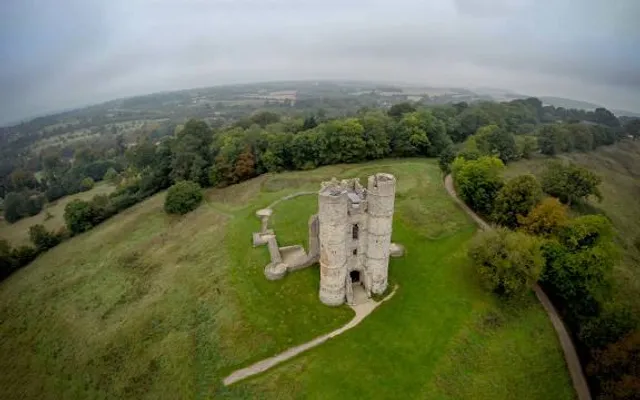
Donnington Castle is a ruined medieval castle, situated in the small village of Donnington, just north of the town of Newbury in the English county of Berkshire.
Nearby attractions
Nearby restaurants
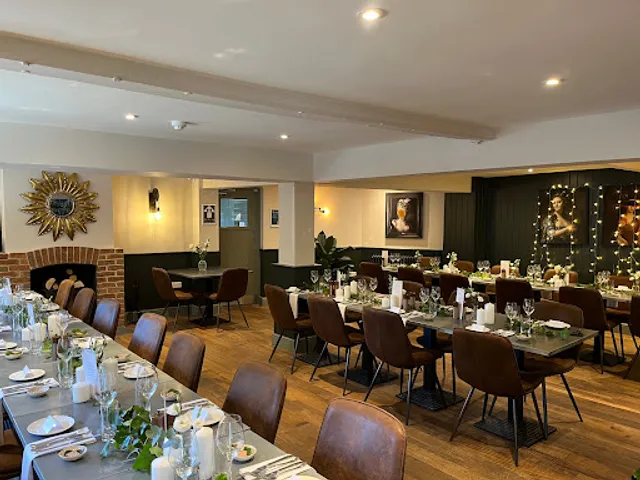
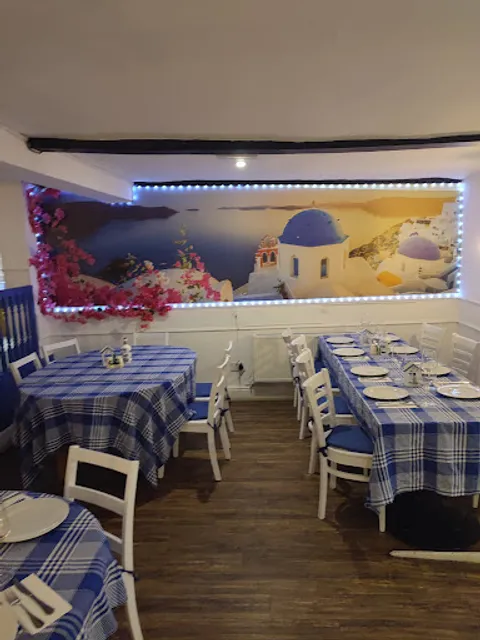
The Greek Table at The Castle Inn, Newbury
Oxford Rd, Donnington, Newbury RG14 3AA, United Kingdom
WinePress at the Donnington Valley
Oxford Rd, Donnington, Newbury RG14 3AG, United Kingdom
Nearby hotels
Donnington Grove Hotel and Country Club
Donnington Grove, Grove Rd, Newbury RG14 2LA, United Kingdom
Donnington & Co
Old Oxford Rd, Donnington, Newbury RG14 3AG, United Kingdom
Related posts
Keywords
Donnington Castle tourism.Donnington Castle hotels.Donnington Castle bed and breakfast. flights to Donnington Castle.Donnington Castle attractions.Donnington Castle restaurants.Donnington Castle travel.Donnington Castle travel guide.Donnington Castle travel blog.Donnington Castle pictures.Donnington Castle photos.Donnington Castle travel tips.Donnington Castle maps.Donnington Castle things to do.
Donnington Castle things to do, attractions, restaurants, events info and trip planning
Donnington Castle
United KingdomEnglandShaw cum DonningtonDonnington Castle

Basic Info

Donnington Castle

Donnington Castle Farm Cottage, Castle Ln, Donnington, Newbury RG14 2LE, United Kingdom
4.4(801)
Open 24 hours
Save
spot

Ratings & Description

Info

Donnington Castle is a ruined medieval castle, situated in the small village of Donnington, just north of the town of Newbury in the English county of Berkshire.

Cultural
Outdoor
Scenic
Family friendly
Off the beaten path
attractions: , restaurants: The Greek Table at The Castle Inn, Newbury, WinePress at the Donnington Valley
logoLearn more insights from Wanderboat AI.
Phone
+44 370 333 1181
Website
english-heritage.org.uk

Plan your stay

hotel
Pet-friendly Hotels in Shaw cum Donnington
Find a cozy hotel nearby and make it a full experience.

hotel
Affordable Hotels in Shaw cum Donnington
Find a cozy hotel nearby and make it a full experience.

hotel
The Coolest Hotels You Haven't Heard Of (Yet)
Find a cozy hotel nearby and make it a full experience.

hotel
Trending Stays Worth the Hype in Shaw cum Donnington
Find a cozy hotel nearby and make it a full experience.

Reviews

Things to do nearby

Bombay Sapphire Distillery Tour and Cocktail Ticket
Fri, Dec 12 • 11:00 AM
Laverstoke Mill, London Road, Whitchurch, RG28 7NR
View details
Rev Up Your Workflow: AI Agent Hackathon with Airia
Mon, Dec 15 • 10:30 AM
Grove, England
View details
Reading, UK Murder Mystery: Solve the case!
Mon, Dec 1 • 12:00 AM
3 Friar St, Reading RG1 1HW, UK, RG1 1HW
View details

Nearby restaurants of Donnington Castle

The Greek Table at The Castle Inn, Newbury

WinePress at the Donnington Valley

The Greek Table at The Castle Inn, Newbury

The Greek Table at The Castle Inn, Newbury

4.4

(68)

Click for details
WinePress at the Donnington Valley

WinePress at the Donnington Valley

4.3

(11)

Click for details
Get the Appoverlay
Get the AppOne tap to find yournext favorite spots!
Wanderboat LogoWanderboat

Your everyday Al companion for getaway ideas

CompanyAbout Us
InformationAI Trip PlannerSitemap
SocialXInstagramTiktokLinkedin
LegalTerms of ServicePrivacy Policy

Get the app

© 2025 Wanderboat. All rights reserved.
logo

Reviews of Donnington Castle

4.4
(801)
avatar
5.0
4y

HISTORY OF DONNINGTON CASTLE

Donnington Castle overlooks the Lambourn Valley in an important strategic position commanding the crossing of major north–south and east–west routes.


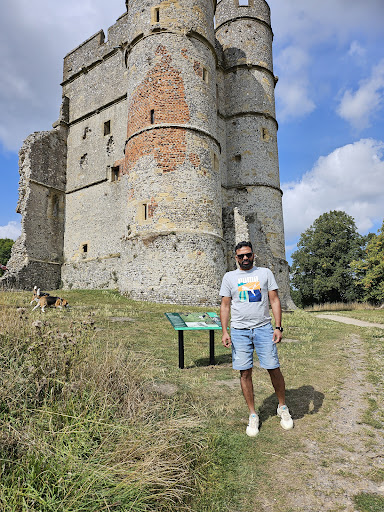
The imposing gatehouse of Donnington Castle

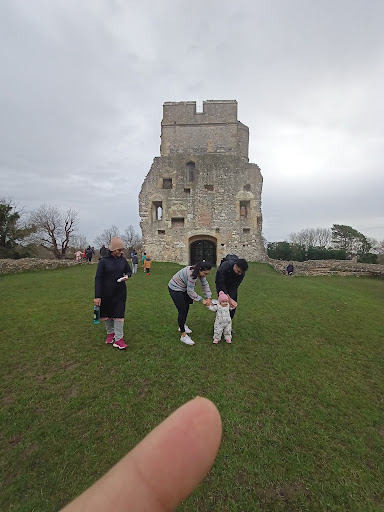
The manor of Donnington was held by the Abberbury family from 1287, and in 1386 Sir Richard Abberbury was granted a licence ‘to crenellate and fortify a castle at Donyngton, Berks’ by Richard II. Sir Richard had been a companion of Richard II’s father, Edward the Black Prince, at the battles of Crécy and Poitiers. The castle consisted originally of a curtain wall with four round corner towers, two square wall towers and a substantial gatehouse, constructed around a courtyard in the style typical of the fortified residences of the period. Accommodation was provided in the towers or in buildings within the courtyard, set against the castle walls. The courtyard buildings are likely to have been of timber construction and possibly included a hall, a kitchen and lodgings for guests. In the early 15th century the castle was held by Thomas Chaucer, son of the poet Geoffrey Chaucer, and later passed into the ownership of the Crown. Henry VIII is reported to have stayed here in 1539 and Elizabeth I in 1568.

THE ENGLISH CIVIL WAR

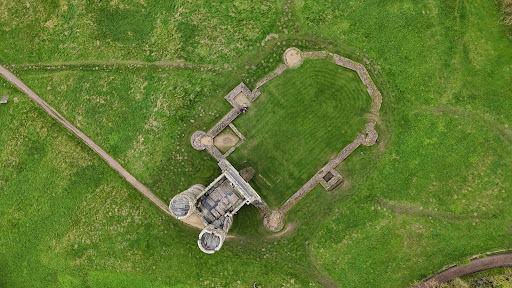
During the Civil War Charles I set up his headquarters in Oxford and in 1643 dispatched Sir John Boys, with 200 foot soldiers, 25 cavalry and sufficient cannon to resist a siege, to take possession of Donnington from the Parliamentarian John Packer. Having taken the castle, Boys built defences around the lower slopes of the hill in the shape of a star, the projections providing sites for gun emplacements that gave a good field of fire. Between 1644 and 1646 the castle was attacked many times, twice being relieved by the king in person. Only when the Royalist cause appeared hopeless did Boys surrender to the Parliamentarian troops, after first obtaining the king’s permission to do so. Parliament voted to demolish the badly damaged castle in 1646 and only the gatehouse was left standing. This was restored to John Packer. The building passed to the guardianship of the state in 1946.


The rear of the castle's gatehouse, with fireplaces and doorways indicating floor levels

DESCRIPTION

The gatehouse, which is two storeys high and is roofed at battlement level, survives well. It serves as evidence for the luxury and privacy enjoyed by Sir Richard Abberbury, whose private quarters would have been situated within this part of the castle. The gate passage has a finely vaulted ceiling, while elegant stone string courses with carved gargoyles decorate the outside. At the rear of the gatehouse the fireplaces and doors indicate the floor levels. Patches of brickwork show where the gatehouse was damaged during the Civil War sieges. The external walls of the castle have been rebuilt to a height of 0.5 metres (2 feet) and indicate its original layout. The Civil War defences survive as a series of scarps and platforms around the slopes...

   Read more
avatar
5.0
1y

Donnington Castle, a site steeped in history, stands as a prominent example of medieval architecture and the enduring legacy of England's storied past. Perched on a hill overlooking the Lambourn Valley in Berkshire, the castle's origins trace back to the 14th century when Sir Richard Abberbury the Elder was granted permission by King Richard II to fortify his existing manor house.

The resulting structure, completed around 1386, was designed not only as a residence but also as a statement of wealth and power. Its most distinctive feature, a striking gatehouse, is flanked by two towers and adorned with decorative stonework, reflecting the grandeur of its time. The castle's strategic location allowed it to play a significant role during the English Civil War, where it witnessed a prolonged siege that ultimately led to its partial destruction.

Despite the ravages of time and conflict, Donnington Castle's gatehouse remains largely intact, inviting visitors to ponder the lives of those who once walked its halls. The surrounding earthworks and fragmented walls hint at the castle's former expanse, offering a glimpse into the medieval defensive strategies employed to protect its inhabitants.

Today, Donnington Castle is a cherished historical landmark, managed by English Heritage. It serves as a tangible connection to the past, allowing individuals to explore and appreciate the rich tapestry of English history. The castle's enduring presence continues to captivate the imagination, inspiring tales of knights, nobility, and the tumultuous events that shaped the nation.

As a silent guardian of history, Donnington Castle offers a serene retreat from the modern world. Its tranquil setting amidst rolling hills and verdant countryside provides a picturesque backdrop for those seeking to escape the hustle and bustle of contemporary life. Whether one is a history enthusiast, a casual visitor, or simply in search of a peaceful moment, Donnington Castle stands as a testament to the enduring allure of England's...

   Read more
avatar
5.0
3y

The manor of Donnington was held by the Abberbury family from 1287, and in 1386 Sir Richard Abberbury was granted a licence ‘to crenellate and fortify a castle at Donyngton, Berks’ by Richard II. Sir Richard had been a companion of Richard II’s father, Edward the Black Prince, at the battles of Crécy and Poitiers.

The castle consisted originally of a curtain wall with four round corner towers, two square wall towers and a substantial gatehouse, constructed around a courtyard in the style typical of the fortified residences of the period.

Accommodation was provided in the towers or in buildings within the courtyard, set against the castle walls. The courtyard buildings are likely to have been of timber construction and possibly included a hall, a kitchen and lodgings for guests.

In the early 15th century the castle was held by Thomas Chaucer, son of the poet Geoffrey Chaucer, and later passed into the ownership of the Crown. Henry VIII is reported to have stayed here in 1539 and Elizabeth I in 1568.

THE ENGLISH CIVIL WAR

During the Civil War Charles I set up his headquarters in Oxford and in 1643 dispatched Sir John Boys, with 200 foot soldiers, 25 cavalry and sufficient cannon to resist a siege, to take possession of Donnington from the Parliamentarian John Packer.

Having taken the castle, Boys built defences around the lower slopes of the hill in the shape of a star, the projections providing sites for gun emplacements that gave a good field of fire.

Between 1644 and 1646 the castle was attacked many times, twice being relieved by the king in person. Only when the Royalist cause appeared hopeless did Boys surrender to the Parliamentarian troops, after first obtaining the king’s permission to do so.

Parliament voted to demolish the badly damaged castle in 1646 and only the gatehouse was left standing. This was restored to John Packer.

The building passed to the guardianship of the...

   Read more
Page 1 of 7
Previous
Next

Posts

Chris GledhillChris Gledhill
Donnington Castle, a site steeped in history, stands as a prominent example of medieval architecture and the enduring legacy of England's storied past. Perched on a hill overlooking the Lambourn Valley in Berkshire, the castle's origins trace back to the 14th century when Sir Richard Abberbury the Elder was granted permission by King Richard II to fortify his existing manor house. The resulting structure, completed around 1386, was designed not only as a residence but also as a statement of wealth and power. Its most distinctive feature, a striking gatehouse, is flanked by two towers and adorned with decorative stonework, reflecting the grandeur of its time. The castle's strategic location allowed it to play a significant role during the English Civil War, where it witnessed a prolonged siege that ultimately led to its partial destruction. Despite the ravages of time and conflict, Donnington Castle's gatehouse remains largely intact, inviting visitors to ponder the lives of those who once walked its halls. The surrounding earthworks and fragmented walls hint at the castle's former expanse, offering a glimpse into the medieval defensive strategies employed to protect its inhabitants. Today, Donnington Castle is a cherished historical landmark, managed by English Heritage. It serves as a tangible connection to the past, allowing individuals to explore and appreciate the rich tapestry of English history. The castle's enduring presence continues to captivate the imagination, inspiring tales of knights, nobility, and the tumultuous events that shaped the nation. As a silent guardian of history, Donnington Castle offers a serene retreat from the modern world. Its tranquil setting amidst rolling hills and verdant countryside provides a picturesque backdrop for those seeking to escape the hustle and bustle of contemporary life. Whether one is a history enthusiast, a casual visitor, or simply in search of a peaceful moment, Donnington Castle stands as a testament to the enduring allure of England's historical heritage.
Satish Kumar SinghSatish Kumar Singh
The manor of Donnington was held by the Abberbury family from 1287, and in 1386 Sir Richard Abberbury was granted a licence ‘to crenellate and fortify a castle at Donyngton, Berks’ by Richard II. Sir Richard had been a companion of Richard II’s father, Edward the Black Prince, at the battles of Crécy and Poitiers. The castle consisted originally of a curtain wall with four round corner towers, two square wall towers and a substantial gatehouse, constructed around a courtyard in the style typical of the fortified residences of the period. Accommodation was provided in the towers or in buildings within the courtyard, set against the castle walls. The courtyard buildings are likely to have been of timber construction and possibly included a hall, a kitchen and lodgings for guests. In the early 15th century the castle was held by Thomas Chaucer, son of the poet Geoffrey Chaucer, and later passed into the ownership of the Crown. Henry VIII is reported to have stayed here in 1539 and Elizabeth I in 1568. THE ENGLISH CIVIL WAR During the Civil War Charles I set up his headquarters in Oxford and in 1643 dispatched Sir John Boys, with 200 foot soldiers, 25 cavalry and sufficient cannon to resist a siege, to take possession of Donnington from the Parliamentarian John Packer. Having taken the castle, Boys built defences around the lower slopes of the hill in the shape of a star, the projections providing sites for gun emplacements that gave a good field of fire. Between 1644 and 1646 the castle was attacked many times, twice being relieved by the king in person. Only when the Royalist cause appeared hopeless did Boys surrender to the Parliamentarian troops, after first obtaining the king’s permission to do so. Parliament voted to demolish the badly damaged castle in 1646 and only the gatehouse was left standing. This was restored to John Packer. The building passed to the guardianship of the state in 1946.
Ian ScottIan Scott
This is a great place to visit and it is very well maintained by English Heritage. There is a free car park and admission is also free. You can spend half an hour or so wandering round the site, taking photographs. But, there are also walking routes leading off into the Berkshire countryside. Donnington Castle has a very interesting history. It was built in 1386.In the early 15th century the castle was held by Thomas Chaucer, son of the poet Geoffrey Chaucer, and later passed into the ownership of the Crown. Henry VIII is reported to have stayed here in 1539 and Elizabeth I in 1568. Between 1644 and 1646 the castle was attacked many times, twice being relieved by the king in person. Only when the Royalist cause appeared hopeless did they surrender to the Parliamentarian troops. Parliament voted to demolish the badly damaged castle in 1646 and only the gatehouse was left intact, although there are also sections of wall still visible.
See more posts
See more posts
hotel
Find your stay

Pet-friendly Hotels in Shaw cum Donnington

Find a cozy hotel nearby and make it a full experience.

Donnington Castle, a site steeped in history, stands as a prominent example of medieval architecture and the enduring legacy of England's storied past. Perched on a hill overlooking the Lambourn Valley in Berkshire, the castle's origins trace back to the 14th century when Sir Richard Abberbury the Elder was granted permission by King Richard II to fortify his existing manor house. The resulting structure, completed around 1386, was designed not only as a residence but also as a statement of wealth and power. Its most distinctive feature, a striking gatehouse, is flanked by two towers and adorned with decorative stonework, reflecting the grandeur of its time. The castle's strategic location allowed it to play a significant role during the English Civil War, where it witnessed a prolonged siege that ultimately led to its partial destruction. Despite the ravages of time and conflict, Donnington Castle's gatehouse remains largely intact, inviting visitors to ponder the lives of those who once walked its halls. The surrounding earthworks and fragmented walls hint at the castle's former expanse, offering a glimpse into the medieval defensive strategies employed to protect its inhabitants. Today, Donnington Castle is a cherished historical landmark, managed by English Heritage. It serves as a tangible connection to the past, allowing individuals to explore and appreciate the rich tapestry of English history. The castle's enduring presence continues to captivate the imagination, inspiring tales of knights, nobility, and the tumultuous events that shaped the nation. As a silent guardian of history, Donnington Castle offers a serene retreat from the modern world. Its tranquil setting amidst rolling hills and verdant countryside provides a picturesque backdrop for those seeking to escape the hustle and bustle of contemporary life. Whether one is a history enthusiast, a casual visitor, or simply in search of a peaceful moment, Donnington Castle stands as a testament to the enduring allure of England's historical heritage.
Chris Gledhill

Chris Gledhill

hotel
Find your stay

Affordable Hotels in Shaw cum Donnington

Find a cozy hotel nearby and make it a full experience.

Get the Appoverlay
Get the AppOne tap to find yournext favorite spots!
The manor of Donnington was held by the Abberbury family from 1287, and in 1386 Sir Richard Abberbury was granted a licence ‘to crenellate and fortify a castle at Donyngton, Berks’ by Richard II. Sir Richard had been a companion of Richard II’s father, Edward the Black Prince, at the battles of Crécy and Poitiers. The castle consisted originally of a curtain wall with four round corner towers, two square wall towers and a substantial gatehouse, constructed around a courtyard in the style typical of the fortified residences of the period. Accommodation was provided in the towers or in buildings within the courtyard, set against the castle walls. The courtyard buildings are likely to have been of timber construction and possibly included a hall, a kitchen and lodgings for guests. In the early 15th century the castle was held by Thomas Chaucer, son of the poet Geoffrey Chaucer, and later passed into the ownership of the Crown. Henry VIII is reported to have stayed here in 1539 and Elizabeth I in 1568. THE ENGLISH CIVIL WAR During the Civil War Charles I set up his headquarters in Oxford and in 1643 dispatched Sir John Boys, with 200 foot soldiers, 25 cavalry and sufficient cannon to resist a siege, to take possession of Donnington from the Parliamentarian John Packer. Having taken the castle, Boys built defences around the lower slopes of the hill in the shape of a star, the projections providing sites for gun emplacements that gave a good field of fire. Between 1644 and 1646 the castle was attacked many times, twice being relieved by the king in person. Only when the Royalist cause appeared hopeless did Boys surrender to the Parliamentarian troops, after first obtaining the king’s permission to do so. Parliament voted to demolish the badly damaged castle in 1646 and only the gatehouse was left standing. This was restored to John Packer. The building passed to the guardianship of the state in 1946.
Satish Kumar Singh

Satish Kumar Singh

hotel
Find your stay

The Coolest Hotels You Haven't Heard Of (Yet)

Find a cozy hotel nearby and make it a full experience.

hotel
Find your stay

Trending Stays Worth the Hype in Shaw cum Donnington

Find a cozy hotel nearby and make it a full experience.

This is a great place to visit and it is very well maintained by English Heritage. There is a free car park and admission is also free. You can spend half an hour or so wandering round the site, taking photographs. But, there are also walking routes leading off into the Berkshire countryside. Donnington Castle has a very interesting history. It was built in 1386.In the early 15th century the castle was held by Thomas Chaucer, son of the poet Geoffrey Chaucer, and later passed into the ownership of the Crown. Henry VIII is reported to have stayed here in 1539 and Elizabeth I in 1568. Between 1644 and 1646 the castle was attacked many times, twice being relieved by the king in person. Only when the Royalist cause appeared hopeless did they surrender to the Parliamentarian troops. Parliament voted to demolish the badly damaged castle in 1646 and only the gatehouse was left intact, although there are also sections of wall still visible.
Ian Scott

Ian Scott

See more posts
See more posts