Nestled in the Suffolk countryside, Ickworth House offers visitors a captivating journey into the grandeur of the Georgian era. While many flock to admire its unique Rotunda and beautifully landscaped gardens, there are hidden aspects of this National Trust property that make it truly remarkable.
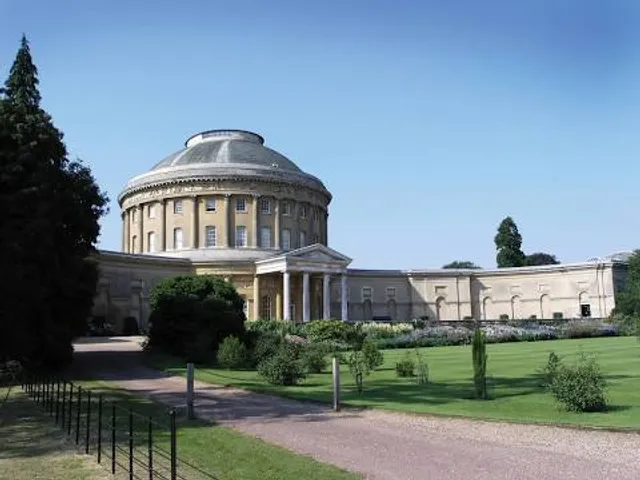
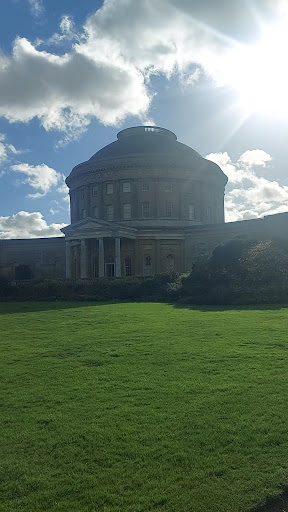
The Architectural Marvel: The centerpiece of Ickworth is its stunning Rotunda, a design rarely seen in English country houses. Built between 1795 and 1829, it was the brainchild of the eccentric 4th Earl of Bristol, Frederick Hervey, who wanted to create an Italian-inspired palace in the heart of Suffolk. What many may not know is that the Rotunda was originally intended to be the main gallery of a much larger complex. Financial constraints and the Earl’s death meant the ambitious plans were scaled down, leaving the Rotunda as the focal point. This design choice lends Ickworth a unique blend of grandeur and intimacy.
The Hervey Family Legacy: Ickworth House is steeped in the rich history of the Hervey family, known for their flamboyant personalities. The 4th Earl, also known as the "Earl-Bishop," was not only a patron of the arts but also a passionate traveler. He filled the house with treasures from across Europe, many of which can still be seen today. However, few know that some of the art and artifacts in Ickworth were acquired under controversial circumstances. The Earl-Bishop had a habit of "borrowing" items from churches and religious institutions during his travels in Italy – a fact that gives an intriguing twist to the house’s collection.
Hidden Rooms and Secretive Stories: Visitors often marvel at the grand rooms on public display, but there are secret areas within the house that few ever see. For example, there is a concealed spiral staircase within the Rotunda, once used by servants to move discreetly between floors. Additionally, the house is rumored to have hidden passageways, though they remain unconfirmed. This air of mystery adds to the allure of Ickworth, making it a perfect spot for those fascinated by history and intrigue.
The Italian Connection: While many visitors appreciate the Italianate garden for its symmetry and beauty, fewer people know that the gardens were directly inspired by the Villa Borghese in Rome. The Earl-Bishop sought to recreate the grandeur of Italy in Suffolk, and even imported Italian cypress trees to complete the illusion. Today, strolling through the gardens feels like stepping into a slice of Tuscany – a testament to the Earl’s vision.
A Survivor of Change: Ickworth has seen numerous changes throughout its history, particularly during World War II. The house was requisitioned by the British government and served as a hospital for wounded soldiers. After the war, the house fell into disrepair, and by the 1950s, parts of it were almost derelict. The National Trust's acquisition in 1956 marked a turning point, leading to the extensive restorations that have preserved Ickworth for future generations. Yet, many visitors remain unaware of how close this architectural gem came to being lost forever.
A Ghostly Presence? Finally, Ickworth House is said to be haunted by several spirits. The most famous is that of Lady Theodosia, the sister of the 1st Marquess of Bristol, who is believed to roam the halls in search of peace. Although the ghost stories may be dismissed by skeptics, the eerie atmosphere in certain parts of the house, especially during quieter moments, is undeniable. It’s an aspect that adds a thrilling dimension to any visit.
Conclusion: Ickworth House is more than just an architectural masterpiece; it’s a treasure trove of history, mystery, and untold stories. For those willing to look beyond the surface, there’s a wealth of secrets waiting to be discovered. Whether you're an art lover, a history buff, or simply someone seeking a day out in picturesque surroundings, Ickworth offers a unique and unforgettable experience. Don't just visit for the Rotunda – explore its hidden depths, and you'll leave with tales that few...
Read moreThe UK is full of amazing places full of tremendous history, art and beauty! But a few really take my breath away as Ickworth did. My visit was a random choice - I picked it because it was the closest to where we were staying at the time, and seemed ok from the photos on Google. But what an amazing surprise Ickworth was when we saw it in its true glory, size and magnitude! Photos don’t do it justice. Even the rainy weather couldn’t change the feeling of awesomeness. On the way to the main building one can’t help it but admire the size of the front opening - the smell of horses evokes the feeling that this space could easily be used for horse races and shows. And then the actual building! At the time it was owned privately by the few Marquis and Marquises of Bristol, this building was intended to house the many works of arts the first owner bought legitimately from Italy. It was intended to be the first ever museum in England, before even V&A existed. Its enormity and ambitious outreach and design are hard to grasp: at the start of its life this building was really a private house for a family of 6 and 48 servants. It’s so huge that the family who owned it lived only in one of the wings using a few of the rooms. Why some of the art bought in Italy did not make it to England and to Ickworth is part of the fascinating story behind this wonderful place. Definitely worth a visit as is part of the English heritage. Some rooms contain art paintings worth millions - by Titian, Durer, Reynolds, etc. A Clementi designed fortepiano is also exhibited - a true priceless work of art. Beautiful libraries. Elegant bespoke furniture and furnishing. Paintings, statues, marble busts, priceless china - it is a miniature V&A museum! Downstairs is also worth a visit - while the master family of 6 had more then a palace to live in upstairs, the 46 servants had to share the bottom floor where everything else was housed - all the machinery and coal to fire the gigantic boiler, the massive kitchens, the boot rooms, the silver-polishing rooms, the coal storage lean-to-s, etc. Another very important point is - if you visit, please talk to the ushers in each room! They are all like mini encyclopaedias and their knowledge is just vast! One can learn a massive amount about the history of the place just by asking and then letting them talk. Now-a-days Ickworth is owned by the National trust which are doing an amazing job preserving it, maintaining it and making it accessible to the wider public. The lovely cafe with a garden terrace also is worth a visit. The gardens are also excellent, and enormous - as is the whole...
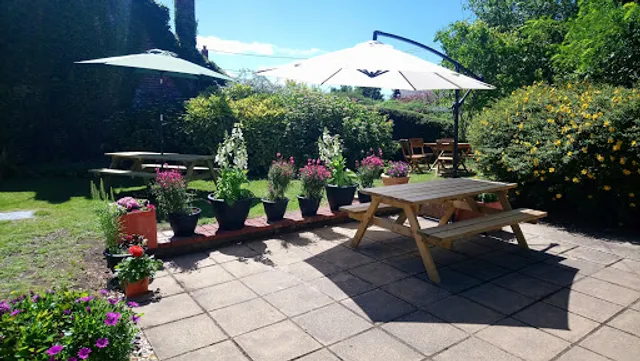
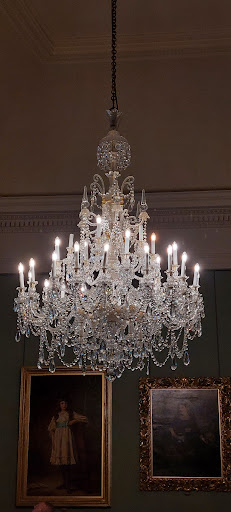
Read moreIckworth in Suffolk was the home of the Hervey family for around 500 years until it passed to the National Trust in the 1950's. The house with it's rotunda was built in 1779. The house has many Italian influences and is filled with art works including some huge paintings and an amazing collection of silverware. It also has some very impressive chandeliers. Downstairs you can see the servants area which is vast and gives a great insight into their lives and how different it was from life upstairs. Outside the Italianate gardens are very beautiful and from the back you can see for miles across the Suffolk countryside. At the rear of the garden a wooden area contains a gothic style stumpery that is definitely worth a visit. The wider estate has numerous hiking trails to enjoy. Ickworth is off the beaten track so when you're on one of the walks all you can hear is the sound of nature. There is a lake and at another point a river. You can see the estate church which dates back hundreds of years and is where many of Ickworth's former owners are laid to rest. Facilities include 2 cafes with lovely outside seating areas,a shop plus a plant shop at the welcome point,second hand bookshop and there are toilet facilities. There is plenty of free parking on site You can hire a bicycle but this is not currently open ( March 2025 ) There is a picnic area. Dogs are permitted in the outer areas but on leads in areas where there are livestock. They are not permitted in the Italianate gardens or the house. There are electric buggies available for disabled visitors but these must be pre-booked. The house has a lift to all floors, level access at The Porters cafe and some of the walks are suitable too! There is also a shuttle service available from the welcome point to the house. Part of the house is a luxury hotel. It's not National Trust but visitors are able to enter and enjoy coffee and cake,afternoon tea and even spa treatments. Entry to the rotunda part of the house and the wider estate is free to National trust members. NT membership is from £8 per month for an adult and gives access to over 500 destinations in England,Wales and...
Read more