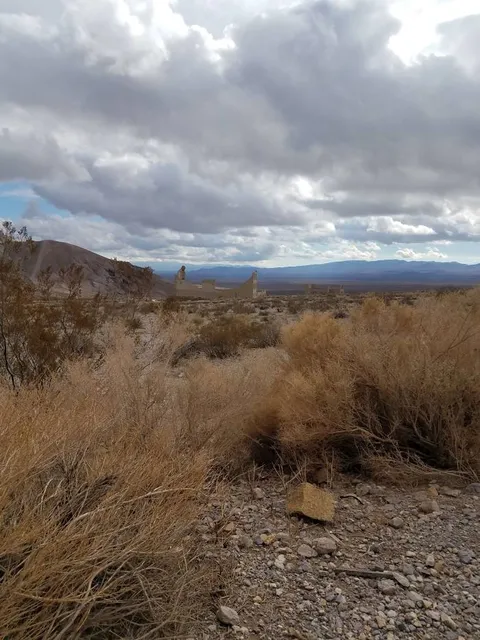
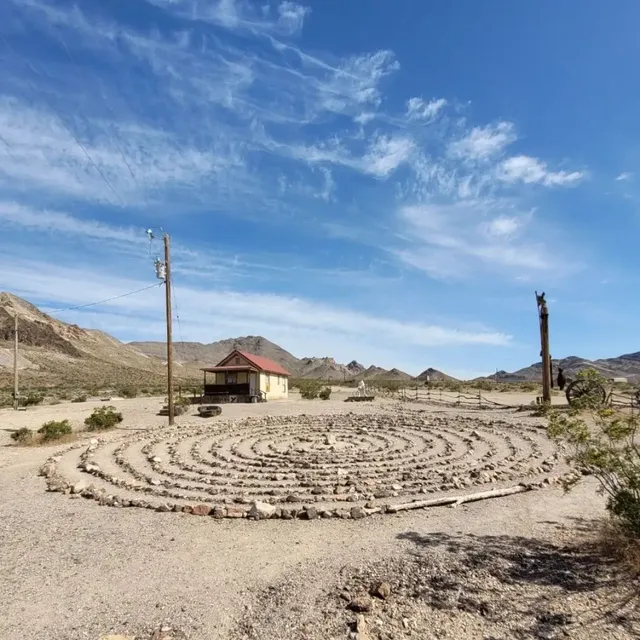
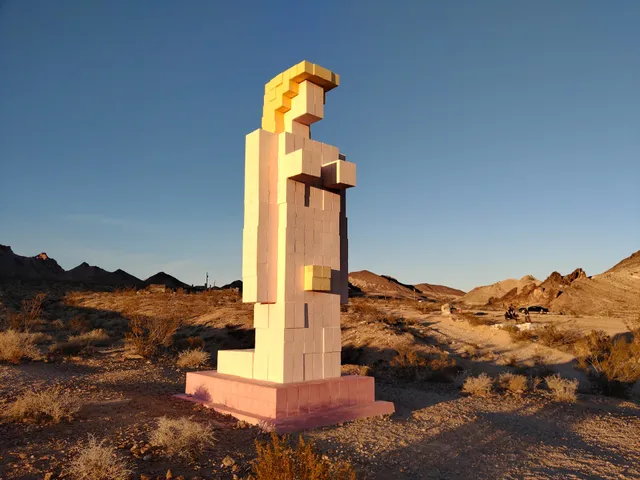
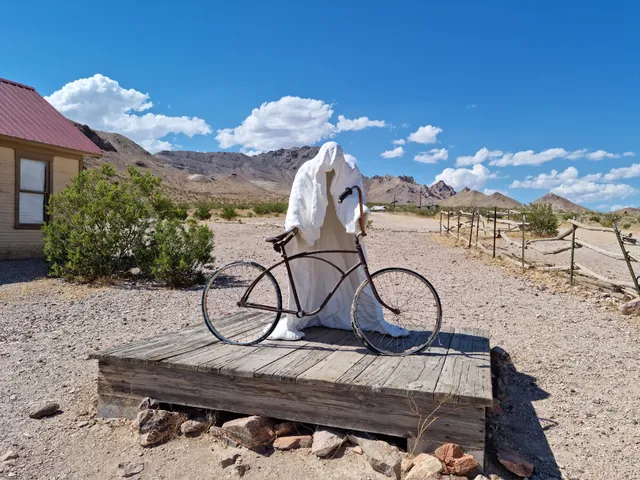
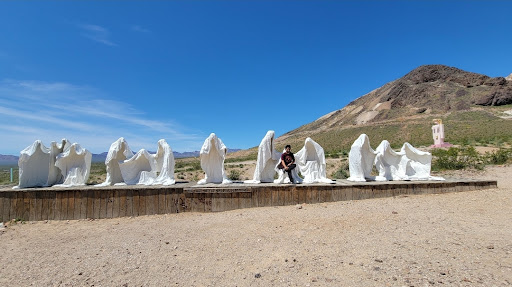
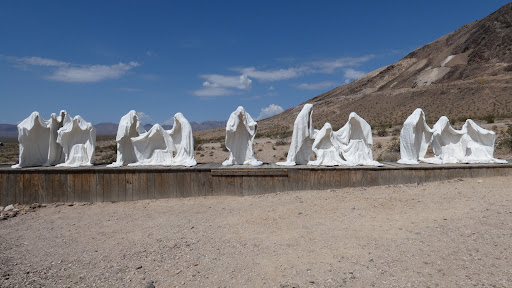
Driving Highway 374 through Nevada's Amargosa Valley, you pass the kind of stark desert landscape that makes cell service disappear and existential thoughts multiply. Most travelers here are heading to Death Valley, but seven miles south of Beatty sits something that will stop you dead: twelve life-sized plaster ghosts arranged on a wooden platform, recreating Leonardo's Last Supper in the middle of nowhere.
This is what great art does: it ambushes you when you least expect it, in places you never planned to go, and changes something fundamental about how you see the world. Albert Szukalski's desert masterpiece shouldn't work. It's Leonardo's most reproduced image reimagined as hollow fabric shells in the Mojave. It sounds like bad art school appropriation that would make you roll your eyes in Chelsea. But standing here, watching these ghostly apostles catch late afternoon light, I understand Szukalski achieved something Leonardo never could: he made the Last Supper about death instead of life, absence instead of presence, and somehow it's more spiritually moving than any church I've ever entered.
The backstory is pure American weird: Belgian sculptor shows up in 1984, recruits locals to pose draped in plaster-soaked burlap, then has them slip out like spiritual molting. What remains are twelve shrouds arranged exactly as Leonardo positioned his apostles, but empty. Completely, devastatingly empty.
Where Leonardo painted the moment of betrayal announcement, Szukalski created the aftermath of resurrection. These aren't living disciples hearing Christ's prophecy; these are abandoned garments left behind after rapture, or death, or whatever metaphysical event you project onto them.
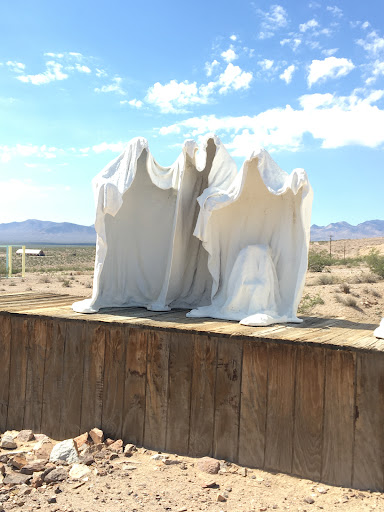
Forty years of desert wind have abraded these figures into archaeological artifacts from a civilization that worshipped differently than we do. The plaster is cracked, stained, weathered. The installation feels simultaneously permanent and fragile.
And the context—Jesus Christ, the context. This isn't pristine museum space with perfect lighting. This is raw Nevada desert, with power lines and Joshua trees and mountains that make you cosmically insignificant. The wooden platform becomes wilderness altar, and vast emptiness transforms into sacred space.
The art world mostly ignores this place. No major museum will acquire it; no blue-chip gallery represents Szukalski's estate. It exists outside validation systems, funded by volunteers and small grants, visited by Death Valley tourists who stumble across transcendence.
Maybe that's exactly how it should be. Standing here as sunset makes these white figures glow against purple mountains, we are reminded why we become critics: to find moments when human creativity intersects with something larger than itself.
Sometimes the most profound religious art exists miles from any church, maintained by people who simply believe it matters. In our digital age, Szukalski's Last Supper insists on physical presence, on making the journey, on standing in actual space with actual objects under an actual sky. It's everything our virtual world is trying to replace, and everything we'll lose...
Read more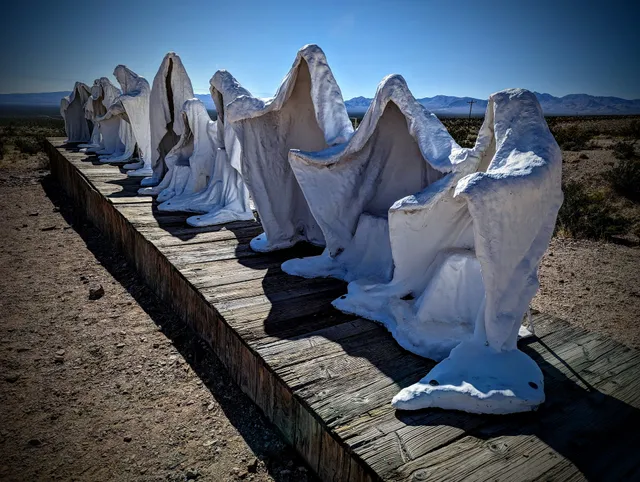
 Learn more insights from Wanderboat AI.