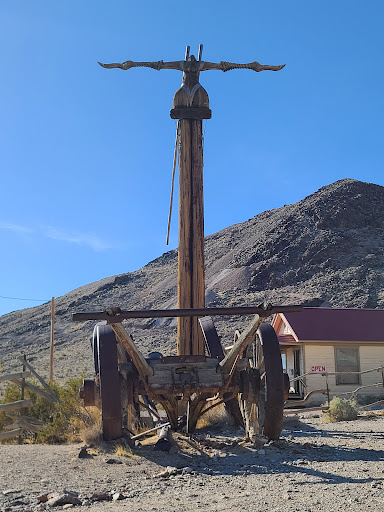
A Road Trip to Rhyolite, a Ghost Town in Death Valley
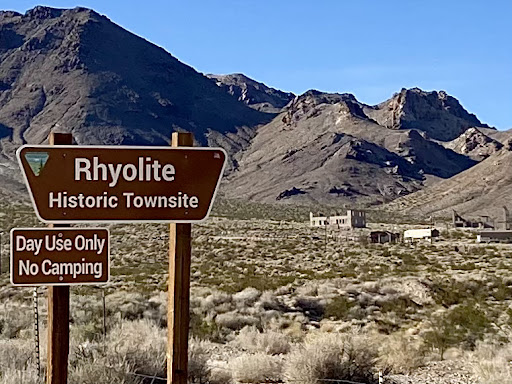
In 2016, I took my mom on a road trip through Death Valley National Park. We spent a week exploring the park's many corners, and one of our favorite stops was the ghost town of Rhyolite.
Rhyolite was a gold boomtown that sprang to life in 1905 after prospectors discovered gold ore in the area. At its peak, Rhyolite had a population of over 5,000 people and boasted electric lights, water mains, telephones, newspapers, a hospital, a school, an opera house, and a stock exchange.
However, the financial panic of 1907 caused the gold mines to close, and by 1916, Rhyolite was a ghost town.
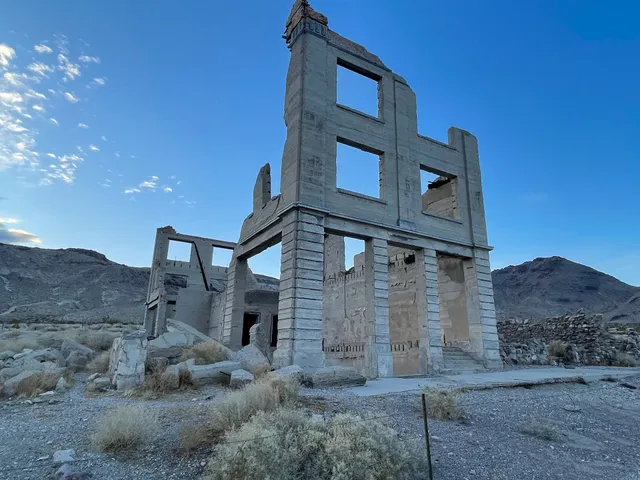
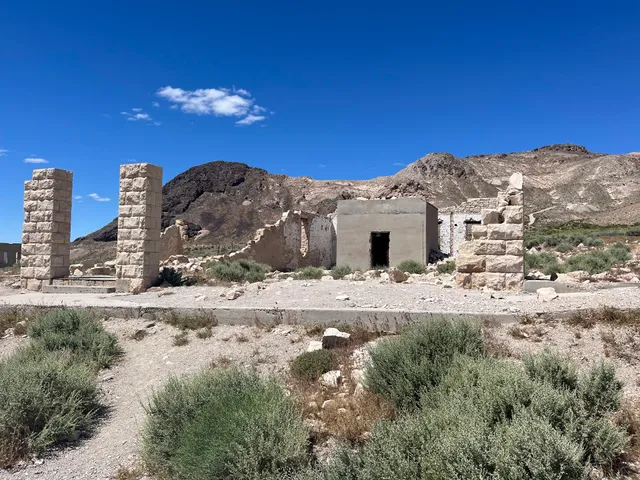
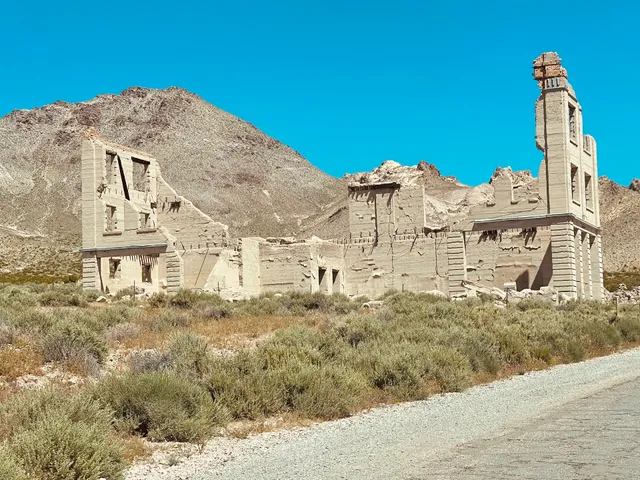
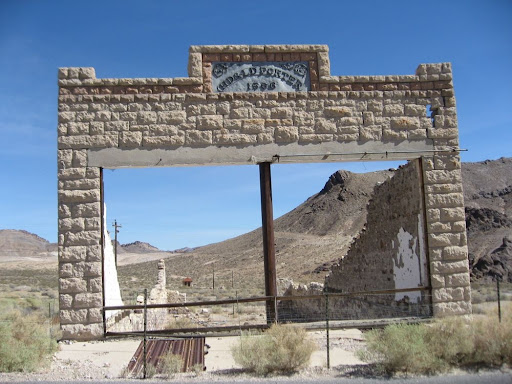
Today, Rhyolite is a popular tourist destination. Visitors can explore the ruins of the town's buildings, including the 3-story bank building, the old jail, and the train depot. The Bottle House, a house built out of thousands of glass bottles, is one of the most popular attractions in Rhyolite.
We enjoyed walking around Rhyolite and imagining what it would have been like to live there during its heyday. It was a fascinating look into the past.
I have visited Rhyolite a few more times since then; the last time was only a few weeks ago, and I must admit that in the short seven years since my first visit, things have changed a lot, not necessarily for the better! If you have Rhyolite on your must-visit list, you better hurry up before things deteriorate even more and not...
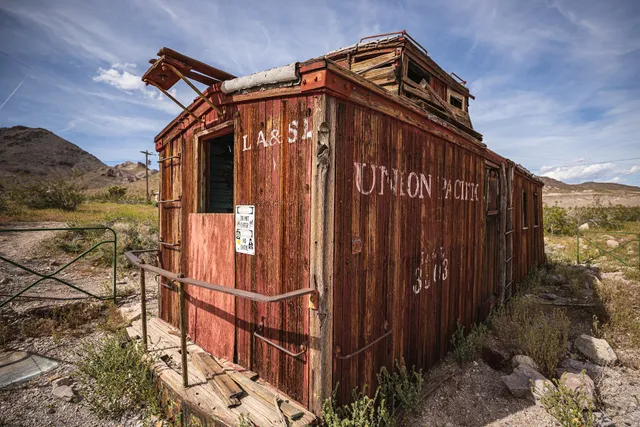
Read moreWHY VISIT? Without question, this area is one of the finest examples of a ghost town. A must-see, in my opinion. In a single 360 degree view, there are abandoned mines, an old train station, the ruins of main street businesses, an adjacent outdoor museum with the most random and eclectic works of art, and of course, the beautiful desert landscape. I would describe the atmosphere as hauntingly and enchantingly spectacular. I sat on the train station veranda and enjoyed a box lunch. I never wanted to leave. I appreciated the allowance to get up close and personal with each relic. Visitors are free to explore by walking in and around most structures. A few are fenced off, visitors can still get very close. There are information signs, with historic photos, through the area to help visitors understand the history of the town. Vault toilets are available
WHY NOT VISIT? It’s the desert. Obviously, be aware of the weather forecast in the hot months. (This is the only reason I can come up with–this historic area...
Read moreState historical marker inscription: In 1904 Frank “Shorty” Harris and Ed Cross found green-colored, high grade gold ore. The resulting gold rush created the Bullfrog District. Its premier community was Rhyolite. Platted in 1905, it quickly grew into the largest city in southern Nevada. Eventually served by three water systems and three railroads, the Tonopah and Tidewater, the Bullfrog Goldfield, and the Las Vegas & Tonopah - whose 1908 depot still stands - Rhyolite boomed. By 1907 it claimed a population of 6,000. With the economic collapse of 1907, and the closure of Charles Schwab's Montgomery Shoshone Mine in 1910, the town died. By 1920 only 14 residents remained. During its heyday, the lack of local timber supplies led to concrete and adobe being used for most buildings, though three buildings were built from empty bottles with one still standing today. The town's growth was fast, and its demise nearly as fast. Today, Rhyolite stands as a testament to the mining heritage of...
Read more