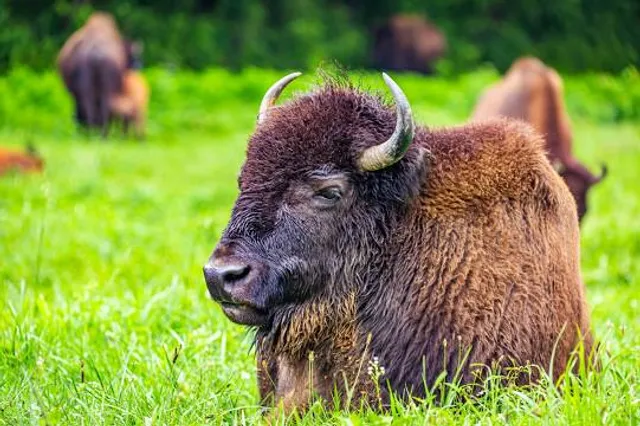
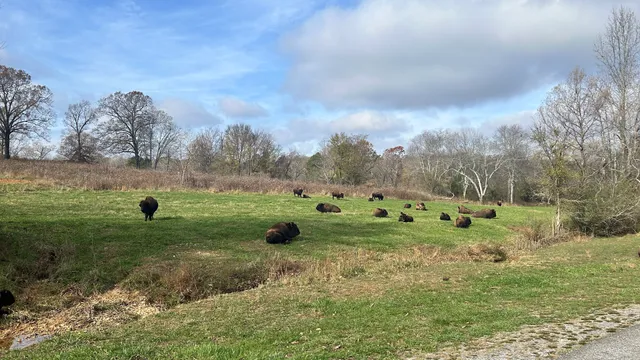
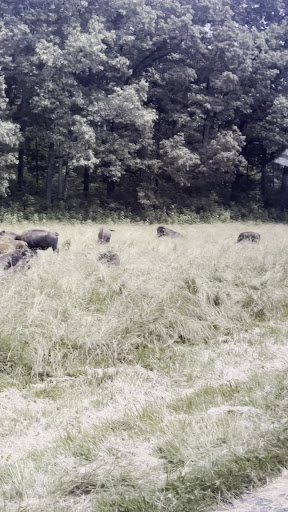
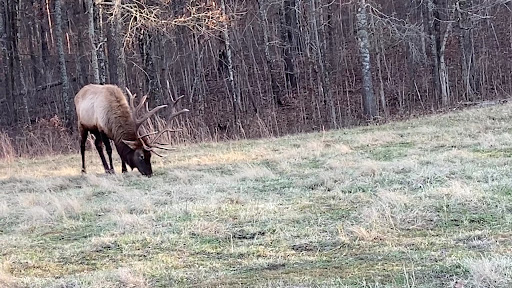
We went around twice and almost left without seeing anything but they popped out of the woods and said hi. Didn't see any elk. If you're reading this go around their feeding time To maximize your chances of seeing bison and elk at a reservation area, consider these factors: Best Time of Day: Early Morning (Dawn to Mid-Morning): This is generally the best time. Bison and elk are most active during these hours, moving from their night feeding areas to bedding down for the day. You'll often find them grazing in open areas. Late Afternoon/Dusk: As the day cools, they become active again, moving back to feeding grounds. This is another excellent time for sightings. Avoid Midday: During the hottest parts of the day, especially in summer, bison and elk tend to seek shade and rest, making them harder to spot. Best Season: The "best" season can depend on what you want to see, as each season offers unique opportunities: Spring (March - May/June): New Life: This is "baby season"! You'll see bison calves (often reddish in color) appearing in May, and elk calves in late May or June. They stay close to their mothers. Shedding Coats: Elk and bison shed their winter coats. Less Crowds: Generally fewer visitors than in summer. Summer (July - August): Abundant Life: Grasses and flowers are in full bloom, and many animals are active. Bison Rut (Mating Season): Typically from July to September. This is a dramatic time to witness bison bulls competing for mates, often engaging in impressive head-butting. Be extra cautious during this time as bulls can be aggressive. More Crowds: Summer is usually the busiest time for visitors. Fall (September - October): Elk Rut (Mating Season): This is a highlight! In September and October, you can hear the iconic "bugling" of bull elk as they call to mates and challenge rivals. They also rub the velvet from their antlers. Changing Colors: The fall foliage can be beautiful, providing a stunning backdrop. Less Crowds: Visitor numbers typically decrease after summer. Winter (November - February): Contrast: Large animals stand out against snowy landscapes. Concentration: In some areas, bison and elk may congregate in lower elevations where food is more accessible. Quiet: Fewer visitors, offering a more serene experience. Tips for Viewing: Go Slow: Drive slowly and be patient. Bring Binoculars: These are invaluable for observing animals from a safe distance. Stay in Your Vehicle: Especially with bison, maintain a safe distance. They are wild and unpredictable. Respect Wildlife: Do not approach or harass...
Read moreThe Elk and Bison Prairie spans 700-acres of lush, native grasslands that have been enclosed to conserve a natural habitat for the elk and bison that had once disappeared from this region. A 3.5-mile road loops through the prairie, allowing you and your family to view all sorts of wildlife, including turkeys, various species of birds, small game and a number of prairie mammals.
Best Times to View the Wildlife The sights and sounds of the Elk and Bison Prairie change from season to season, so you'll want to take your family multiple times throughout the year.
Spring:In the spring, new life buds across the meadows. The elk and bison shed their winter coats, and in May, you'll find new bison calves huddling close to their mothers.
Summer:In the summer, the grass and flowers grow and the animals flourish. The elk and bison are the most active during the day, so consider visiting in the early morning and late afternoon in order to take in the best views of the animals in their natural surroundings. (A note of caution: Breeding season runs from July to September. Bison bulls can be especially aggressive during this time.)
Fall & Winter:As the leaves change in the fall, the elk begin to "bugle," calling for their mates. By winter, the large prairie animals have grown their thick winter coats once again. And, the cycle...
Read moreI enjoyed being surrounded by the bison while in my auto. However, many of them have really big sores and open wounds on their backs. I assume it is from scratching with their horns, I don't know. I know they are wild, but they are in a sanctuary, so i hope that the oozing sores are getting treatment. I also saw a bunch of turkey. Hens with babies! The roads are good and well maintained. The cost to drive thru is 5 dollars per vehicle, that you stick in a machine. No worker was collecting all automated. You put your money in, and then the gate will open, and you pull thru and then you pull thru one more gate. There are a couple of places to pull off the road and get out to read the info boards. It's a pretty cool place. I give it a 4 only because of the sores on a lot of the backs of the Bison. They is no playground and no restrooms that I seen . The animals roam free so if you do get out of your car you need to be...
Read more