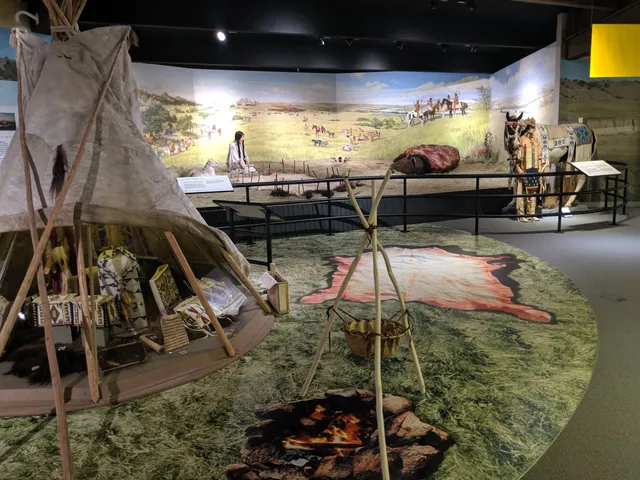
Very interesting and informative. Learned a lot about how the Native Americans lived using stone, wood, bone, horns, and other animal parts ( such as buffalo stomachs or bladders to hold water) to fabricate tools and utensils for use in their lives.
Interesting aspects of the daily lives of men, women, and children are covered, including the division of labor, play, toys, etc. Displays and videos explain the culture, spirituality, respect for elders, and many other things of their society. There was a short movie (located after the displays I've mentioned) which shows the actual use of the tools, the erection of a T-Pi, hunting, etc..
Displays also cover the introduction of steel tools and other trade items from the American settlers, the taking of the the land and forced settlement on reservations, and battles between the Native Americans and. US soldiers ( including the massacre of Native Americans).
Native American artwork is displayed from different eras.
The museum is free (donations excepted). We spent two hours there and could have spent longer).
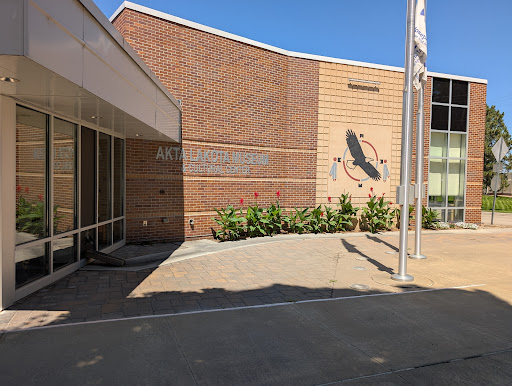
The museum is located on the grounds of a large school for Indian children ( which has dormitories and other living facilities). There is a separate section of the museum which covers the history and development of the school in the early 1900s, the poverty and lack of opportunities the children had, etc. It was also...
Read moreNot many Lakota Cultural centers in South Dakota. This is also an on campus and off campus boarding school that seems to address the cruel history of Catholic (and Protestant) boarding schools in the United and showcases the many positive changes over the years while also leaving one with questions. There are no Lakota elders on the board for the school or museum as I understand it but there is a Lakota parental advisory board. There's the beautiful and thought - provoking works of art in the museum and artifacts from the history of the Lakota people, another section devoted to the history of the school, two gift shops and a meditation garden in the back. To my mind there also ought to be more contemporary art and photography of the children in the current day and age. Lakota people, and all indigenous people of the United States, are still around, adapting and thriving and hanging on to their culture and way of life often against incredible challenges due to the United States government's forced removal of the tribes, breaking of treaties and " loosening the native bonds" of the indigenous population and the American government acting as if the relationship between the American and Native American tribes is like father and son.
I spent probably 4 hours there. Plan to spend at least one to two hours.
Free parking on site and no admission fee....
Read moreThis museum is community based, open to the public, and run by kind patrons. I visited here from Minnesota and accidentally planned my timing wrong so I arrived just 15 minutes before closing. The receptionist let me walk around and enjoy my time without pushing me-- I got out before close to be polite, but she was so kind ! The art, the dioramas, the display of culturally significant artefacts and relics, and the realistic portrayal of the (shamefully sad on the US side) relationship between the Lakota and US governments was wonderful. There's also a gift shop featuring handmade Lakota Art. I would completely recommend this place to a friend, family member, or stranger ! If you're driving near or through Chamberlain, be sure...
Read more