I am a travel writer and photographer for National Park Planner and I was at the Allegheny Portage Railroad National Historic Site in September 2014. The park is located near Cresson and Gallitzin, Pennsylvania. The park commemorates one of America’s early technological achievements. Faced with losing business to New York’s Erie Canal during the rush to move people and goods to the west, the state of Pennsylvania opted to build its own canal from Philadelphia to Pittsburgh. Only the Allegheny Mountains stood in the way.
The canal would be dug from two sides of the mountain, with the eastern leg running from Philadelphia to Hollidaysburg and the western leg running from Pittsburgh to Johnstown. The gap between the two ends of the canal presented the challenge of how to move canal boats over the mountain. The solution was to build a “railroad,” not a railroad in the traditional sense of the word, but an incline railroad powered by steam engines that could take a canal boat out of the water on one side of the canal, place it on a rail car, and through a series of short inclines, pull it up the mountain and lower it down the other side where it could be placed back into the canal so that it could finish its journey east or west across Pennsylvania.
Construction on the canals began in the late 1820s, with the incline railroad starting in 1831 and opening for business in 1834. The incline railroad remained functional until the early 1840s, when the state built tracks around the base of the mountains from one side of the canal to the other. This was called the “new” Portage Railroad and it eliminated the need for the inclines. Overall, the Portage Railroad, old and new, remained the quickest way to move people and cargo across Pennsylvania for 23 years until it was replaced by a traditional railroad that bypassed the need for the canal, carrying passengers and goods from Philadelphia to Pittsburgh entirely on rails beginning in 1857.
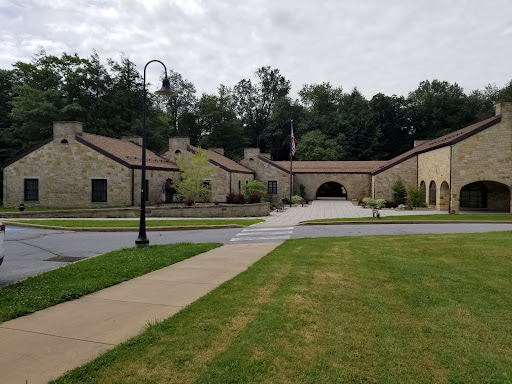
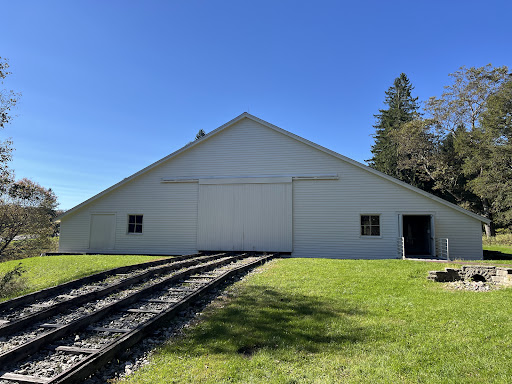
The portage railroad was dismantled once it went out of business and nothing is left except for a few permanent tunnels and the Lemon House, the home of Samuel Lemon, who also ran a tavern from the home. This is open to visitors for self-guided tours of the first floor. The National Park Service has also reconstructed Engine House 6 at its original location at the top of Incline 6 (also open to visitors). The engine house is a building typical of those that housed the stream engines and pulley system that hoisted the canal boats up and down the mountain. In addition, a Visitor Center is located a short walk from the Lemmon House and Engine House 6. It is here that you can get a better understanding of how the railroad worked through information panels, archival photos, and models.
There are also three trails in the park. The 8-mile long 6 To 10 Trail takes hikers from the sixth incline (at the Visitor Center) to the tenth incline (towards Hollidaysburg). At the end of the trail is the Foot of Ten Trail that takes hikers to the area where Engine House 10 once stood. In addition, visitors can drive 35 miles towards Johnstown to the Staple Bend Tunnel, the first railroad tunnel ever built in America. It is situated near the top of Incline 1. A two mile paved trail that can be biked or hiked takes visitors to the tunnel.
For complete information and plenty of photos of the park, visit National Park...
Read more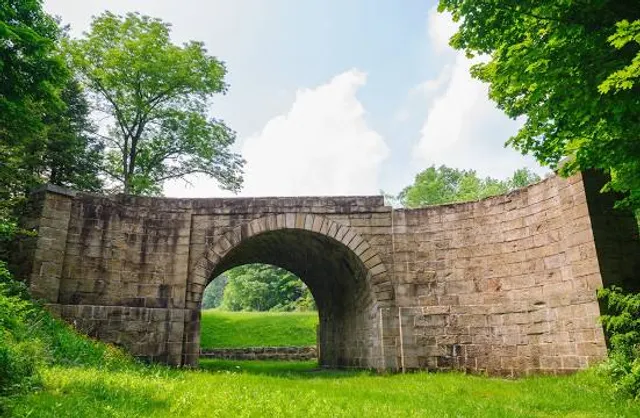

 Learn more insights from Wanderboat AI.