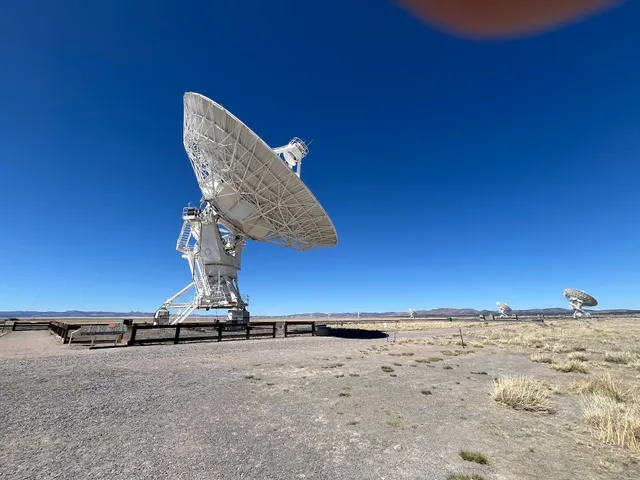
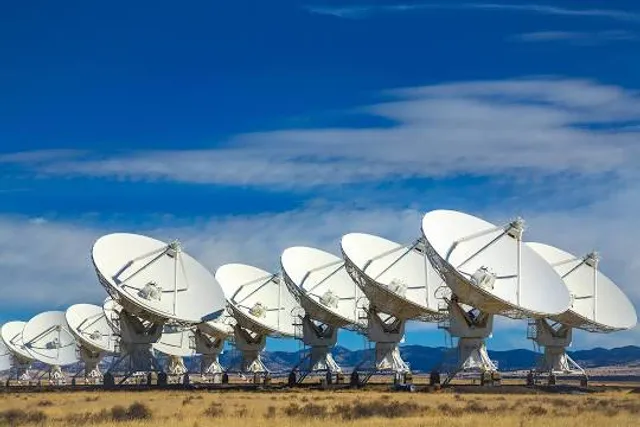
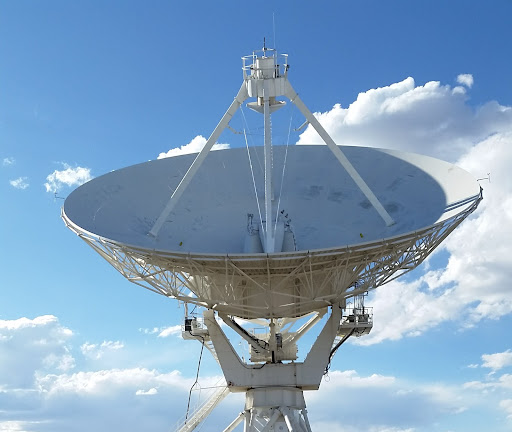
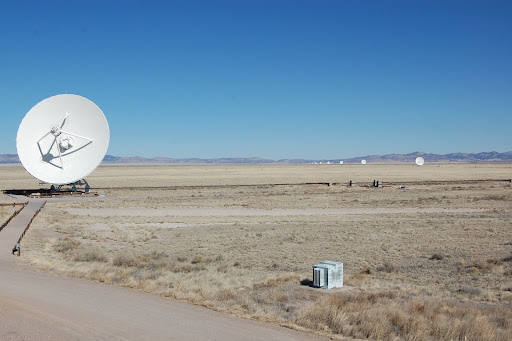
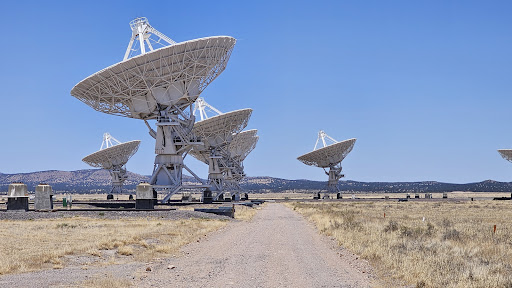
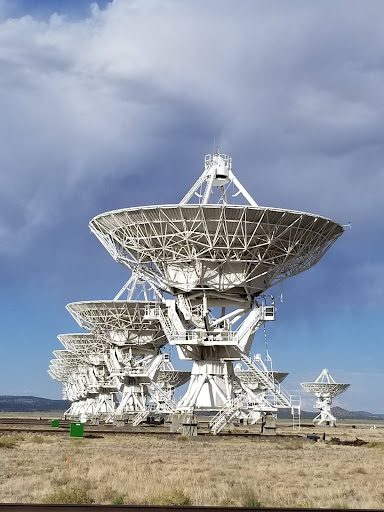
This is one of my favorite places to shoot photos in New Mexico. The Very Large Array is open to the public and has recently started charging a $6 admission.
The $6 admission gives you access to a several exhibits that are both educational and photo worthy. The Very Large Array was used in the movie Contact with Jodie Foster. Information about the movie filming can be found in the visitors center as well as a short film about the VLA. A gift store and some outdoor exhibits are also at the Visitors Center. (Sun Dial, & Science Experiments)
TIPS: Many visitors miss the view from the balcony of the Visitors Center. This spot can be used for some good photography, shelter from the wind on certain days, and has benches where you can sit and enjoy a sandwich from your car or just kick back and take in the scenery.
Another place many visitors are unaware they can visit is the maintenance shed. Your probably thinking you wouldnt want to visit a shed, but its not what you think. Its a huge square building, about 6 stories tall, just down the road from the main visitors center. Its basically the mechanics garage where telescope dishes go for servicing. Down at the shed you can find some unique railroad machines used to move and service the dishes. If one is in the shed being worked on sometimes the people there will come out and give you another little tour.
I've visited many times, probably over a half dozen, taking many friends with me and always had a great time. Try not to visit on a really rainy day though, as you wont be able to go out and walk around the closest dish.
Staff is always friendly and overly knowledgeable, but will rarely approach you, you are given free range to just wander about the area for the most part.
This is a great place for anyone interested in astronomy, science, families with kids, or those looking for some unique travel stops while passing thru...
Read moreExciting place, mediocre presentation.
(review adjusted) This being an old scientific/engineering facility, it has not been put up with displays and presentations to the wider public in mind. The indoor displays are limited and somewhat cramped. The tour around the complex is not much of a walk; the most interesting parts are getting to ask the on-site personel questions about the tech and the science, outdoors it is naturally that you get to see the dishes up close, with plenty of good photo ops.
You've get most of the visit if you have read about the location in advance, and bumped into it in popular culture. If this is your first time visiting or not particularly hooked on the sciences, it'll be a mixed bag. If you are curious about but not scientifically versed, a good first question you could ask those in the know would be "what do these things let us see that a regular binoculars can't"? At that point, you'll get to hear some things that will pique your...
Read moreAs a science enthusiast, when I saw the sign for this I had to stop, and I'm glad we did, even though we had not planned it and had a few more hours to drive that day. Visitor center is pretty small, there is a gift shop, 'theater' and a few small exhibits. The walking tour is the real attraction here, with 10+ stops on the tour highlighting different pieces of science and technology. There are two parabolic dishes about 50 feet apart where you can whisper and have someone in the other dish hear you (kids thought this was really cool), a unique sun dial, pictures of space objects taken by the VLA (and compared with pictures from other telescopes), and of course, getting up close to one of the radio telescopes. Lots of signs and displays on the tour that help you learn about how the...
Read more