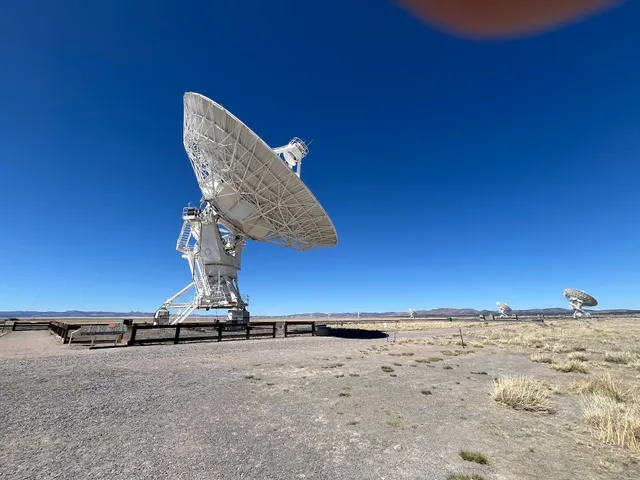
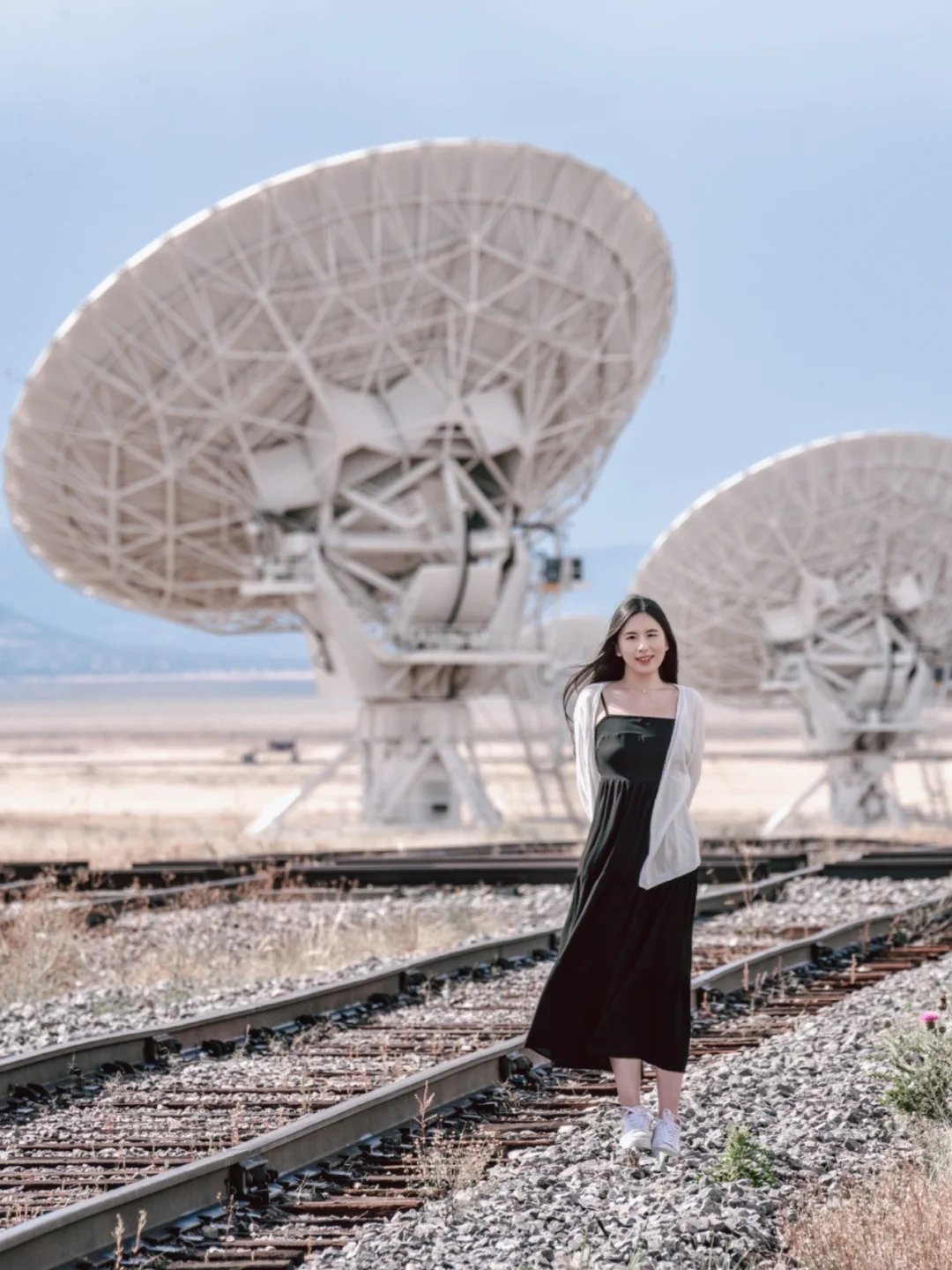
Yes, this is mostly a nerd-stop, but it is sooo cool! This is an array of dozens of radio telescopes ("dishes"), each about 60' in diameter, and spread out along a 'Y'-shaped railroad track that spans many miles (so they can be moved as needed) in the middle of the New Mexico desert. These radio telescopes have sometimes been used to contact a distant US space probe in the past, but are mostly used in the study of radio sources throughout the universe. Their contribution to our knowledge base about the universe cannot be overstated.
The area here is flat, mostly desolate of vegetation except dry scrub, and is ringed-in by distant mountain ranges (this was done purposely, as the mountains help to shield the sensitive radio telescopes from spurious and strong terrestrial radio signals that would overwhelm the faint radio signals from distant objects in space.)
For this same reason, you are reminded to turn off cell phones and any other electronic device that might emit radio signals. However, this request did not appear to be strictly enforced; a researcher who works there told me that with newer software used to record the faint signals, it is pretty good at detecting and removing the 'trash' signals emitted by anything electronic, such as cell phones, digital cameras, etc. They do ask that you put your cell phone into airplane mode, or turn it off completely. But DSLR's were used throughout the grounds by tourists without reproach, and other visitors were using their cell phones to record pictures and video.
My stay here was only a few hours so I couldn't avail myself to all that I otherwise might have; the historical movie, the gift shop, and a few other places will have to be reviewed by others. Many visitors are also aware that parts of the movie 'Contact' with Jodie Foster (released in 1997) were filmed here.
But the high-desert landscape here is picturesque, especially with the many large white 'dishes' that rise above the level ground, with nothing else around for miles! It makes for very interesting photo ops. The staff here is small, but friendly as you could hope for, and this place is unique in the world.
Drive time is about one hour west of Socorro, NM, and about two hours from Albuquerque, with some beautiful desert scenery along the way, so keep your camera handy.
I'd recommend keeping water with you as you explore the VLA, and, especially in the summer, to wear a wide-brimmed hat to shield your face and neck from the sun, which is noticeably more intense here at this higher elevation, than sea-level South Florida where I live.
Definitely recommended-- spend part of a relaxing day here, and...
Read more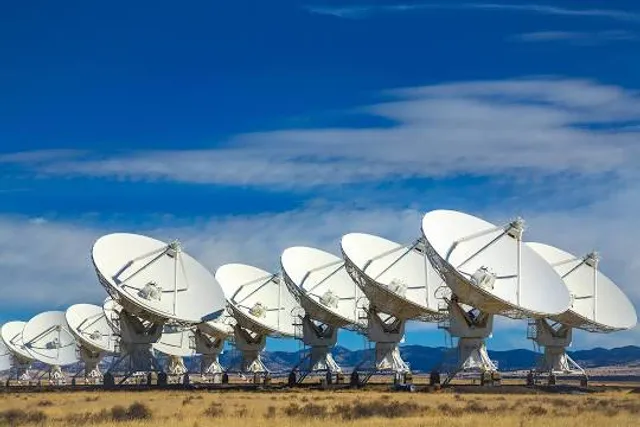

 Learn more insights from Wanderboat AI.