Fort Ross, located on the picturesque shores of the Pacific Ocean in California, is a historic landmark that serves as a window into the past. This unique site holds significant historical and cultural importance, showcasing the early Russian presence in North America during the 19th century.
Established in 1812 as a Russian-American Company settlement, Fort Ross aimed to support the fur trade and expand Russian influence in the region. The fort served as a hub for trade, agriculture, and maritime activities, fostering interactions between Russian settlers, Native Alaskans, and Native Californians. Today, it stands as a testament to the diverse cultural encounters that took place on the North American frontier.
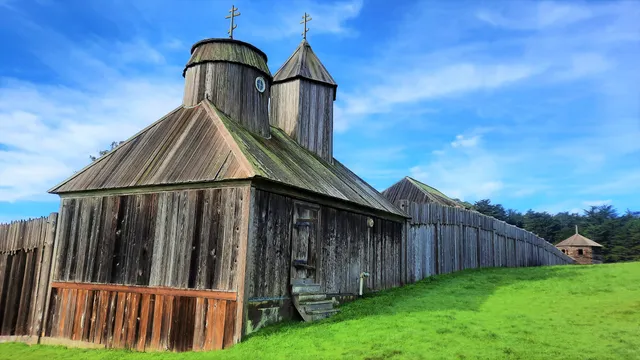
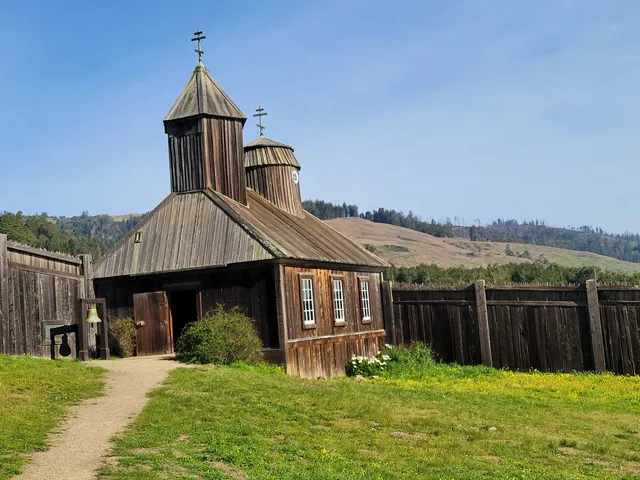
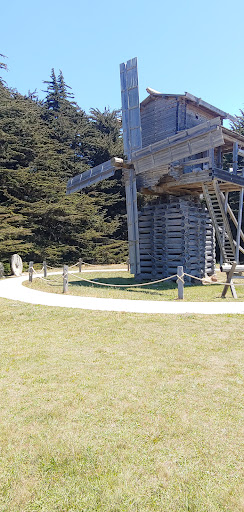
Fort Ross's architecture is reminiscent of its Russian heritage, with its reconstructed buildings reflecting the original structures that once stood there. Visitors can explore the reconstructed chapel, commander's house, and other structures, gaining insights into the daily lives of the Russian colonists. The fort's museum exhibits artifacts, documents, and artworks, providing a comprehensive overview of the historical context and the complex relationships between the different communities.
Beyond its historical significance, Fort Ross is surrounded by breathtaking natural beauty. Its location on the rugged California coastline offers stunning views of the Pacific Ocean and opportunities for outdoor activities such as hiking, picnicking, and wildlife spotting.
Fort Ross stands as a symbol of cultural exchange, resilience, and the shared history of different peoples. It serves as a living reminder of the early exploration and settlement of the American West, making it a must-visit destination for history enthusiasts, nature lovers, and anyone seeking a deeper understanding of the multifaceted heritage of California and the...
Read moreDid you know that some of California was once part of the Russian Empire?
Fort Ross is a great place for a lot of that history. California Parks do a good job of letting us know the native, Russian and American settlement periods and tell us almost nothing of the turbulent wars for independence Mexico was going through at the same time when the fort was in use. The Russians arrived in Spain, but left Mexico when they went home.
This fort and its chapel are both a State Park and a nationally recognized historic site.
The fort is nicely rebuilt and totally fun to visit for kids ages 4 to 95. It is a museum with lots of things to touch. Much of the storeroom and quarters are restored enough to get the feel of the Russian Empire times.
The visitor center offers a small but interesting set of displays covering the local native cultures and the different people who inhabited the fort. There is room to form your own opinions about this fort that never saw a battle.
It is worth reading about what happens to the lands and furnishings when the Russians leave.
The ocean is a beach to the south, directly in front of the fort, and rocks with sea lions just north of that cove. Stay back from the sea lions. They a cute, but also large wild animals. They can and do bite. The hike down to both parts of the coastal access is steep but short and totally worth it. Expect wind.
Verizon phones don't have service. Roaming cell service does not seem to work either.
The visitor center has free WiFi and good, clean bathrooms.
More quality bathrooms are to be found inside the fort.
The shop has a wide range of good gifts related to the Russian period and the area, climate and animals in general. Very little junk.
If you have a California State Park annual pass, it is...
Read moreAs a growing empire with a long Pacific coastline, Russia was in many ways well positioned to play a leading role in the settlement and development of the West. The Russians had begun their expansion into the North American continent in 1741 with a massive scientific expedition to Alaska. Returning with news of abundant sea otters, the explorers inspired Russian investment in the Alaskan fur trade and some permanent settlement. By the early 19th century, the semi-governmental Russian-American Company was actively competing with British and American fur-trading interests as far south as the shores of Spanish-controlled California.
Russia’s Alaskan colonists found it difficult to produce their own food because of the short growing season of the far north. Officials of the Russian-American Company reasoned that a permanent settlement along the more temperate shores of California could serve both as a source of food and a base for exploiting the abundant sea otters in the region. To that end, a large party of Russians and Aleuts sailed for California where they established Fort Ross (short for Russia) on the coast north of...
Read more