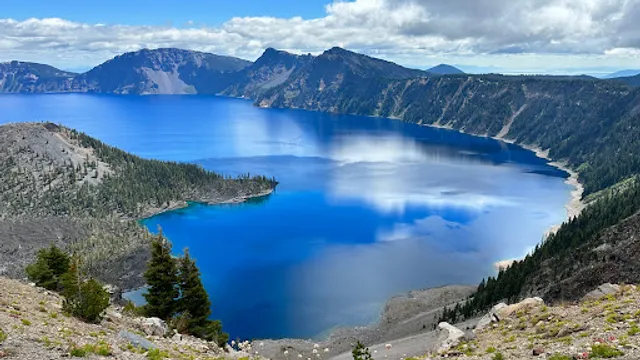
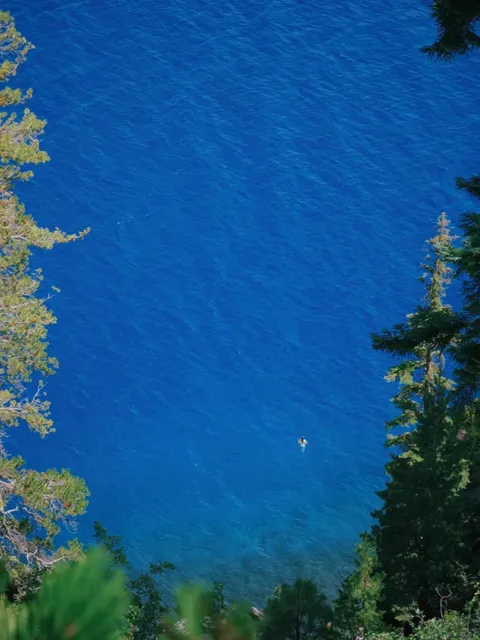
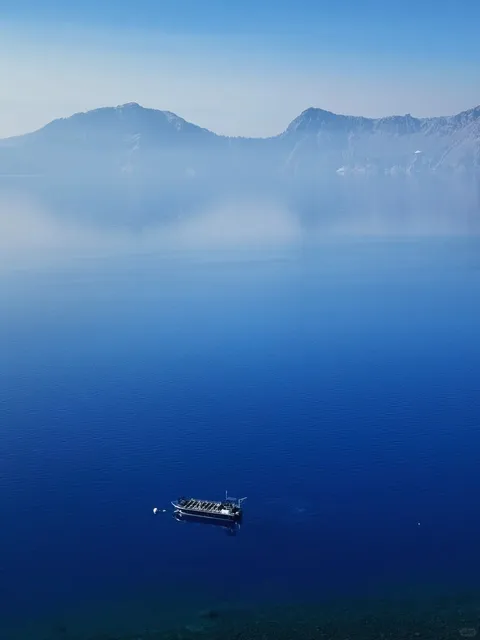
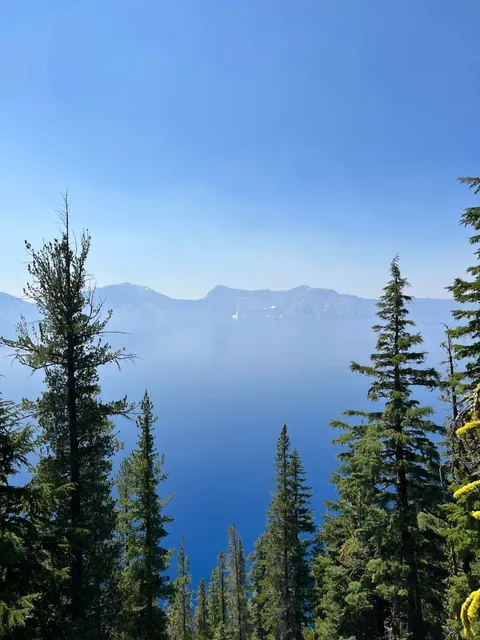
The one thing I want to share is that when you visit places like this, go for everything- you never know when you will be back and if you don't do it, you miss out. I remember that years ago I was driving south on 97 and went by this but did not stop. Such a Dumb*ss. We were on a road trip through the redwoods and this was our most northern point. There had been fires in the costal range forests. We followed a rainstorm in from the West, it put out the forest fires and going to the crater, the forests on the road were full of raindrops, but the storm had stopped. The aroma was incredible. When we got to the rim of the crater, the clouds were hanging around inside the crater, but as the sun came out everything cleared- it took some time. I wanted to go to the lake and swim, you could do it at the time. My daughter got a little timid when we were at the water's edge and has forever regretted it. The storm kicked up about an 8" wind wave on the lake, but under the surface it was both clear and calm. The turbulance caused the water to turn slightly alkaline, it was the silkiest water that I have ever been in. You know how a little bleach on your hands makes them slippery, imagine all over your body. Wow! I will never forget that. But the movement of the water worried my daughter so she missed out on this because she would not put more than her foot in. We returned in 2017, when we went to watch the Eclipse in Oregon. That time we hit a traffic jam like everyone talks about, but they ran out of money and passes and were letting everyone in for free. Thank you NPS! This time my daughter did not hesitate to go in for a swim, so we will always be able to say that we swam in the crater lake. It was wonderful. Even if you aren't into going into the water, there are many many hiking trails around the crater, and there are viewpoints all around the rim, which I think goes for 30 miles. The hotel is wonderful, and make reservations a long time in advance. It is pricey, yes, but you can say you stayed at the Crater Lake Lodge. Photo opportunities everywhere or just take a chair out and enjoy the view. The ranger station at the village has a Jr. Ranger program with a guide book and a quiz, and you get a Jr. Ranger patch suitable for sewing on your jean jacket. Other than that, it has all been said in these hundreds of reviews. The photos are from the first visit, no swim but Jr....
Read moreThis is one of the most amazingly beautiful, awe-inspiring areas I have ever had the pleasure of visiting. The beauty of Crater Lake takes your breath away and the cataclysmic way this region was created. While you're here, and if you're up for a hike, do travel some of the trails in the park. They are well worth your time and effort. As of 2022, it is registered as the deepest lake in the United States at a depth of 1943 ft. Within the lake, you will find a few of Mother Natures oddities; The first two are the (2) Volcanoe's within The Volcano
Crater Lake, located in south-central Oregon, is a breathtaking natural wonder steeped in geological and cultural significance. This volcanic crater lake, known as Giiwas in the Klamath language, is renowned for its deep blue color and exceptional water clarity. Formed about 7,700 years ago by the collapse of Mount Mazama, it is the deepest lake in the United States and ranks ninth globally for maximum depth.
Geologically, Crater Lake is part of the Cascade Range volcanic arc, with its formation involving a massive eruption that led to Mount Mazama's subsidence. The caldera that now holds Crater Lake was formed by this event, and over time, rain and snow accumulated to create the lake. The lake, with no rivers flowing into or out of it, sees its water replenished every 250 years through precipitation.
Two small islands, Wizard Island and Phantom Ship, add to the lake's allure. Wizard Island, a cinder cone, and Phantom Ship, a natural rock pillar, contribute to the unique landscape. The lake and Crater Lake National Park offer numerous recreational activities like hiking, biking, snowshoeing, and fishing.
The lake's unique ecology includes the presence of kokanee salmon and rainbow trout, introduced by human intervention. A notable feature is the "Old Man of the Lake," a log that has been floating vertically for over a century, preserved by the cold water temperatures.
The Klamath tribe of Native Americans holds Crater Lake in high regard, viewing it as a spiritual site. Their oral history describes the lake's formation and its significance in their culture, including vision quests and spiritual practices.
Visitors can explore the lake via Rim Drive, a road offering stunning views of the lake and its geological features. Trails like the Garfield Peak Trail and the path to Mount Scott provide panoramic views, and the Cleetwood trail leads to boat trips on the lake.
Crater Lake's subalpine climate results in mild, dry summers and cold, snowy winters, with significant snowfall that contributes to its unique ecosystem. The water's purity, attributed to the absence of inlets and tributaries, is among the highest in the world, providing a pristine natural environment for...
Read more