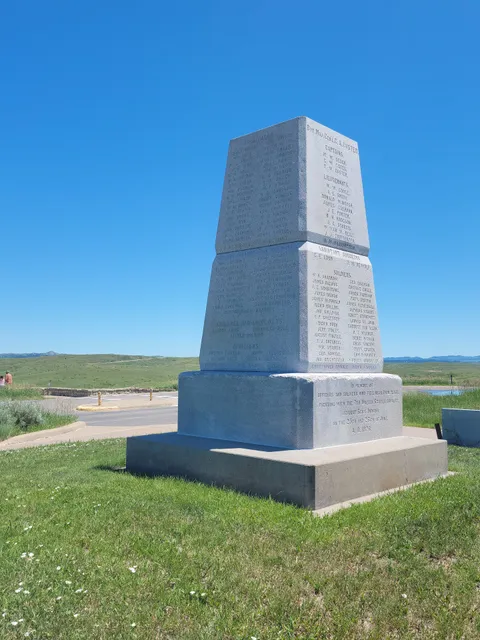
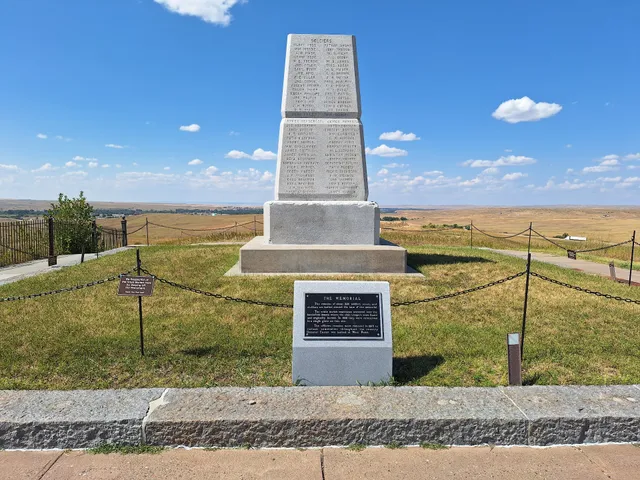
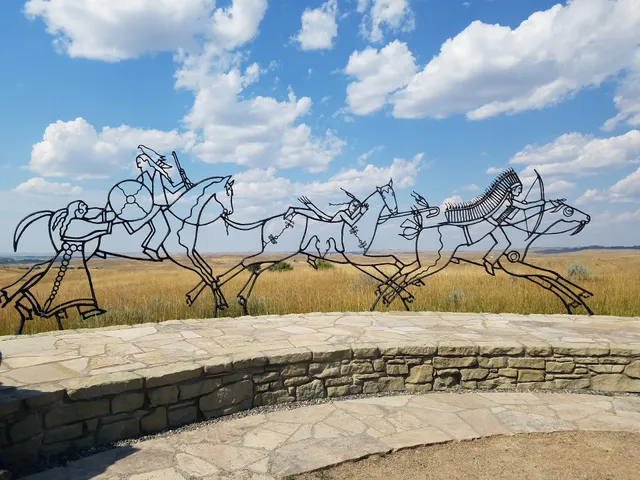
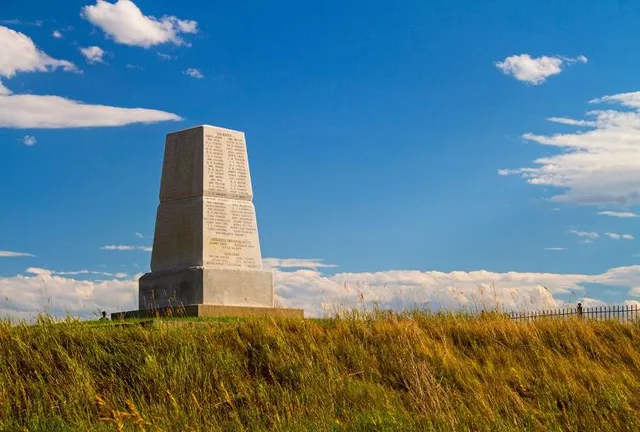
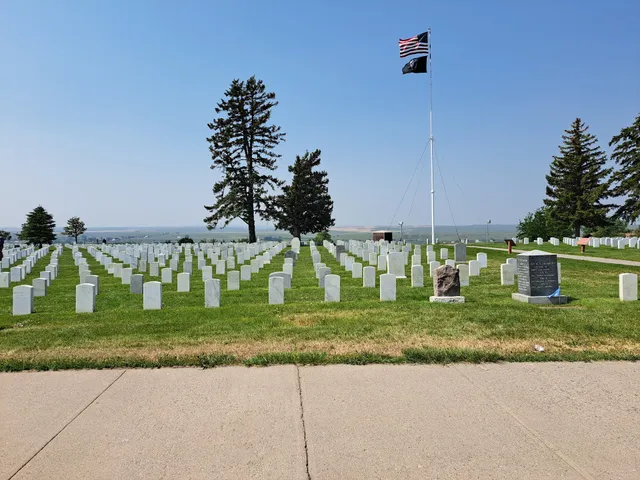
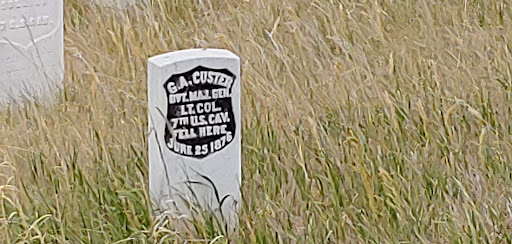
The Little Big Horn Battlefield was a bucket list destination for me, and I was determined to make the most of my visit. I spend the night in Billings, and it took me about an hour to make 60-mile drive to the entrance to the Little Big Horn Battlefield National Monument. When I arrived a 9 a.m. I found the small parking lot at the visitor’s center was already full. The parking area at is Visitors Center is really small and fills up quickly. After circling for a few minutes another car left and I was able to park and begin my tour at the Visitor’s Center. The rangers here like at all our National Park are very Helpful and offers several suggestions on how to best see the battlefield. It’s just a short walk from the Visitors center up a pave path to Last Stand Hill which is the most visited site on the Battlefield. Here at the top of the hill overlooking the visitor’s center and the National Cemetery is where George Custer and member of the 7th Cavalry made their last stand against the Indians. The remain of many of the enlisted men who died here rest under the huge 7th Cavalry Monument. Located on the west side of the hill are the small monuments marking the location of where the soldiers of the 7th Cavalry fell. There is a lone white marker with a black face that marks the spot where George Custer fell. Nearby are the stones where other fell including George Custer’s brothers Boston and Thomas. Just a short walk down another paved path is the Spirit Warriors Monument This is the newest monument on the battlefield and tell the story of the battle from the Native American side. It is a very impressive and informative monument. At various times throughout the day rangers and Native American historians lead programs and demonstration at various location throughout the battlefield. I would highly recommend that if you have the time to take in one of these programs. They are wonderful and very informative. While Last Stand Hill is the most visited part of the battlefield there is so much more to see. There is little or no parking available on Last Stand Hill so after finishing my visit there, I walked back to my car and started the driving tour of the rest of the battlefield. The driving tour takes you out to the southern edge of the Battlefield where the 7th Cavalry first encountered the Indians. Using the Map that I picked up at the Visitors I stopped at each of the pull outs along the way. The map along with the storyboards at each pullout gives you clear picture of what occurred at each location. Along the way you will see the white marble stones that mark the location of where a soldier fell. You will also see pink granite stones that marked the location of where a Native American fell. Along the way there are more than a dozen pullout and I stopped at them all. The entire drive is about 10 miles out and back round trip. Since this was a bucket list destination for me, I spent a little more than 6-hours touring the battlefield. It you are just interested in Last Stand Hill, and the sites around the visitor’s center, including the Spirit Warrior Monument, I would probably allow about 2-hours to fully visit those sites. If you include the 10-mile out and back driving tour, I would allow at least an additional hour. If time is an issue, I would allow at least 3-hours to visit Last Stand Hill and complete the Driving tour. But if you are a history buff like me and want to take in some of the ranger and Native American Programs then you and easily spend most of the day here. I enjoy my visit to the Little Big Horn Battlefield and left here with a clearer understanding of not only what occurred...
Read moreI visited this monument while driving from the Pacific Northwest to the Atlantic Northeast in1980. I was looking at driving routes from the Midwest to a few places in the Pacific Northwest the other day, and wanted to pinpoint a few familiar places I've been to in the past and this museum was one of those places. I remember this museum for the incredible detailed life-like displays of native American indians in their natural outdoor teepee homes, grinding corn, children playing. Life-size teepees, a cooking fire, animal pelts hanging like coats on a coat rack at the entrance of the teepee. The most amazing and largest display was that of a man paddling a canoe positioned as if he was in the canoe on a river in turbulent white water. I had to walk as far as I could get toward the back of the display because it was so real. The size of the canoe was truly ingenious native American design and built unlike any canoes id ever seen before, or in movies. Clearly this canoe was twice as long as even full sized canoes you see on top of SUVs and was built for seaworthiness and rough river travel on powerful rivers like the Columbia River to the coast between Oregon and Washington. American indians adapted in harmony with nature and their way of life and they innovated and built what was necessary for survival of not just themselves, but survival with balance and survival of animals, plants, and natural resources in their environment. This is actually an example of authentic human intelligence evolution of survival through natural selection, learning and innovation of tools. Human intelligence evolved because of adaptation and learning directly from living experience in their environment. The opposite of that is called...
Read moreThis place is much more than a museum to learn about history. It is a solemn place that allows one to transport themselves, albiet momentarily, to what life on the plains really looked like.
Located in off the highway, my first thoughts was how well preserved the location is. You can view across the plains and scattered hills and not see any resemblance of 21st century life such as buildings or telephone wires.
I highly recommend two experiences when visiting. First, participate in a ranger talk. During our visit the ranger was captivating, knowledgeable and friendly. The talk sets the tone and provides the visitor an opportunity to begin their mindful transportation. It sets the tone for the events of what occurred here. Our ranger talk was provided by one who also is a professor in Arizona. Secondly, take a self guided walk along the path towards the ravine. As you walk along the path you will encounter grave markers of service men and native Americans that fell at the spot. There are also a few informational markers that describe what occurred. You can also listen to pre-recorded informational recordings via the marker instructions.
The drive along the battlefield is also recommended as it takes to further out to areas where other skirmishes occurred.
The museum has various artifacts one should explore after exploring the grounds. There is also a small gift shop to purchase souvenir items and snacks. Restrooms are also available. Plenty of parking.
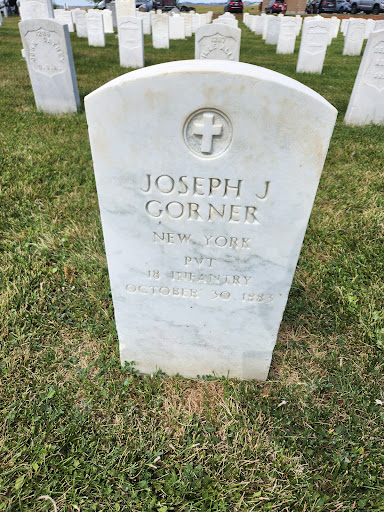
It was both a sad and uplifting experience visiting this national cemetery. I appreciate the park rangers knowledgeable presentation and their captivating manner to their...
Read more