Where to start...? Overall, I believe this experience was educational, fun, and inviting for people and kids of all ages. For the night sky being cloudy AND the observatory under construction, the people in charge were able to improvise and work with what they had really well. Notably, Mike, Phia, Tim, and Bob were excellent with kids and managing a crowd.
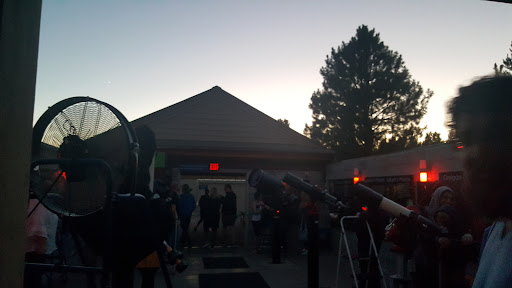
At first, it seemed like the weather was going to trump any night-time viewing, this resulting in volunteers looking through telescopes at each other (not exactly what you expect, right?). But with patience and the sky darkening, we were able to see Venus! And one by one, more stars came through.
Being younger in age, my eyes were "better for viewing," as Mike would tell me. This led to an almost private tour of different equipment, including but not limited to different telescopes, star-gazing binoculars, and more. My family and I were able to personally toy with some lesser equipment to see stars as they appeared, leading to an educational tour of the night sky, the Big Dipper, Arcturus, and Mizar and Alcor.
Being a star nerd certainly helped my experience, but I would just say be open to learning and taking turns. If you can, certainly reserve later times (if they have them), as the sky will be far darker to see. Along with this, being patient not only with the stars but the people leading stations will have you an amazing time!
All in all, I learned a lot, had my questions answered, and further developed my love for astronomy. It was worth the drive and the money, and great for kids and people of all ages.
My only caveat would be-and this isn't against the observatory- check the observatory's website before scheduling, as the resort didn't update the website when we went, still going off the...
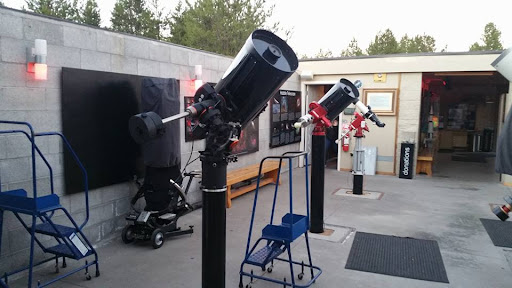
Read moreBoy, has the Oregon Observatory improved dramatically since a few years ago! During the summer season, it is open six days a week (not Mondays). The experience was wonderful: enthusiastic and very knowledgeable staff, about 20 excellent telescopes and great viewing conditions. During the daytime session (11 to 2), viewing of the sun through a solar telescope revealed solar flares and the "wavelike" nature of the sun's surface. (No sunspots are currently active.)
During the night session (9 to 11), about 150 people showed up and were a fabulous, interested, and inquisitive group. We saw a few of Jupiter's moons and the color bands of its outer atmosphere. Also saw three globular clusters (M3, M4, and M5) which are fascinating in that their 100,000+ stars are not apparent, but the collective light certainly is.
Also saw several nebula: a ring nebular, the "dumbell nebular", and a 2600-year old exploded star. Staffing was always close by to answer questions, get help viewing, explain what was visible, and adjust the telescope after the occasional bumping.
Also, there were dedicated staff using laser pointers to various constellations, significant stars, the Milky Way, and explaining how the star patterns are changing--by hour, and over thousands of years.
Naturally there were several telescopes pointed at the moon, Saturn, and Jupiter.
Note that on July 6, 2019, the daytime high was about 85 °F (30 °C) and the 11 p.m temperature was about 45 °F (7°C) under crystal...
Read moreGo out in the parking lot and look up at the night sky - it’s a better experience than looking at random individual stars through telescopes not big enough to resolve details on the stars they are aimed at. 2 stars instead of 1 because I extend a good faith assumption that if there happens to be a planet visible during your time slot it’s something worth seeing - even then you’ll likely be standing in line for a long time for a short view of an isolated object. But if there are no planets out when you come, the telescopes are just aimed at random stars, or maybe they’ve been knocked off by other viewers and they’re aimed at nothing - you probably won’t be able to tell. A lot of milling around in the dark, waiting in line to see views bettered in the parking lot. Check to see if the sky is clear and there will be planets before coming. The short lecture at the beginning is moderately interesting (make sure you aren’t last in line checking in or it will start without you) and the grounds itself is beautiful at dusk - there’s a pond with resident swans. I would walk around the pond rather than doing the...
Read more