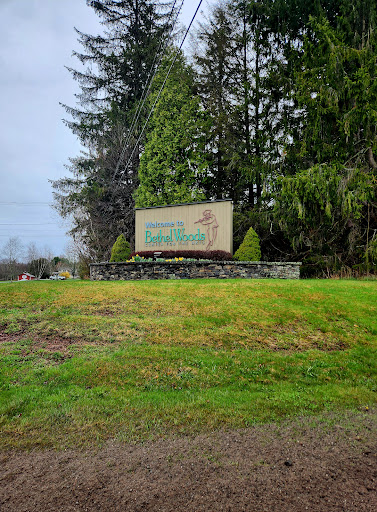
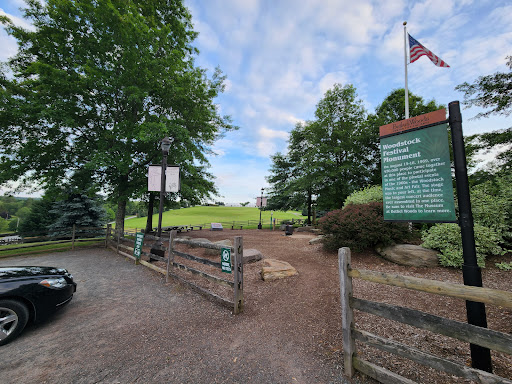
After a couple of hours of enjoying all the exhibits in The Museum at Bethel Woods: Story of 60s and Woodstock; we took the short trek down the hill to the hayfield on the dairy farm, where the actual Music & Art Fair occurred. Nothing at its museum compared to the experience on this site!
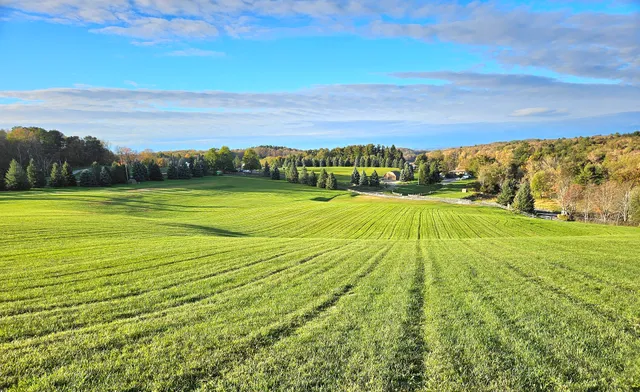
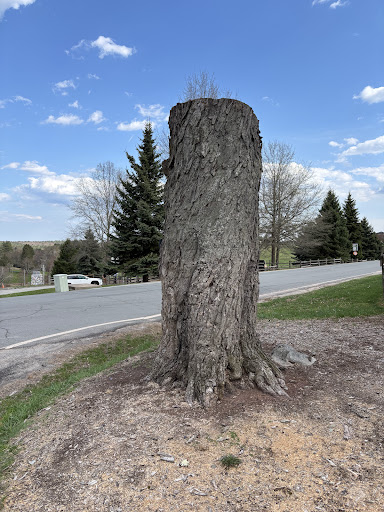
The field is smaller than expected. How could 420K fit in that field? The message tree is now a stump! Skinny dipping? (across the road). The 1984 marker needs repairing! Stage is marked only by gravel. Richie Havens’ ashes scattered! Trees planted later as a border. Max sold the farm a year later. He died 3 years later—heart attack.
Only the surprising appearance of Lonnie Ernst, within minutes of our arrival in the small gravel parking lot, made any real insights possible! He grew up near Max Yasgur, joined the Navy, rather than be drafted, and got a call from Max—after his recent discharge following multiple tours in Vietnam—to come home that weekend (rather than to get married to his high school sweetheart ) to run security at Woodstock with Wavy Gravy!
He explained that TOTAL count by aerial photography of nearly a half million, but MANY folks stayed for only a morning or an afternoon, since the conditions were so tough with lack of toilets, food, water, etc.
ONLY 15,000 tickets were ever sold, and the new fences never really got started. Barbed wire still needed taking down (for dairy cows), as he arrived with many fans—and Richie Havens—already on the farm!
That explained why Richie Havens, listed as the third act, started the concert late; not really, it was his scheduled time! He came early to meet the fans; so, he was already there! (Joan Baez, the scheduled first act, stranded 5 miles away at the nearby airport, needed the first helicopter to get her over the massive crowds that clogged the roads.)
Max, a conservative Republican, believed that the “generation gap” could ONLY be bridged, if the older people would listen.
Local communities’ opposition to concert goers and their rejection of Max divided along town and rural lines: nearby towns hated the disruptions and damages, but farms in the other direction supported Max and helped care for those young people with food and drink. Max got farm people to fill milk jugs with well water, because town people were selling water for $6.00 per bottle IN 1969! (He erected a sign about FREE WATER.)
Mr. Ernst’s stories about Max made me a researcher that evening, and I learned that he changed his post office box to another nearby town due to hate mail. Although the biggest dairy farmer in that county, even the general store would not do business with him after the concert! So, he sold the farm, within a year, and moved to Florida in his early 50s, where he died from a heart attack just a couple of years later—of a broken heart I’d bet!
I must read Max’s son’s book, assistant district attorney in Manhattan—at the time of the concert—who helped his father with legal issues, I presume, before and after!
Thank you, Mr. Lonnie Ernst, for making our pilgrimage real with your authentic—and fascinating—stories by a man, who grew up nearby, came back home for the concert in an official role—ironically as a Vietnam Vet—and stayed home to marry (the Tuesday after the concert) and rear two children in the wake of two seismic acts within the pivotal Sixties. You helped bridge a generation gap, which Max had intended for the Music & Art Fair to begin.
Your normal life—47.5 years of marriage to Bernas—is a witness to the healing powers of Love, Peace, and Music to prevent or heal the common side-effects of war, e.g., Post-Traumatic Stress Disorder (PTSD), addictions, homelessness, and suicide!
Your continuing love of that weekend, by stopping to tell your stories to strangers, shows that something special happened here, which you share with others still in search of that grace to heal us even now.
(PLEASE let the museum video your telling all of your stories so that many people can see, hear, and enjoy you, now...
Read moreAn amazing experience to say the least. My wife and I have been there a handful of times, and this trip we decided to bring our young son to see the history for himself. The monument was defaced and spray painted black. It was such a shame to see happen to something that stood for peace and love. To anyone looking to visit here, a few things you should know. First off, it’s free. It’s a super short drive up the road past the main entrance to get into the concert venue. It’s in a nice little fenced in area overlooking the grass field where the stage was once set up. You can still see the lines in the grass, it’s breath taking. The times we have been there, we have had the pleasure of meeting and speaking with someone that was at Woodstock and are visiting the monument and reliving and telling stories of the their own personal experience. If you are a music fan, a historian or just looking for something to do with your family, this won’t...
Read moreIn spite of the rain and snow and cold, I was in complete awe of just being in such a historical place. Being there, in this spot, is such a vibe that maybe not everyone understands, but the energy of just standing there was incredible. I was even fortunate enough to get to speak to a couple of people who are from the area and were in attendance. Getting that type of first-hand account is indescribable. It's a must visit if you're a Woodstock fan. The outside monuments are free to visit, and there is also a museum and food area inside. The museum is $20, but well worth it. I can officially mark this off of my...
Read more