As a child, the opportunity to assist my grandfather in painting the interior of the home of the famous artist Jackson Pollock in Easthampton, NY, specifically in the area known as Springs, remains one of the most cherished memories of my youth. It was a sunny summer day in the 80s when we arrived at the artist's iconic abode in Springs.
I remember the sheer excitement that coursed through my veins as we entered the house. The interior, although modest in size, held an aura of creativity that seemed to radiate from every corner. My grandfather, a seasoned painter himself, had a gleam of pride in his eyes as he handed me a paintbrush and explained the importance of our task.
Under his patient guidance, I delicately applied strokes of paint to the walls, bringing new life to the rooms within the house in Springs. It was a simple task, but I felt a profound sense of responsibility, knowing that we were contributing to the preservation of the home of such a renowned artist in Easthampton.
As I worked, I couldn't help but imagine Jackson Pollock himself, with his iconic splatter paintings and innovative techniques, walking these same halls. The house in Springs seemed to echo with his artistic spirit, and I felt a connection to him that transcended time.
During our breaks, my grandfather shared stories of his own experiences as a painter and the wisdom he had gained over the years. I listened intently, absorbing not only his knowledge but also his passion for the art of painting.
As the days wore on, the rooms gradually transformed, their once-worn appearance giving way to fresh, vibrant colors that seemed to breathe new life into the old. I marveled at the transformative power of paint and how it could enhance the artistic essence of the house, especially in a place as historically significant as Springs, Easthampton.
When the work was done, and we stood back to admire our handiwork, I felt an immense sense of accomplishment. I knew that this experience, painting the interior of Jackson Pollock's home in Springs, Easthampton, would stay with me forever, a testament to the importance of art, the magic of Springs, and the enduring bond between generations.
Years have passed since that memorable time in Easthampton, but the vivid memories of helping my grandfather paint the interior of the home of a true artistic legend in Springs remain etched in my heart, a lasting tribute to the power of creativity, the beauty of Easthampton's Springs area, and the strength of family...
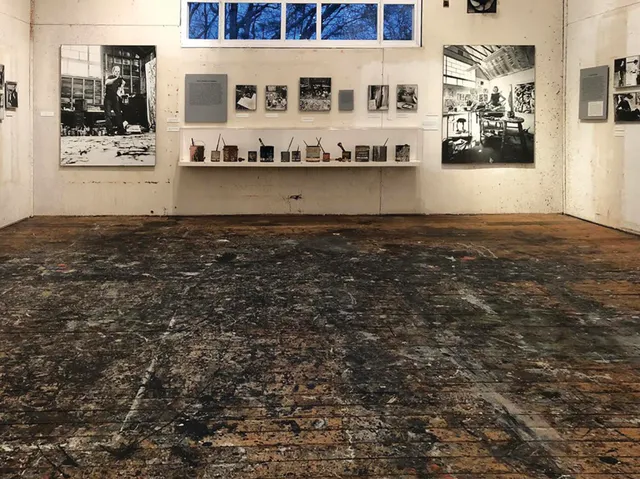
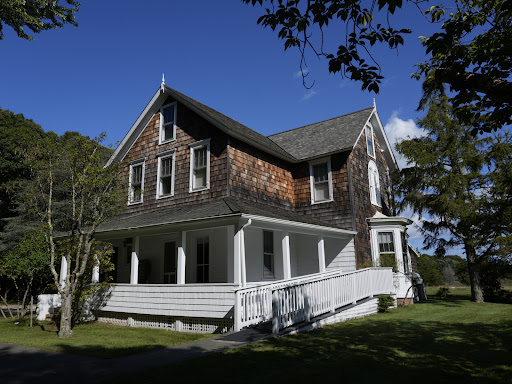
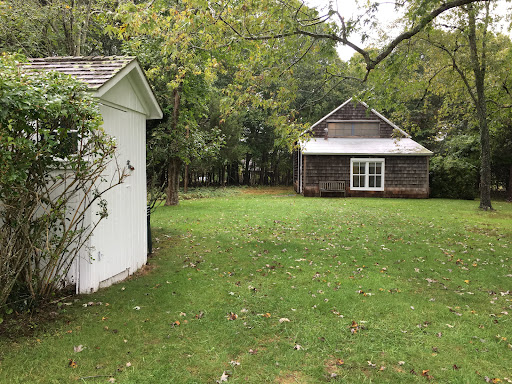
Read moreMuch like the home studio of N.C. and Andrew Wyeth in Chadds Ford, PA, Jackson Pollock's is only open to visitors on rare occasions. So glad I was able to get permission to take a few exterior shots to see where he created his abstract expressionist paintings in a wood-framed barn and white shed. In 1945, Jackson Pollock and his wife Lee Krasner moved to what is now known as the Pollock-Krasner House and Studio in Springs on Long Island, NY. It's not hard to see why he was drawn to the area and this bohemian community. Bohemian culture always fascinated my Danish grandfather and father, and now me. A major figure in the abstract expressionist movement, Pollock was widely noticed for his "drip technique" of pouring or splashing liquid household paint onto a horizontal surface, enabling him to view and paint his canvases from all angles. It was called all-over painting and action painting, since he covered the entire canvas and used the force of his whole body to paint, often in a frenetic dancing style. This extreme form of abstraction divided the critics: some praised the immediacy of the creation, while others derided the random effects. A reclusive and volatile personality, Pollock struggled with alcoholism for most of his life. In 1945, he married fellow artist Lee Krasner, who became an important influence on his career and his legacy much like Jamie Wyeth was on Andrew Wyeth. Pollock died in a single-car crash in his Oldsmobile convertible while driving under the influence of alcohol. At the time, Krasner was visiting friends in Europe; she abruptly returned on hearing the news from a friend. One of the passengers, Edith Metzger, was also killed in the accident, which occurred less than a mile from Pollock's home. The other passenger, Ruth Kligman, survived. In December 1956, four months after his death, Pollock was given a memorial retrospective exhibition at the Museum of Modern Art (MoMA) in New York City. A larger, more comprehensive exhibition of his work was held there in 1967. In 1998 and 1999, his work was honored with large-scale retrospective exhibitions at MoMA and at the Tate in London. In 2016, Pollock's painting titled Number 17A was reported to have fetched $200 million in a private purchase. (excerpts...
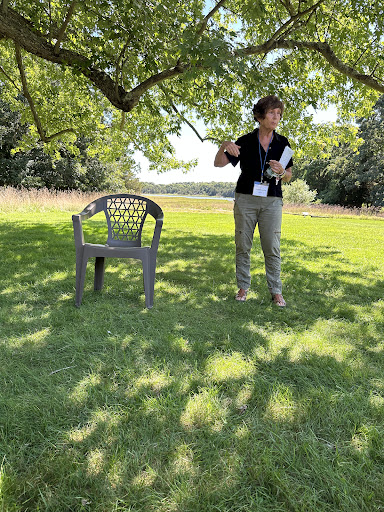
Read moreI wouldn't really recommend this as a destination, even if you like jackson pollack, the work on display is kinda subpar and its literally just an old house and a kinda rundown studio. i guess the nature around it is pretty? but you don't need a reservation for that lol. the tour guide on the day of we went was kinda rude. she got really upset at a couple that came in maybe 5-10min late? like come on lol. its just an artist's house? its not that serious that they were late, there was no need to make such a big deal about it. your presentation and job isn't important enough to get that upset, like you're not saving lives here. please gain some perspective in life. It made me and wife feel really awkward the whole time cause we both don't really wanna be around people who are that rude to visitors. the same tour guide also threw shade to me and my wife about not asking any questions throughout the tour. she said to other people, "at least you guys are making an effort and asking questions unlike some other people" then directly looked at us. maybe some people are less social than others and just want to listen? the tour guide overall just didn't seem like a very...
Read more