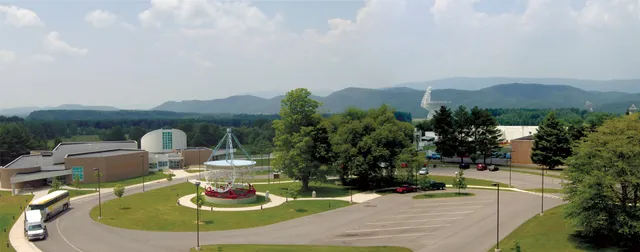
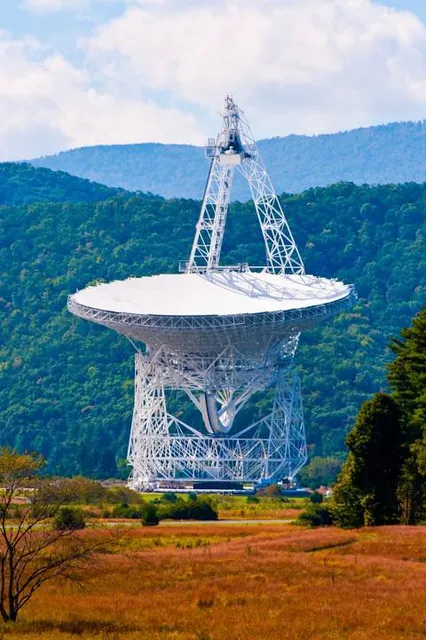
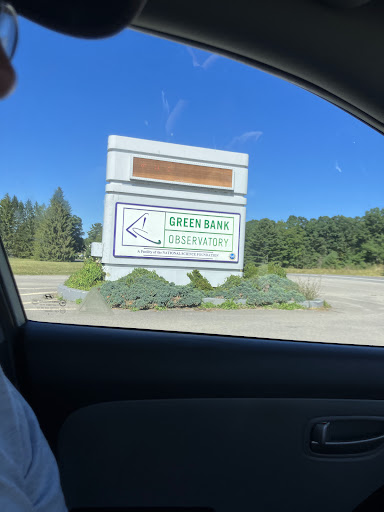
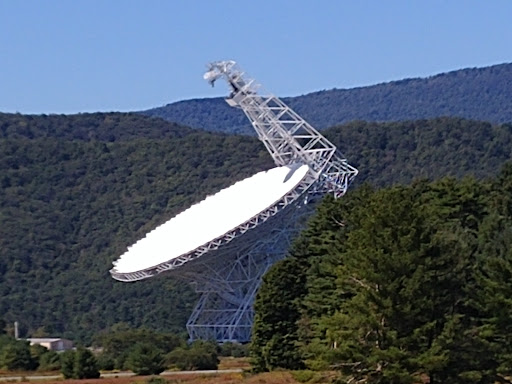
By happenstance, another couple joined us for a visit to the observatory. When Senator Byrd was alive, the observatory was on “easy street” and has struggled to adapt to a more normal world of constrained resources. The directions were tricky, with Google and Garmin unsure of the actual entrance. Arriving at the entrance, there is a small parking lot for the science center. The facility is well kept, with 120 full time staff. There is a decent size exhibition room that attempts to explain radio frequency energy and the value of collecting it for astronomy — a difficult concept for most. A number of the exhibits were not working, though many were. They taut their “Starlight Café”, and the two ladies their do a surprisingly good job with a limited menu - better than most of the restaurants in the surrounding area. As interesting as the actual place is the location inside the Radio Quiet Zone, with no cell service, no microwaves, no WiFi routers, no television, etc. It’s best to turn off all electronics and leave them in the car. The site was started in 1959, and has a storied history. The $10/pp bus tour is well worth going. Run every two hours 1000 - 1600, they start with participants in the auditorium and provide a short talk and video before going to the bus. Our guide (one of only two staff visible during our visit) was a delightful woman from Durham (in NW England) and had an interesting talk past the telescopes with a 10-minute stop outside the gate of the main Green Bank Telescope. On the way back to the science center, one passes a viewing platform to which one may return by walking or by car, to take photos (with cell phone or other). At the present time, the National Science Foundation funds 60% of the operation of the center, and the center’s true value is apparent to enough folks around the country to make up the other 40%. One in particular is the Search for Extraterrestrial Intelligence (SETI) Institute who have funded the observatory for 20% of the observation time, and for visitors so interested, for an extra fee, one may make reservations for a specific “SETI” tour. There is also a “tech tour” available a dozen times a year which gets into the details of the receivers, performance levels, and operation of the telescope, and must be scheduled in advance, as a background check is required of those visitors.
At a minimum, one may visit and come away with appreciation for the ability of humans to conceive big ideas about the universe, and ways to collect information that goes all the way back to the very beginning, and help achieve understanding. The evidence of the increasing capabilities is there, along with ongoing real-life studies.
The Observatory is well worth a planned stop if West Virginia be on...
Read more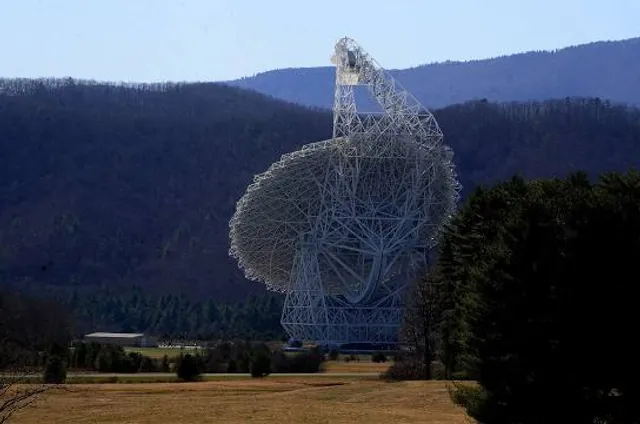
 Learn more insights from Wanderboat AI.