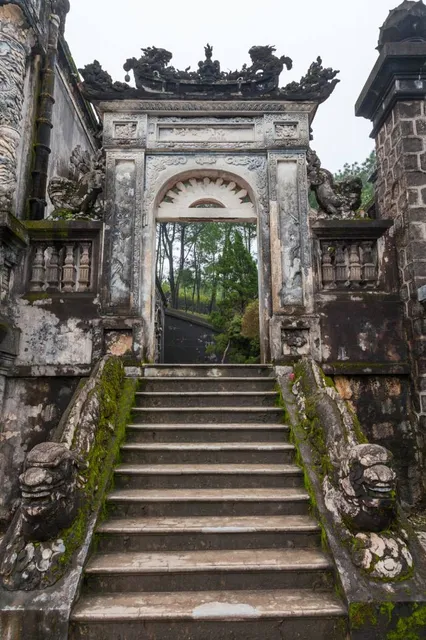
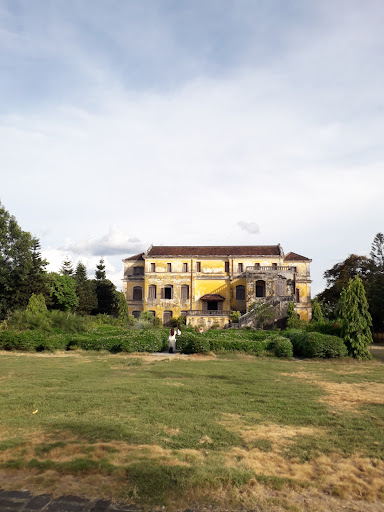
Address: 78A Nguyen Hue street, Hue city An Dinh palace is located in Nguyen Hue street about 2km from city center. Being constructed in the area of over 23.460m2, An Dinh palace is one of the constructions in the palace system of Nguyen dynasty. Emperor Khai Dinh (1916-1925) had the palace constructed on the basis of a small residence where he used to stay. The Emperor had passed away before An Dinh palace was completed. Then, An Dinh Palace became the place where royal families received foreign delegations. Madam Tu Cung stayed in the palace in 1945-1950-1968-1975. At the palace, the traditional architecture of Nguyen dynasty still remains. Gothic architecture is also clearly shown through decoration styles and items such as pillars, archway, etc. Like other works constructed at the time, westernized construction materials were used in An Dinh palace. Entering the palace, visitors may feel like being lost in the house of a European noble family. Rooms, stairs and decorative patterns are away from traditional style. Grape leaves were used instead of dragon and phoenix patterns. Daisy and lotus patterns were replaced by rose ones.
There are totally 20 rooms inside the palace. What special are the living room and two reception rooms at the first floor. The 6 drawings which describe the tombs of Emperors, namely Gia Long, Minh Mang, Thieu Tri, Tu Duc, Khai Dinh and Dong Khanh are hung on the living room. Powder color drawings, surrounding glided frames, 26 archways of the living room were made from glided wood and meticulously decorated.
Perhaps, An Dinh palace is home to glided masterpieces. These drawings and glided patterns bring a cozy feeling and make visitors forget its western architecture. The second and third floor were the places where Madam Tu Cung stayed and worshiped gods.
Cuu Tu Dai house is a famous architecture which was home to ceramic interior decoration - a popular decoration style under Emperor Khai Dinh reign. For this reason, Emperor Khai Dinh was called "The son of pieces of ceramics" by French.
Deer and crocodiles were breed in the garden behind the main house. Today, An Dinh palace poem written by Emperor Khai Dinh in Autumn 1920 still can be found on the screen placed on the...
Read moreAn Dinh Palace is the private palace of King Khai Dinh, located on the bank of the An Cuu River in Hue City, Vietnam. It was built in 1917 and is a beautiful example of Vietnamese architecture in the neo-classical style. The palace is surrounded by a brick wall and has a total area of 23,463 square meters. The main gate is three-way and two-story, and is decorated with elaborately embossed porcelain. Inside the gate is the Trung Lap Communal House, which has an octagonal structure with a high background. In the communal house, there is a bronze statue of King Khai Dinh, cast in 1920.
The main architectural work of An Dinh Palace is the Khai Tuong Pavilion, which is located behind the Trung Lap Communal House. The three-story pavilion was built with new materials in the style of a European castle, and occupies an area of up to 745 square meters. The pavilion is very elaborately decorated, especially the interior of the first floor with murals of very high artistic value.
An Dinh Palace was the home of King Khai Dinh and his family until his death in 1925. After his death, the palace was used by his son, King Bao Dai, and his family. In 1945, after the August Revolution, the family of King Bao Dai moved from the Imperial City to An Dinh Palace. The palace was later used by the government of Ngo Dinh Diem and then by the government of the Socialist Republic of Vietnam.
Today, An Dinh Palace is a museum and a popular tourist destination. It is a beautiful and historic building that is a testament to the rich culture and history of Vietnam.
Here are some additional details about An Dinh Palace that you might find interesting:
The palace was built using a combination of traditional Vietnamese and European architectural styles. The murals on the first floor of the Khai Tuong Pavilion were painted by Vietnamese artists who were trained in France. The palace is home to a collection of furniture, artifacts, and other objects that belonged to King Khai Dinh and his family. The palace is located in a beautiful setting on the banks of the An Cuu River.
I...
Read moreAn Dinh Palace is a historical landmark located in Hue, Vietnam. It served as the residence of the Nguyen Dynasty emperors during the period of 1802 to 1945. As someone interested in history and culture, I found my visit to An Dinh Palace to be a fascinating experience.
The palace itself is a beautiful example of Vietnamese architecture, with its intricate designs and ornate decorations. The main building is surrounded by a lush garden, creating a serene and peaceful atmosphere. Walking through the palace grounds, I couldn't help but imagine what life was like for the emperors and their families who once resided here.
One of the highlights of the visit was the chance to see the living quarters of the emperors. The rooms were well-preserved and gave a glimpse into the opulence of the Nguyen Dynasty. The furniture and decorations were exquisite, showcasing the wealth and power of the emperors.
Another interesting aspect of the palace was the display of historical artifacts and photos. I found it fascinating to learn about the history of the Nguyen Dynasty and the significant role they played in Vietnamese history. The exhibits were well-curated and provided a comprehensive overview of the dynasty's reign.
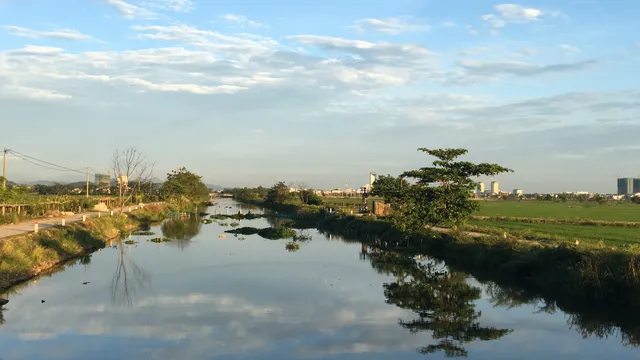
The palace also offers a beautiful view of the surrounding area, including the Perfume River. The location of the palace adds to its charm and makes for a picturesque setting. I would highly recommend taking the time to explore the palace grounds and enjoy the stunning views.
Overall, my visit to An Dinh Palace was a memorable experience. The palace is a must-visit for anyone interested in Vietnamese history and culture. The architecture, historical artifacts, and scenic views make it a worthwhile destination. Whether you are a history buff or simply looking to immerse yourself in the rich heritage of Vietnam, An Dinh Palace is definitely worth a visit.
The ticket fee is 50,000 VND/pax and 2,000 VND...
Read more