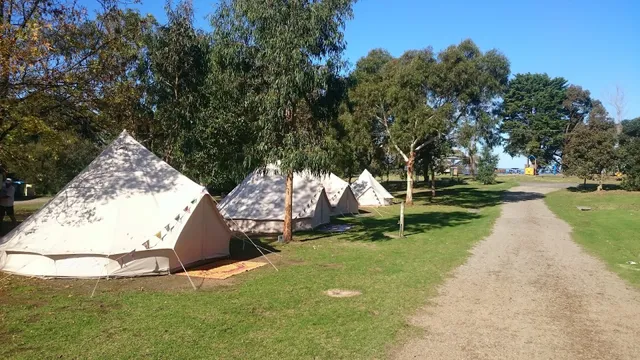
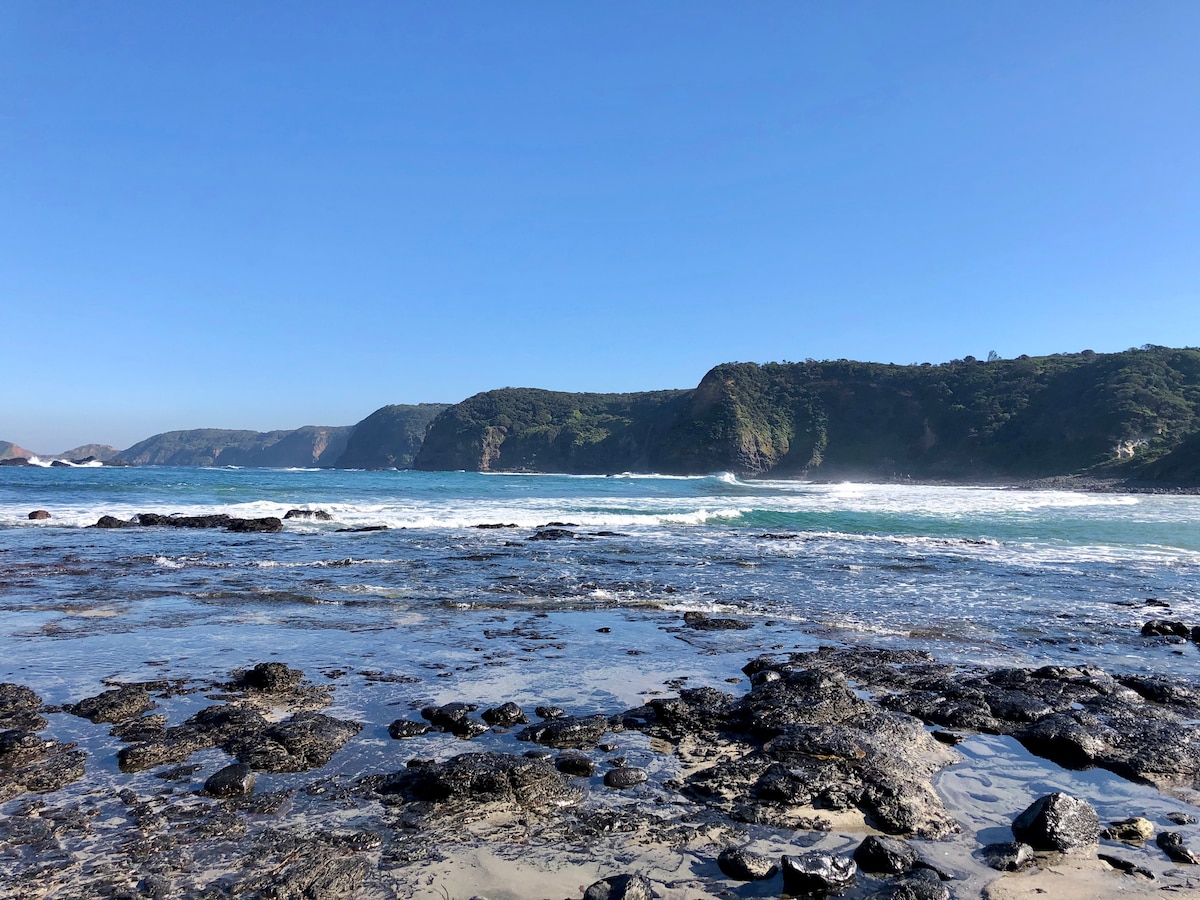
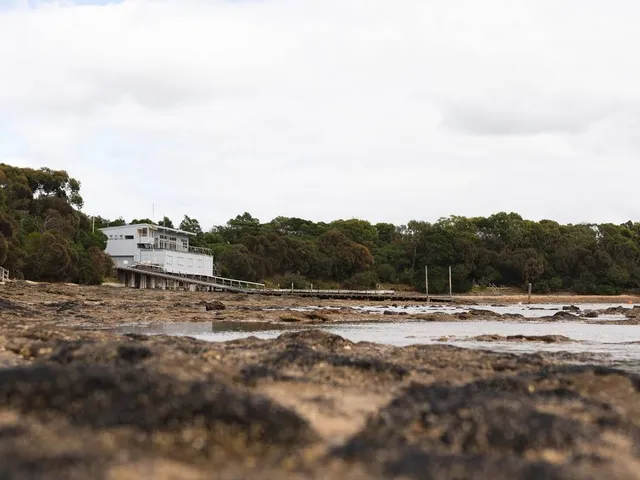
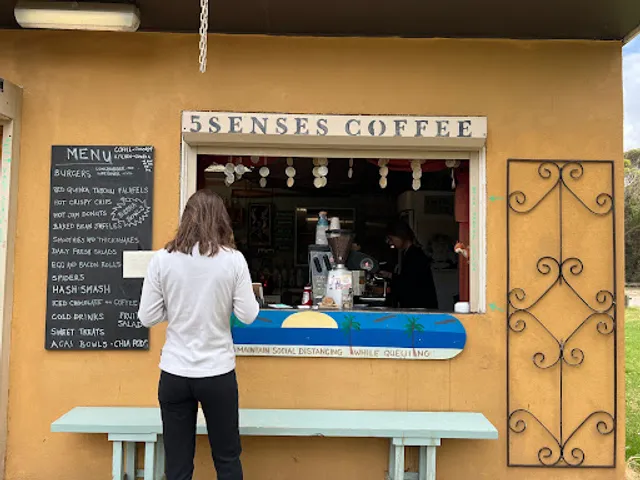
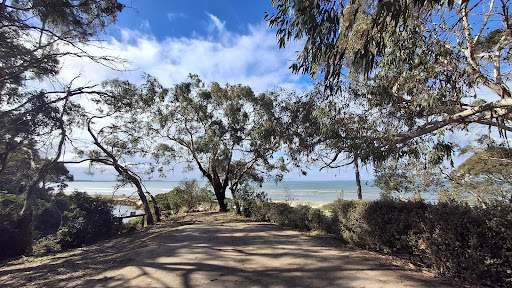
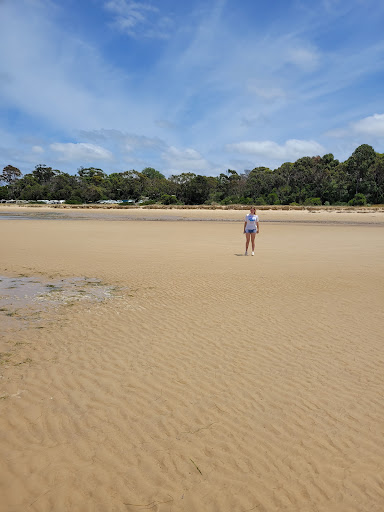
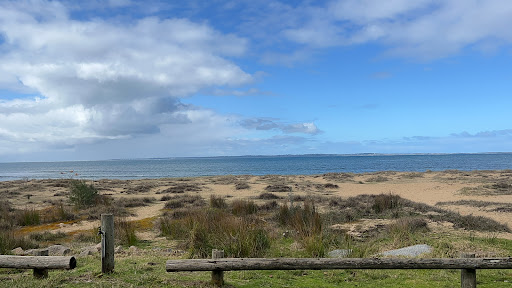
Β Β Β Read moreReview of camping at Point Leo Foreshore & Reserve, Mornington Peninsular.||||Camping at Point Leo. Whatβs not to enjoy about spending time in this comfortable and well-serviced green oasis on the south-east coast of the Morning Peninsular over-looking Western Port Bay. Just 5 km across the bay is Philip Island. At night from the heights of the camping site above the beach the lights of Ventnor and Cowes are bright against the darkness of the island. Look further southwest passed the end of Philip Island and you can imagine King Island over the horizon - almost 200 km away β closer to Tasmania than to Victoria. In between are the cold seas that are typical of this part of the coast.||Our group of 20 β handful of families with school-age kids kitted out for the cold and with the adults wary/watching them spent time playing around the rock platforms that are available at low tide. Captured rock pools quickly warm and provide space to explore with snorkels and face masks. There were lifeguards patrolling the beach opposite the surf school during our time and, a little further back from the beach there was a new cafΓ©/bar that had not been available when we were last there β three years ago (and post-Covid-19 lockdown). ||You canβt pass a new bar without exploring the choices. Weβd kept the place for our Sunday mid-morning coffee, and before heading away after two nights camping. Staff were flat-out servicing the passing beach/walker trade. Park behind the cafΓ© and the footpath takes you passed the cafΓ© and then the Lifeguard building on the way to the beach. As you approach the beach you trudge through loose sand by choice - given that thereβs a new-looking high wooden walkway alongside that crosses a dry creek bed; itβs easily negotiable with a wheelchair/minder. Someone has clearly given thought to people with disabilities.||The new lawns around the cafΓ© were fenced off from foot traffic except no one had taken the trouble to tell the local rabbits β not so much grazing young grass, but the endless scrapes and holes that had been made across the lawn. Many contained rabbit pellets β the smaller fibrous kind that are not eaten. Presumably this is rabbit country when the cafΓ© is closed. ||We had booked our half-dozen camping sites within easy reach of each other β to enable us to share a open-sided community roof/cover/centre β mainly for breakfast/talking/socializing. Weβd set up a small group of service tables for stoves, plates, serving dishes, etc. for family-focus meals and some sharing when, for example, there were pancakes and/or fruit available. The two evening meals had been one carry-in and one evening out, respectively, for Friday and Saturday; the former after the hassles of arriving/setting up camp and, the second, at a popular hotel in Flinders 10 minutes down the road heading south. Other times we had previously shared meals in Balnarring 10 minutes to the north; the commercial centre there offers a range of small eat-in/takeaway places for all the popular traditional holiday foods/meals. ||Drive out and then return and, with the kids ready/in bed, the adults could take time out to sit around with a glass of wine β¦ before they too caught up with the fatigue of the day.||The grounds of the campsite stretch around three sides of the Point with, respectively, one powered and two non-powered blocks/sites available. The lines of sites are spaced around the unsurfaced trails within the three blocks. Vehicles moving along the trails were a nuisance. It was a dry weekend, and the vehicles raised dust that hung along the trails and drifted across the sites. Vehicles/speed was also an issue with the many small kids running around. Modern ablution/kitchen units serviced each block. Chase the toilets in the night and you needed a torch and sense of direction. ||Then thereβs the bird life β the βbin chickensβ (Australian White Ibis) that roam the camp in groups like mobile waste collectors β edible waste only; the handful of koalas that are active around dawn and other wildlife that you canβt always see.||Kids, sand and sea are a natural β¦ except that the sea was mixed β robust waves at times and too cold to enjoy. It offers good surfing for the experienced. Our little group, however, spanning three generations did little more than play in the rock pools and wade into the receding waves and, of course, keep an eye on the little ones. Everyone in wet suits. There was a cold wind on the beach. Lots of time was spent building castles and moats with adjoining trenches.||At other times the beach is the place to be of an evening or early morning β we had a couple of joggers in the group for those 5, 7 or 10 km runs. For the rest of us - walk the foreshore when the rocks are exposed, and the gulls are working the pools of captured water for accessible food.||||Ever wonder who or what was βPoint Leoβ? The First Australians β the Boonwurrung tribe of the Kulin People β called the place Bobbinaring during a period of 40,000 years and long before settler communities started to arrive 200 years ago. Stories suggest the shape of the headland resembling that of a lion, but also the Christian name of a local merchant who traded in the area during the early part of the 20th century. The latter seems the more likely.||Whatever the derivation of the name, itβs not hard to imagine those First Australians fossicking along the beach for food available from the wildlife - flora and the fauna on land or in the sea. Time in which to let your imagination play on the evening shadows and catch the ghosts of people who passed this way long before you were there. ||Back in the camp thereβs a warm shower waiting and perhaps a group in our communal camp centre β socializing before that down-filled sleeping bag beckoned.||Peter...
Β Β Β Read moreReview covers Point Leo Foreshore Reserve - beaches, bushland and camping facilities.||||With release from lockdown mid-November last year the entire state became available β¦ well, apart from those few isolated places wherein the dreaded Covid-19 virus was able to escape quarantine into the local community. Like the majority of greater Melbourne we were quickly on the road once that 5 km radius from home was lifted, and the whole of the Mornington Peninsula was available.||Weekend camping at Point Leo in mid-March was an easy choice β following from earlier w/e visits in November and January (and another time close by in Balnarring); so it was #4 for us during this rather dysfunctional summer. Camping routines at Point Leo were following the recommended Covid-19 preventative rules when distancing the campers one-to-the-other (with every other site unoccupied), kitchens closed and only half the spaces/cubicles/showers in the ablutions useable. But then, by March, pressure on camping had eased and the spaciousness of the grounds, the empty footpaths through the wetlands and no competition for that shower or toilet enhanced the pleasure of being away; of leaving those urban routines of 15 months of pandemic behind.||Itβs been a particularly wet summer, and this came across well with the greenness of the reserve β lush grass, heavy vegetation and bird life that seemed to have burst into being. One downside, of course, was the extensive areas of erosion behind the beach with tree fall impacting the slopes. It was extensively fenced with warning signs of the dangers of falling timber.||The camping areas and facilities were clean, presentable and functional. One evening sitting around and eating our meal, we came across a line of people collecting trash across our part of the campsite, light hand-held collecting sticks in hand. They were friendly to a fault. Everything open on site was working well. There was plentiful hot water with regular pressure in the showers. At the bottom of the stairway to the beach adjacent to where we were camping (in the non-powered sites next to The Point) there was cold water/batherβs wash-off shower that also worked well.||The sea was mixed β robust waves and too cold to enjoy β and our little group spanning three generations did no more than wade into the receding waves and keep an eye on the little ones. Lots of time spent building those castles and moats with adjoining trenches. Dig down a metre or so 40 m from the edge of the waves and you could find sufficient water high up the beach, which was more than sufficient for the kids.||At other times the beach is the place to be of an evening or early morning β walk the foreshore when the rocks are exposed and the gulls are working the pools of captured water and/or when you can follow the lights on Phillip Island β those where people live and those towards the extreme west that were rotating and warning people out to sea.||And no, we did not see any of those bottle nose dolphins for which this stretch of coastal water is famous; weβve seen them other times, but not this time. (Neither did we see koala.) In any case, the wind was simply too cold to linger and/or stand around for long.||Thereβs this thing about camping with services/facilities easily available close by and, we did what we had done on earlier occasions, ordered our evening meal by phone and then drove into Balnarring to collect pizze that rivals the best of the Italian-made. Then the delight of sitting around of a sheltered evening in the reserve high above the beach with the evening turning into night β¦ eating/sharing those pizze; nine adults & seven little kids. Social camping doesnβt come much better than this.||And that name? Ever wonder who or what was Point Leo? The handout/brochure from the camping people doesnβt say, but thereβs reference to origin within the Point Leo Management Plan that you can find on the web. It dates from 2017. The First Australians β the Boonwurrung tribe of the Kulin People β called the place Bobbanaring during a period of 8,000 years before settler communities started to arrive during the mid-19th century; a township was proposed and surveyed. Local stories suggest the shape of the headland resembling that of a lion, but also the Christian name of a local merchant who traded in the area during the early part of the 20th century. The former seems the more likely β¦ 100 years after the settlers first turned up and the place remained unnamed?||Whatever the derivation of the name, itβs not hard to imagine those First Australians fossicking along the beach for whatever food that could be found/cultivated/nurtured/harvested from the wildlife - flora and fauna - on land or in the sea. Youβll have the beach largely to yourself much of the time β time in which to let your imagination play on the shadows and catch the ghosts of those people who passed this way long before you were there.||||Peter...
Weβve been coming here as a family for the past few years now, camping each time. Each year weβve had to enter the ballot to get a site due to the popularity of the area. This year was the first at a non powered site. While our son (and dad to a degree) were concerned about recharging digital devices the rest of the family were happy to be camping at Point Leo again. Good facilities in the past and this year sees a new kitchen, laundry and toilet block added to the non powered area we just happpend to score a site at. Thereβs a large communal kitchen area with a big fridge and freezer too which helped a lot. Lots of families, a patrolled surf beach (usually small waves which is great for little kids) and lots of rock pools for exploring. Nearby thereβs lots of vineyards for the adults to explore and regardless of where youβre camping you fall asleep to the sound of the surf the majority of the time which is amazing. Highly rated and friendly environment. Downsides - hard to book a site during peak times due to the number of return campers that get first rights to their site. If you love a campfire youβll be disappointed to hear thereβs a no fires policy (like most in the area I...
Β Β Β Read more