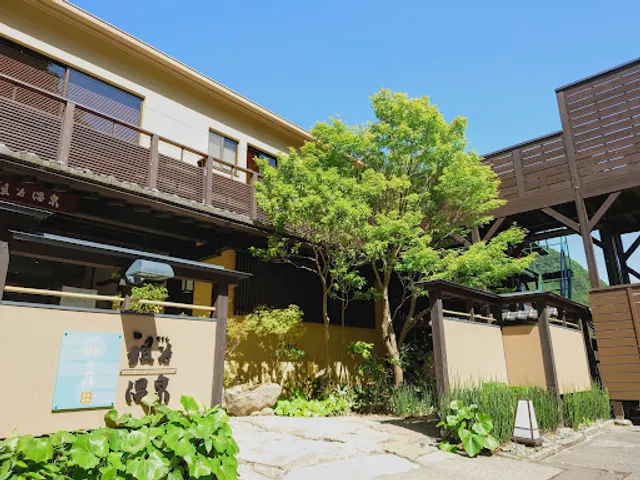
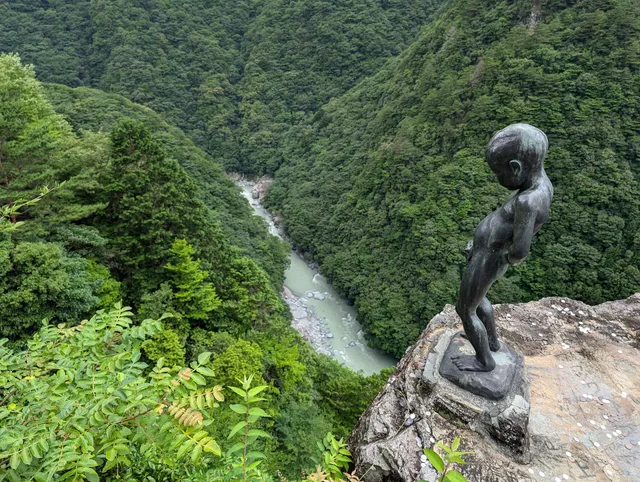
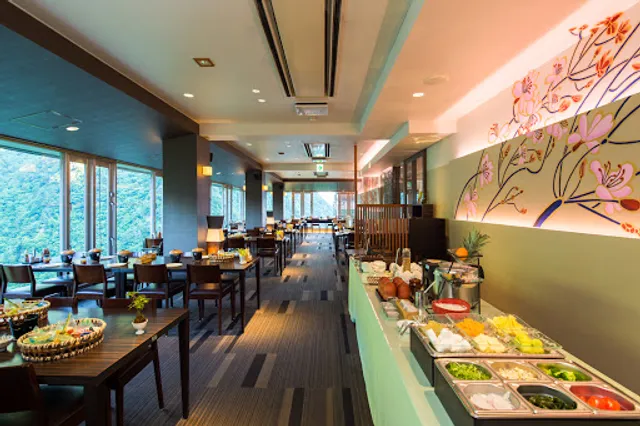
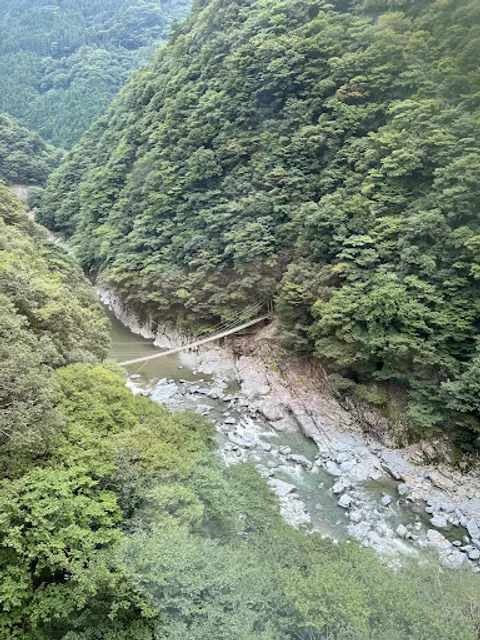
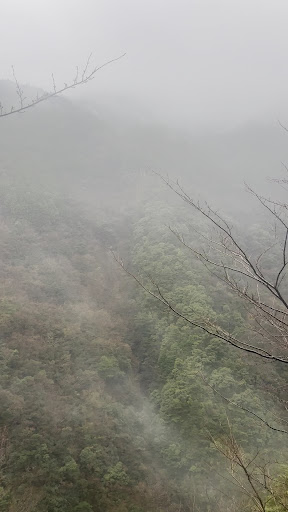
We stayed for 2 nights at Hotel Iyaonsen, and were impressed by the level of service, the food offerings, the condition of the room and especially the Onsen (natural hot springs) quality down in the valley (more on that in a moment.) We were already expecting it to be remotely situated with incredible valley/mountain views, and on that (and all other) fronts, our hopes and expectations were more than met.||||As other reviewers have already noted, the drive to Hotel Iyaonsen - while not exactly a harrowing experience - is one that requires alertness... the road is barely wide enough for one vehicle, and if you spot a car approaching from the opposite direction, one of the drivers will have to back up to an area where there's sufficient width in the road for both cars to slide past one another. It's also very twisty - so much so, that it's really not practical to be barreling down the mountain pass in any case. Thankfully, there are mirrors placed at the corners of each sharp turn so that drivers are able to see oncoming traffic ahead of time. In my mind, this added to the charm of being somewhere so remote, even if it's a bit of a hassle to get there.||||We stayed in a room called "Tamayura" (Room #505, to be exact), which is the top room at the property. It's a corner room located on the top floor, and has an open-air outdoor Onsen bath to boot. Measuring 47m², it pales in comparison to highest category rooms at other ryokans we've stayed at, but the layout made it feel more spacious than its measurements would suggest. Tamayura had a living room, a smaller area where you can enjoy the Valley view, and a separate sleeping area.... none of them were segregated by walls, which added to the airy feel but might bother some guests accustomed to having distinctly separate living/sleeping areas. While it's Japanese in design and decor, it was more modern than traditional. The room had an earthly tone and allowed an abundance of natural light to enter, making it seem fresh and new. The Onsen and shower were located on the deck, and exposed to the elements. Now, I am used to having an open-air Onsen bath (in fact, in most cases I prefer it), but also having to shower outside (before getting into the Onsen) could be painful if it was in the dead of winter. The other drawback has to do with the in-room Onsen itself - it's not of the free-flowing variety; you have to fill it up from scratch each time you bathe. While it probably takes no more than 20 minutes for the bath to fill up, you might spend a bit more time regulating the temperature (by turning either the cold or hot water tap) until it's just right for you.||||Thankfully, this is made up by the awesome Onsen down in the valley. There is a cable car that shuttles (paying) guests to and from the bottom of the Valley, where there are separate men/women communal Onsen baths. There are also baths that you can rent privately (at extra cost.) All of them were amazing - the hot springs were soft, supple, slippery and full of natural minerals... we could just feel the hot springs-ness of the bath. All along, we were able to enjoy views of the river that flows right in front of the Onsen. Truly an experience that we will cherish.||||We loved our first dinner at Iyaonsen; the chef did a wonderful job focusing on local ingredients and recipes (or, if not practical, ingredients from elsewhere near Shikoku island.) We were blown away the salt-grilled "Amago," a trout-based fish that's specific to parts of Japan and a major delicacy. It was full of flavor, not fishy at all (which is not easy for a river fish), soft but plump, and edible from head to tail. We were also treated to local pork, Iya-style Soba noodles that uses 100% pure buckwheat flour (which is very uncommon elsewhere in Japan) and Pike Conger from the Naruto area. The second dinner was less impressive - I suspect that the vast majority of guests (mostly Japanese, I suspect) are merely passing by and stay no more than one night. Therefore, for outliers like us they generally may not have an abundance of Plan B options to serve. For instance, instead of rice at the end (well, just before dessert), they served us Udon noodles, which is fine. Except that it tasted like any frozen Udon that you can purchase in a Supermarket. When I asked them what type of Udon it was, the waiter disappeared into the kitchen to inquire with the staff, came back, and told us it was "Sanuki Udon." No... we know Sanuki Udon, and it was nothing like what we had just enjoyed in Kagawa Prefecture, both in terms of style as well as overall quality. On the positive side, for the traditional "Sashimi" course offering, they elected to offer us raw local Konjac as well as raw Yuba Tofu (which is made with a kind of soy milk that's usually used to make Yuba Tofu skin, if that makes any sense!) They were consumed with soy sauce and wasabi, just like Sashimi. Well, to say we were impressed would be a major understatement; they were both sublime! For us, it's just as memorable to have unique items that offer us sensations that we haven't experienced before. On that front, Iyaonsen definitely succeeded.||||For people that are looking to visit a beautiful place in Japan that's really off the beaten path, but still desire comfortable accommodations and good food, we highly recommend Iya Valley and Hotel Iyaonsen. To get around, however, we also strongly suggest that you rent a car and drive, as all of the tourist sites (aside from the Peeing Boy statue) are in no way within walking distance, and we never saw a single bus during our time...
Read moreWe stayed for 2 nights at Hotel Iyaonsen, and were impressed by the level of service, the food offerings, the condition of the room and especially the Onsen (natural hot springs) quality down in the valley (more on that in a moment.) We were already expecting it to be remotely situated with incredible valley/mountain views, and on that (and all other) fronts, our hopes and expectations were more than met.||||As other reviewers have already noted, the drive to Hotel Iyaonsen - while not exactly a harrowing experience - is one that requires alertness... the road is barely wide enough for one vehicle, and if you spot a car approaching from the opposite direction, one of the drivers will have to back up to an area where there's sufficient width in the road for both cars to slide past one another. It's also very twisty - so much so, that it's really not practical to be barreling down the mountain pass in any case. Thankfully, there are mirrors placed at the corners of each sharp turn so that drivers are able to see oncoming traffic ahead of time. In my mind, this added to the charm of being somewhere so remote, even if it's a bit of a hassle to get there.||||We stayed in a room called "Tamayura" (Room #505, to be exact), which is the top room at the property. It's a corner room located on the top floor, and has an open-air outdoor Onsen bath to boot. Measuring 47m², it pales in comparison to highest category rooms at other ryokans we've stayed at, but the layout made it feel more spacious than its measurements would suggest. Tamayura had a living room, a smaller area where you can enjoy the Valley view, and a separate sleeping area.... none of them were segregated by walls, which added to the airy feel but might bother some guests accustomed to having distinctly separate living/sleeping areas. While it's Japanese in design and decor, it was more modern than traditional. The room had an earthly tone and allowed an abundance of natural light to enter, making it seem fresh and new. The Onsen and shower were located on the deck, and exposed to the elements. Now, I am used to having an open-air Onsen bath (in fact, in most cases I prefer it), but also having to shower outside (before getting into the Onsen) could be painful if it was in the dead of winter. The other drawback has to do with the in-room Onsen itself - it's not of the free-flowing variety; you have to fill it up from scratch each time you bathe. While it probably takes no more than 20 minutes for the bath to fill up, you might spend a bit more time regulating the temperature (by turning either the cold or hot water tap) until it's just right for you.||||Thankfully, this is made up by the awesome Onsen down in the valley. There is a cable car that shuttles (paying) guests to and from the bottom of the Valley, where there are separate men/women communal Onsen baths. There are also baths that you can rent privately (at extra cost.) All of them were amazing - the hot springs were soft, supple, slippery and full of natural minerals... we could just feel the hot springs-ness of the bath. All along, we were able to enjoy views of the river that flows right in front of the Onsen. Truly an experience that we will cherish.||||We loved our first dinner at Iyaonsen; the chef did a wonderful job focusing on local ingredients and recipes (or, if not practical, ingredients from elsewhere near Shikoku island.) We were blown away the salt-grilled "Amago," a trout-based fish that's specific to parts of Japan and a major delicacy. It was full of flavor, not fishy at all (which is not easy for a river fish), soft but plump, and edible from head to tail. We were also treated to local pork, Iya-style Soba noodles that uses 100% pure buckwheat flour (which is very uncommon elsewhere in Japan) and Pike Conger from the Naruto area. The second dinner was less impressive - I suspect that the vast majority of guests (mostly Japanese, I suspect) are merely passing by and stay no more than one night. Therefore, for outliers like us they generally may not have an abundance of Plan B options to serve. For instance, instead of rice at the end (well, just before dessert), they served us Udon noodles, which is fine. Except that it tasted like any frozen Udon that you can purchase in a Supermarket. When I asked them what type of Udon it was, the waiter disappeared into the kitchen to inquire with the staff, came back, and told us it was "Sanuki Udon." No... we know Sanuki Udon, and it was nothing like what we had just enjoyed in Kagawa Prefecture, both in terms of style as well as overall quality. On the positive side, for the traditional "Sashimi" course offering, they elected to offer us raw local Konjac as well as raw Yuba Tofu (which is made with a kind of soy milk that's usually used to make Yuba Tofu skin, if that makes any sense!) They were consumed with soy sauce and wasabi, just like Sashimi. Well, to say we were impressed would be a major understatement; they were both sublime! For us, it's just as memorable to have unique items that offer us sensations that we haven't experienced before. On that front, Iyaonsen definitely succeeded.||||For people that are looking to visit a beautiful place in Japan that's really off the beaten path, but still desire comfortable accommodations and good food, we highly recommend Iya Valley and Hotel Iyaonsen. To get around, however, we also strongly suggest that you rent a car and drive, as all of the tourist sites (aside from the Peeing Boy statue) are in no way within walking distance, and we never saw a single bus during our time...
Read moreI stayed for 2 nights, and the experience has been unforgettable in positive ways, most especially due to the frontline staff at various points of service and in different roles. Being greeted with my name printed and checked from the guest list by the kind driver was reassuring. On the way to the hotel, the driver graciously stopped briefly at a famous photo spot to take pictures. It was drizzling, but since I don’t speak Japanese and didn’t want to add trouble to the group, I just ran out of the car to take pictures, not caring about getting wet. The driver kindly opened an umbrella for me to shield myself.
After using the onsen, there was a moment when I pressed the button to call the cable car down. To my surprise, the cable car that was going up suddenly came back down again. Having stayed there for 2 nights and using the cable car many times, I became familiar with the routine, and I have to say each time, the controller was attentive, warm, and courteous. I cannot imagine doing such a job myself. There were newcomers who were not familiar with the mechanism yet, but I exchanged glances with the controller, and he knew I would take good care of the cable car. (When I was there for the first time, he explained to me how it worked carefully—I just want to emphasize that he remembers the guests and interacts warmly.)
Then there are the people who serve at the restaurant, explaining the meals to us. I appreciate how hard they try to learn and use English in order to communicate with us. It’s the effort that elevates the local cuisine experience. They work as a team too, taking turns to introduce the courses, not just sending someone who speaks English the best to serve international guests. So, literally, you get to be received by all of them. I remember the energy of a younger staff member and the calm tone of an older staff member who said, “Please relax.” I also want to highlight how the room cleaning staff greeted me each morning. Yes, he was checking on how I’d like the room cleaned, but even more so, he asked how I was doing, inquired about my plans for the day, and reminded me to take care. This is especially important for guests traveling alone, in my opinion.
On the second night of my stay, a strong wind weather warning was issued, and unfortunately, I stayed up for an hour in the middle of the night because of the banging noise of the wind against the building and through the gaps in the windows and doors. But the next morning, I opened the curtains and saw snow floating and falling. I admire the effort the team puts into making an onsen hotel run smoothly despite the geographical challenges.
On the second night after dinner, while I was resting in the armchair, I heard a siren coming. I thought, who in the deep mountains is asking for help? God, please help. Since my room overlooked the entrance, I saw the ambulance stopping right outside, and paramedics rushed in. To protect the patient’s privacy, I won’t go into details. But I want to highlight that while we were relaxing in the beauty of nature in this hidden cliffside onsen stay, the people here are working really hard to make this place function, and I want to honor that. Thank you very much for giving me a once-in-a-lifetime experience.
Practical note for those considering visiting: The stairs from the cable car station to the onsen are made of metal and can be slippery, as the signboard indicates. If you’re like me and not used to walking in yukata and slippers, wear trainers...
Read more