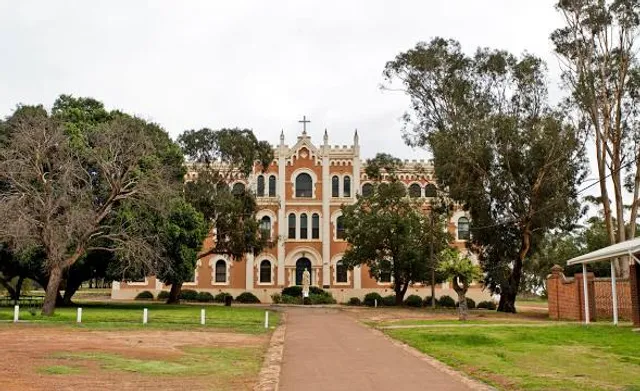
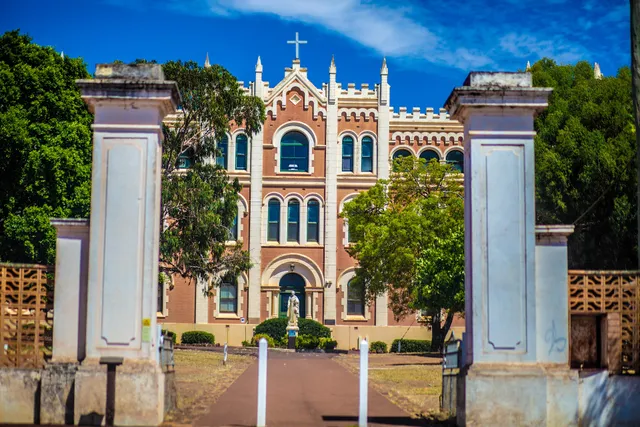
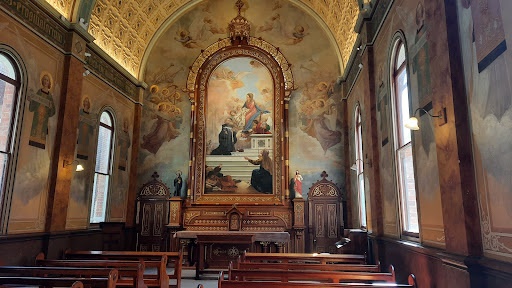
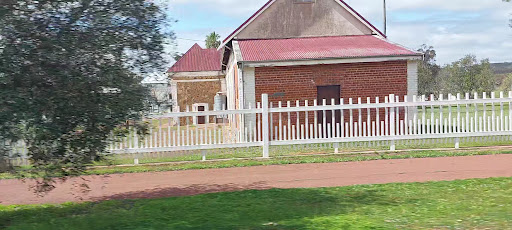
Absolutely well worth the drive to experience this fascinating part of Western Australian history. The town tour was also definitely worth my time, giving us access to buildings unavailable to self guided, and getting stories from our knowledgeable guide about the history of this fascinating place founded all the way back in 1847! They had some impressive art both in the art gallery but also on the ceilings and walls of the chapels. The roadhouse had some decent enough food to keep me going but I did take home some Abbey Ale beer which I found quite delicious. My day actually exceeded my expectations, would suit anyone interested in architecture, art, WA/ Australian history, religious history or just enjoy quirky road trip curios.
For anyone considering visiting, The tours are conducted at 11 and 1.30 and are 2 hours long. The museum/art gallery took me about an hour but someone who loves art could spend longer. The tour was completely secular focused on New Norcia's history and purpose with no pressure to participate in spiritual matters. For those whom are religious and wished to experience some of the spirituality of this place with the monks, mass was available to attend at 9 on Sunday (7.30 other days) and took 1 hour, and prayers in the oratory are conducted throughout the day. Everything was close walking distance. From the information centre the roadhouse for food was just a few minutes stroll, the church also a few minutes in the other direction. Bring sunscreen, a...
   Read moreVisiting New Norcia in Western Australia was a truly unique and enriching experience. As Australia’s only monastic town, it immediately stood out with its quiet charm, spiritual atmosphere, and stunning Spanish-style architecture. The moment I arrived, I could feel a deep sense of history and tranquility that’s hard to find elsewhere.
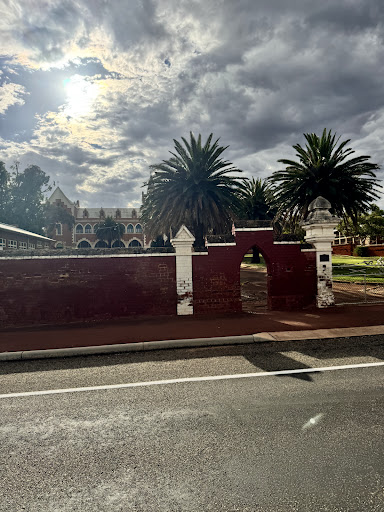
The town was founded by Benedictine monks in the 1840s, and their influence is still very present today. Walking through the historic buildings like the monastery, chapels, schools, and museum was like stepping back in time. Each structure told a story, and the guided tours offered fascinating insights into the daily lives of the monks and the town’s evolution. I was especially intrigued by the blend of European religious heritage with Indigenous Australian history — it gave the place a deeper cultural richness.
One of the highlights for me was visiting the New Norcia Museum and Art Gallery, which houses an impressive collection of religious art and historical artifacts. The tranquil gardens and wide open spaces also made it a peaceful place to just sit and reflect. And of course, I couldn’t leave without trying their famous monastery-baked bread and nut cake — both lived up to the hype!
New Norcia is not your typical tourist spot, but that’s what makes it so special. It’s a place for reflection, discovery, and slowing down. I’d definitely recommend it to anyone looking for a different kind of getaway in WA — one that feeds both the...
   Read moreThe Museum contains a fascinating array of artefacts that trace New Norcia’s time as an Aboriginal mission, a centre of extensive farming and as a place of education and culture.
The ground floor has the 19th century New Norcia display, a gift shop and the visitors centre; upstairs are the displays of church memorabilia, an exhibition which presents the era of the girls’ orphanage, a collection of Charles Austin Gardner botanic drawings and the art gallery, housing one of the largest collections of moveable religious art in Australia.
Over a series of interconnecting galleries, a mixture of significant artworks, furniture, objects and personal effects tell the surprising, complex story of Australia’s only monastic town. Founded in 1847 by Spanish Benedictine monks the site has been a large, imaginative mission for Aboriginal peoples, the centre of a vast pastoral enterprise, a place of education for both Indigenous and European children and a site of distinctly Mediterranean culture and devotion. The complex also houses two special permanent exhibitions. Life at St Joseph’s tells the insider story of Aboriginal girls and Benedictine Sisters who were the building’s first residents. The Gardner Room features the collection of Charles Austin Gardner, the pioneer West Australian botanist and early advocate for the state’s...
   Read more