HTML SitemapExplore

Itakhola Mura — Local services in Chattogram Division

Name
Itakhola Mura
Description
Nearby attractions
Nearby restaurants
Nearby local services
Lalmai Pahar
Bangladesh
Nearby hotels
Related posts
Keywords
Itakhola Mura tourism.Itakhola Mura hotels.Itakhola Mura bed and breakfast. flights to Itakhola Mura.Itakhola Mura attractions.Itakhola Mura restaurants.Itakhola Mura local services.Itakhola Mura travel.Itakhola Mura travel guide.Itakhola Mura travel blog.Itakhola Mura pictures.Itakhola Mura photos.Itakhola Mura travel tips.Itakhola Mura maps.Itakhola Mura things to do.
Itakhola Mura things to do, attractions, restaurants, events info and trip planning
Itakhola Mura
BangladeshChattogram DivisionItakhola Mura

Basic Info

Itakhola Mura

C4QH+GPH, Kotbari, Bangladesh
4.4(315)
Open until 6:00 PM
Save
spot

Ratings & Description

Info

Cultural
Outdoor
Scenic
Off the beaten path
attractions: , restaurants: , local businesses: Lalmai Pahar
logoLearn more insights from Wanderboat AI.
Open hoursSee all hours
Sun5 AM - 6 PMOpen

Plan your stay

hotel
Pet-friendly Hotels in Chattogram Division
Find a cozy hotel nearby and make it a full experience.
hotel
Affordable Hotels in Chattogram Division
Find a cozy hotel nearby and make it a full experience.
hotel
The Coolest Hotels You Haven't Heard Of (Yet)
Find a cozy hotel nearby and make it a full experience.
hotel
Trending Stays Worth the Hype in Chattogram Division
Find a cozy hotel nearby and make it a full experience.

Reviews

Nearby local services of Itakhola Mura

Lalmai Pahar

Lalmai Pahar

Lalmai Pahar

4.3

(274)

Click for details
Get the Appoverlay
Get the AppOne tap to find yournext favorite spots!
Wanderboat LogoWanderboat

Your everyday Al companion for getaway ideas

CompanyAbout Us
InformationAI Trip PlannerSitemap
SocialXInstagramTiktokLinkedin
LegalTerms of ServicePrivacy Policy

Get the app

Š 2025 Wanderboat. All rights reserved.

Reviews of Itakhola Mura

4.4
(315)
avatar
5.0
2y

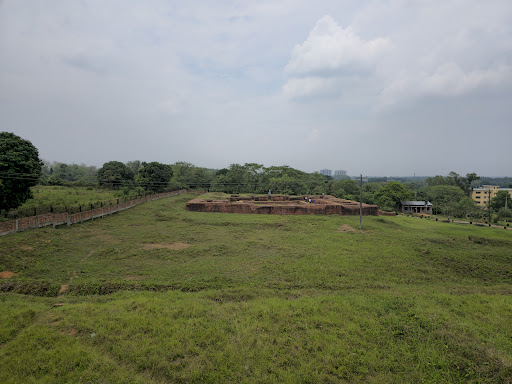
The archeological site of Itakhola Mura situated in Mainamati. The location is among the most spectacular ruins, along with the Kutila Mura. It is located in Comilla directly over the Kotbari road from the Rupban Mura site, in three terraces on nearby hillocks. The term comes from its lengthy history as a quarry for historic bricks. A large stupa complex with an accompanying monastery was discovered here during excavations, 42 meters to the north. The number of cultural periods at the site is stated (or overestimated) to be five, with the earliest three phases still buried beneath the later relics. On a basement measuring 13.1 meters square, the Stupa Complex was initially constructed as a monolithic stupa in the traditional form. It does, however, have one oddity: a little sanctuary (2.4m by 2.1m) constructed in the middle of its eastern, or front, side. An imperfect life-size stucco representation of Aksobhya was discovered here. This portion of the monument was surprisingly well-preserved, but sadly, the military cut off its jungle-covered top a few decades ago to construct a rest house here.

After sealing the old sanctum, the shrine was afterwards expanded and elaborated through additions and renovations, particularly by constructing three long, narrow chapels on the eastern side, giving the building an oblong shape (41.4m x 24m). It remarkably resembles the Rupban Mura shrine in this particular aspect. Eventually, the side chapels were closed off, leaving a few cubicles for mounting cult pictures, like in other areas of the shrine. A 2.6-meter-wide circumambulatory corridor and a 1.2-meter-thick border wall encircle this business. In the slightly lower second terrace, a much wider, more clearly defined, and better preserved border wall (79 m by 56 m) once more encloses this holy precinct. It has three fascinating auxiliary shrines: two are located in the eastern side's corners, while the third, a larger one, is located in the west's back. The eastern side's center features a grand entryway with 22 wide stairs that leads to the considerably lower third terrace. On this side, the damaged boundary wall's outside is beautifully ornamented with offsets, sunken panels, and decorative patterns. At the bottom of the lengthy stairway are five votive stupas, three of which are arranged in a north-south row inside of a clearly defined enclosure. These stupas are all semi-cruciform in shape, much like the larger subsidiary shrines on the western side of the second terrace. They unquestionably reflect a formative, early stage in the evolution of the cruciform style of Buddhist architecture, which is now prevalent at many other sites like Shalvan Vihara, Paharpur, and Vikramashila. It is reasonable to date these constructions to the seventh or eighth century AD.

This modestly sized monastery was constructed around a 16.2 m square open courtyard on a separate mound. It has 19 cells and one entry hall. Its enormous gateway structure, measuring 17.6 by 8.5 meters, is located in the middle of the eastern wing. Brick bedsteads can be found in a few of the cells. Brick hunters severely destroyed this building in 1944–1945. In addition to the stucco figure, notable artifacts from the location include three spherical gold pellets totaling 19 tolas that were found during clearance work following the excavations and a copperplate inscription. Unreadable copperplate...

   Read more
avatar
3.0
5y

Itakhola Mura an archaeological site in mainamati. The site, like that of the kutila mura, is one of the most impressive ruins. It lies in three terraces on adjacent hillocks just opposite the rupban mura site across the Kotbari road, Comilla. It served for a long time as a quarry for ancient bricks, hence the name. Excavations have revealed here a grand stupa complex with an attached monastery, located 42m to its north. The cultural phases of the site are stated (or overstated) to be five; the earlier three being still buried underneath the later remains.

Itakhola Mura The Stupa Complex was originally built as a solid stupa in the traditional style on a 13.1m square basement. However, it has one peculiarity; a small sanctum (2.4m ' 2.1m) built in the centre of its eastern or front side.

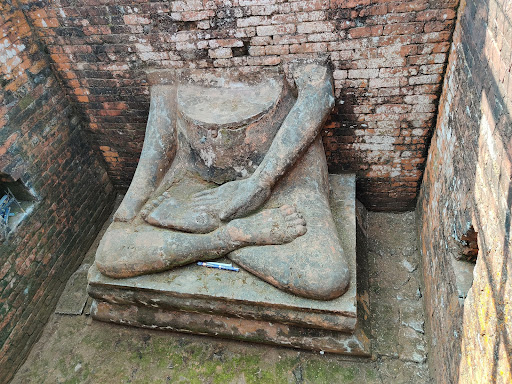
Here a damaged life-size stucco image of Aksobhya was found in situ. This part of the monument was fairly well preserved, but unfortunately, its jungle-covered top was sliced off by the military a few decades back to build a rest house here.

Subsequently, the shrine was enlarged and elaborated by additions and alterations, especially by adding three long narrow chapels in the eastern side after blocking the old sanctum; thus giving the structure an oblong shape (41.4m × 24m).

In this particular feature, it is strikingly similar to the Rupban Mura shrine. The side chapels were ultimately blocked up, leaving space for a few cubicles for installing cult images, as in other parts of the shrine. This establishment is surrounded by a 2.6m wide circumambulatory passage and is enclosed by a 1.2m thick boundary wall.

This holy precinct is again enclosed within a much larger, well-defined, and better preserved boundary wall (79 m ' 56 m), in the slightly lower second terrace. It contains three interesting subsidiary shrines, two in two corners of the eastern side, and the other, a slightly larger one, at the back in the west. An elaborate entrance with 22 broad steps at the centre of the eastern side leads to the much lower third terrace. The outer face of its damaged boundary wall in this front side is excellently decorated with offsets, sunken panels, and ornamental designs.

Five votive stupas lie at the base of the long staircase, three of them in a northsouth row within a well-defined enclosure, all semi-cruciform in shape, like that of the larger subsidiary shrines in the western side of the second terrace. They certainly represent an experimental early stage in the development of the cruciform style in Buddhist architecture that we see in mature form at shalvan vihara, paharpur, Vikramashila and many other sites. These structures may reasonably be dated as belonging to 7th-8th centuries AD.

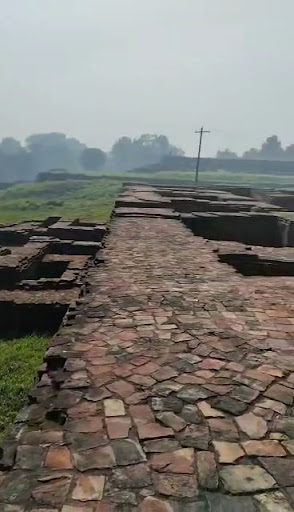
The Monastery This medium sized monastery of the usual square shape with 19 cells and one entrance hall was built around an open courtyard, 16.2m. square, on a separate mound. Its monumental gateway complex, 17.6m ' 8.5m, projects outwards, lies at the centre of the eastern wing. Some of the cells have brick-built bedsteads. This structure was badly damaged by brick-hunters in 1944-45.

Mentionable antiquities from the site, besides the stucco image, are three round pellets of solid gold, (19 tolas), and a copperplate inscription, discovered during clearance work after the excavations. The copperplate has not yet...

   Read more

avatar
5.0
7y

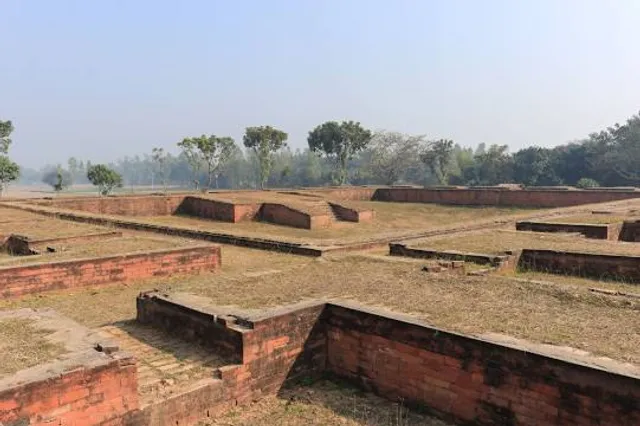
Itakhola Mura is an archaeological site in Mainamati. This site is one of the most impressive ruins. It lies in three terraces on adjacent hillocks just opposite the Rupban Mura site across the Kotbari road in Comilla. Excavations have revealed here a grand stupa complex with an attached monastery, located 42m to its north. The cultural phases of the site are stated (or overstated) to be five; the earlier three being still buried underneath the later remains.

The Stupa Complex was originally built as a solid stupa in the traditional style on a 13.1 meter square basement. However, it has one peculiarity; a small sanctum (2.4 m x 2.1 m) built in the center of its eastern or front side.

Subsequently, the shrine was enlarged and elaborated by additions and alterations, especially by adding three long narrow chapels in the eastern side after blocking the old sanctum; thus giving the structure an oblong shape (41.4 m x 24m). In this particular feature, it is strikingly similar to the Rupban Mura shrine. The side chapels were ultimately blocked up, leaving space for a few cubicles for installing cult images, as in other parts of the shrine. This establishment is surrounded by a 2.6 m wide circumlocutory passage and is enclosed by a 1.2 m thick boundary wall.

This holy precinct is again enclosed within a much larger, well-defined, and better preserved boundary wall (79 m x 56 m), in the slightly lower second terrace. It contains three interesting subsidiary shrines, two in two corners of the eastern side, and the other, a slightly larger one, at the back in the west. An elaborate entrance with 22 broad steps at the Center of the eastern side leads to the much lower third terrace. The outer face of its damaged boundary wall in this front side is excellently decorated with offsets, sunken panels, and ornamental designs.

Five votive stupas lie at the base of the long staircase, three of them in a north south row within a well-defined enclosure, all semi-cruciform in shape, like that of the larger subsidiary shrines in the western side of the second terrace. They certainly represent an experimental early stage in the development of the cruciform style in Buddhist architecture that we see in mature form at shalvan vihara, paharpur, Vikramashila and many other sites. These structures may reasonably be dated as belonging to 7th-8th centuries AD.

The Monastery This medium sized monastery of the usual square shape with 19 cells and one entrance hall was built around an open courtyard, 16.2m. Square, on a separate mound. Its monumental gateway complex, 17.6m x 8.5m, projecting outwards, lies at the Centre of the eastern wing. Some of the cells have brick-built bedsteads. This structure was badly damaged by brick-hunters in 1944-45.

Mentionable antiquities from the site, besides the stucco image, are three round pellets of solid gold, (19 tolas), and a copperplate inscription, discovered during clearance work after the excavations. The copperplate has not yet...

   Read more
Page 1 of 7
Previous
Next

Posts

Murshed RumiMurshed Rumi
The archeological site of Itakhola Mura situated in Mainamati. The location is among the most spectacular ruins, along with the Kutila Mura. It is located in Comilla directly over the Kotbari road from the Rupban Mura site, in three terraces on nearby hillocks. The term comes from its lengthy history as a quarry for historic bricks. A large stupa complex with an accompanying monastery was discovered here during excavations, 42 meters to the north. The number of cultural periods at the site is stated (or overestimated) to be five, with the earliest three phases still buried beneath the later relics. On a basement measuring 13.1 meters square, the Stupa Complex was initially constructed as a monolithic stupa in the traditional form. It does, however, have one oddity: a little sanctuary (2.4m by 2.1m) constructed in the middle of its eastern, or front, side. An imperfect life-size stucco representation of Aksobhya was discovered here. This portion of the monument was surprisingly well-preserved, but sadly, the military cut off its jungle-covered top a few decades ago to construct a rest house here. After sealing the old sanctum, the shrine was afterwards expanded and elaborated through additions and renovations, particularly by constructing three long, narrow chapels on the eastern side, giving the building an oblong shape (41.4m x 24m). It remarkably resembles the Rupban Mura shrine in this particular aspect. Eventually, the side chapels were closed off, leaving a few cubicles for mounting cult pictures, like in other areas of the shrine. A 2.6-meter-wide circumambulatory corridor and a 1.2-meter-thick border wall encircle this business. In the slightly lower second terrace, a much wider, more clearly defined, and better preserved border wall (79 m by 56 m) once more encloses this holy precinct. It has three fascinating auxiliary shrines: two are located in the eastern side's corners, while the third, a larger one, is located in the west's back. The eastern side's center features a grand entryway with 22 wide stairs that leads to the considerably lower third terrace. On this side, the damaged boundary wall's outside is beautifully ornamented with offsets, sunken panels, and decorative patterns. At the bottom of the lengthy stairway are five votive stupas, three of which are arranged in a north-south row inside of a clearly defined enclosure. These stupas are all semi-cruciform in shape, much like the larger subsidiary shrines on the western side of the second terrace. They unquestionably reflect a formative, early stage in the evolution of the cruciform style of Buddhist architecture, which is now prevalent at many other sites like Shalvan Vihara, Paharpur, and Vikramashila. It is reasonable to date these constructions to the seventh or eighth century AD. This modestly sized monastery was constructed around a 16.2 m square open courtyard on a separate mound. It has 19 cells and one entry hall. Its enormous gateway structure, measuring 17.6 by 8.5 meters, is located in the middle of the eastern wing. Brick bedsteads can be found in a few of the cells. Brick hunters severely destroyed this building in 1944–1945. In addition to the stucco figure, notable artifacts from the location include three spherical gold pellets totaling 19 tolas that were found during clearance work following the excavations and a copperplate inscription. Unreadable copperplate still exists.
Your browser does not support the video tag.
Md. Kamal PashaMd. Kamal Pasha
Wonderful archeological site
Azwad OniAzwad Oni
Itakhola Mura an archaeological site in mainamati. The site, like that of the kutila mura, is one of the most impressive ruins. It lies in three terraces on adjacent hillocks just opposite the rupban mura site across the Kotbari road, Comilla. It served for a long time as a quarry for ancient bricks, hence the name. Excavations have revealed here a grand stupa complex with an attached monastery, located 42m to its north. The cultural phases of the site are stated (or overstated) to be five; the earlier three being still buried underneath the later remains. īŋŧItakhola Mura The Stupa Complex was originally built as a solid stupa in the traditional style on a 13.1m square basement. However, it has one peculiarity; a small sanctum (2.4m ' 2.1m) built in the centre of its eastern or front side. Here a damaged life-size stucco image of Aksobhya was found in situ. This part of the monument was fairly well preserved, but unfortunately, its jungle-covered top was sliced off by the military a few decades back to build a rest house here. Subsequently, the shrine was enlarged and elaborated by additions and alterations, especially by adding three long narrow chapels in the eastern side after blocking the old sanctum; thus giving the structure an oblong shape (41.4m × 24m). In this particular feature, it is strikingly similar to the Rupban Mura shrine. The side chapels were ultimately blocked up, leaving space for a few cubicles for installing cult images, as in other parts of the shrine. This establishment is surrounded by a 2.6m wide circumambulatory passage and is enclosed by a 1.2m thick boundary wall.
See more posts
See more posts
hotel
Find your stay

Pet-friendly Hotels in Chattogram Division

Find a cozy hotel nearby and make it a full experience.

The archeological site of Itakhola Mura situated in Mainamati. The location is among the most spectacular ruins, along with the Kutila Mura. It is located in Comilla directly over the Kotbari road from the Rupban Mura site, in three terraces on nearby hillocks. The term comes from its lengthy history as a quarry for historic bricks. A large stupa complex with an accompanying monastery was discovered here during excavations, 42 meters to the north. The number of cultural periods at the site is stated (or overestimated) to be five, with the earliest three phases still buried beneath the later relics. On a basement measuring 13.1 meters square, the Stupa Complex was initially constructed as a monolithic stupa in the traditional form. It does, however, have one oddity: a little sanctuary (2.4m by 2.1m) constructed in the middle of its eastern, or front, side. An imperfect life-size stucco representation of Aksobhya was discovered here. This portion of the monument was surprisingly well-preserved, but sadly, the military cut off its jungle-covered top a few decades ago to construct a rest house here. After sealing the old sanctum, the shrine was afterwards expanded and elaborated through additions and renovations, particularly by constructing three long, narrow chapels on the eastern side, giving the building an oblong shape (41.4m x 24m). It remarkably resembles the Rupban Mura shrine in this particular aspect. Eventually, the side chapels were closed off, leaving a few cubicles for mounting cult pictures, like in other areas of the shrine. A 2.6-meter-wide circumambulatory corridor and a 1.2-meter-thick border wall encircle this business. In the slightly lower second terrace, a much wider, more clearly defined, and better preserved border wall (79 m by 56 m) once more encloses this holy precinct. It has three fascinating auxiliary shrines: two are located in the eastern side's corners, while the third, a larger one, is located in the west's back. The eastern side's center features a grand entryway with 22 wide stairs that leads to the considerably lower third terrace. On this side, the damaged boundary wall's outside is beautifully ornamented with offsets, sunken panels, and decorative patterns. At the bottom of the lengthy stairway are five votive stupas, three of which are arranged in a north-south row inside of a clearly defined enclosure. These stupas are all semi-cruciform in shape, much like the larger subsidiary shrines on the western side of the second terrace. They unquestionably reflect a formative, early stage in the evolution of the cruciform style of Buddhist architecture, which is now prevalent at many other sites like Shalvan Vihara, Paharpur, and Vikramashila. It is reasonable to date these constructions to the seventh or eighth century AD. This modestly sized monastery was constructed around a 16.2 m square open courtyard on a separate mound. It has 19 cells and one entry hall. Its enormous gateway structure, measuring 17.6 by 8.5 meters, is located in the middle of the eastern wing. Brick bedsteads can be found in a few of the cells. Brick hunters severely destroyed this building in 1944–1945. In addition to the stucco figure, notable artifacts from the location include three spherical gold pellets totaling 19 tolas that were found during clearance work following the excavations and a copperplate inscription. Unreadable copperplate still exists.
Murshed Rumi

Murshed Rumi

hotel
Find your stay

Affordable Hotels in Chattogram Division

Find a cozy hotel nearby and make it a full experience.

Get the Appoverlay
Get the AppOne tap to find yournext favorite spots!
Wonderful archeological site
Md. Kamal Pasha

Md. Kamal Pasha

hotel
Find your stay

The Coolest Hotels You Haven't Heard Of (Yet)

Find a cozy hotel nearby and make it a full experience.

hotel
Find your stay

Trending Stays Worth the Hype in Chattogram Division

Find a cozy hotel nearby and make it a full experience.

Itakhola Mura an archaeological site in mainamati. The site, like that of the kutila mura, is one of the most impressive ruins. It lies in three terraces on adjacent hillocks just opposite the rupban mura site across the Kotbari road, Comilla. It served for a long time as a quarry for ancient bricks, hence the name. Excavations have revealed here a grand stupa complex with an attached monastery, located 42m to its north. The cultural phases of the site are stated (or overstated) to be five; the earlier three being still buried underneath the later remains. īŋŧItakhola Mura The Stupa Complex was originally built as a solid stupa in the traditional style on a 13.1m square basement. However, it has one peculiarity; a small sanctum (2.4m ' 2.1m) built in the centre of its eastern or front side. Here a damaged life-size stucco image of Aksobhya was found in situ. This part of the monument was fairly well preserved, but unfortunately, its jungle-covered top was sliced off by the military a few decades back to build a rest house here. Subsequently, the shrine was enlarged and elaborated by additions and alterations, especially by adding three long narrow chapels in the eastern side after blocking the old sanctum; thus giving the structure an oblong shape (41.4m × 24m). In this particular feature, it is strikingly similar to the Rupban Mura shrine. The side chapels were ultimately blocked up, leaving space for a few cubicles for installing cult images, as in other parts of the shrine. This establishment is surrounded by a 2.6m wide circumambulatory passage and is enclosed by a 1.2m thick boundary wall.
Azwad Oni

Azwad Oni

See more posts
See more posts