HTML SitemapExplore

RIOgaleão International Airport — Local services in Região Geográfica Imediata do Rio de Janeiro

Name
RIOgaleão International Airport
Description
Nearby attractions
Nearby restaurants
Casa da Empada
R. C, 864 - Galeão, Rio de Janeiro - RJ, 21941-570, Brazil
Nearby local services
Nearby hotels
Rio Aeroporto Hotel Galeão
RIOgaleão Int'l Airport - Av. Vinte de Janeiro, 3 andar - Terminal 1 - Galeão, Rio de Janeiro - RJ, 21941-900, Brazil
Related posts
Keywords
RIOgaleão International Airport tourism.RIOgaleão International Airport hotels.RIOgaleão International Airport bed and breakfast. flights to RIOgaleão International Airport.RIOgaleão International Airport attractions.RIOgaleão International Airport restaurants.RIOgaleão International Airport local services.RIOgaleão International Airport travel.RIOgaleão International Airport travel guide.RIOgaleão International Airport travel blog.RIOgaleão International Airport pictures.RIOgaleão International Airport photos.RIOgaleão International Airport travel tips.RIOgaleão International Airport maps.RIOgaleão International Airport things to do.
RIOgaleão International Airport things to do, attractions, restaurants, events info and trip planning
RIOgaleão International Airport
BrazilRio de JaneiroRegião Geográfica Imediata do Rio de JaneiroRIOgaleão International Airport

Basic Info

RIOgaleão International Airport

Av. Vinte de Janeiro, s/nº - Ilha do Governador, Rio de Janeiro - RJ, 21941-900, Brazil
4.3(11.4K)
Save
spot

Ratings & Description

Info

Cultural
Entertainment
Accessibility
Family friendly
attractions: , restaurants: Casa da Empada, local businesses:
logoLearn more insights from Wanderboat AI.
Phone
+55 21 3004-6050
Website
riogaleao.com

Plan your stay

hotel
Pet-friendly Hotels in Região Geográfica Imediata do Rio de Janeiro
Find a cozy hotel nearby and make it a full experience.
hotel
Affordable Hotels in Região Geográfica Imediata do Rio de Janeiro
Find a cozy hotel nearby and make it a full experience.
hotel
The Coolest Hotels You Haven't Heard Of (Yet)
Find a cozy hotel nearby and make it a full experience.
hotel
Trending Stays Worth the Hype in Região Geográfica Imediata do Rio de Janeiro
Find a cozy hotel nearby and make it a full experience.

Reviews

Live events

Pedra do Telégrafo & Secret Beaches - Rio de Janeiro
Wed, Jan 28 • 6:00 AM
Rio de Janeiro, Rio de Janeiro, 22011-002, Brazil
View details
Sunrise on Morro Dois Irmãos
Wed, Jan 28 • 3:00 AM
Rio de Janeiro, Rio de Janeiro, 22450-241, Brazil
View details
Discover Rios Historic Center
Tue, Jan 27 • 2:00 PM
Rio de Janeiro, Rio de Janeiro, 20010-150, Brazil
View details

Nearby restaurants of RIOgaleão International Airport

Casa da Empada

Casa da Empada

Casa da Empada

5.0

(1)

Closed
Click for details
Get the Appoverlay
Get the AppOne tap to find yournext favorite spots!
Wanderboat LogoWanderboat

Your everyday Al companion for getaway ideas

CompanyAbout Us
InformationAI Trip PlannerSitemap
SocialXInstagramTiktokLinkedin
LegalTerms of ServicePrivacy Policy

Get the app

© 2025 Wanderboat. All rights reserved.

Reviews of RIOgaleão International Airport

4.3
(11,354)
avatar
5.0
4y

Portuguese explorers arrived on the bay on January 1st, 1502. The city was not established by the Portuguese until 1565 and it was named Sao Sebastiao do Rio de Janeiro. In 1763 Rio became the Portuguese colonial capital. During this time sugarcane was the main crop being cultivated until gold and diamonds were discovered in the surrounding areas. Because of Rio’s proximity to the bay and coast, it became a port to ship the precious exports back to Portugal. In 1822, Brazil became independent from Portugal and Rio de Janeiro became the new capital. During this time Rio de Janeiro became the cultural, political, and economic center of Brazil. Rio remained the capital of Brazil until 1960 when the capital was moved to Brasilia.

Rio de Janeiro has a diverse landscape containing seas, mountains, and forests. Directly to the east lies the Guanabara Bay which contains many islands. It has close proximity to the Tropic of Capricorn. Rio has an area of about 485 square miles (“Rio De Janeiro Population 2019,” 2019). Because Rio is located in the Southern Hemisphere summer falls from October to January and winter runs from June to August. However, because of its tropical climate temperatures are relatively warm year round. Rio sometimes gets cold fronts from the Antarctica region. Rio is loosely divided into four different zones: the north, south, central, and west zone. The north zone is where a majority of the favelas are located. It is commonly associated with poverty and crime. It is also home to the Sambadrome. The south zone is known for high income and lots of tourism. It is home to Copacabana Beach, many high-end hotels, shops, and restaurants. The west zone is the biggest of the zones and is where Olympic Park is located. Because of this many new hotels have popped up in the area. The central zone is considered to be the economic center of the city. It is where the Port of Rio is. It has recently been revitalized and has many historic buildings and museums.

Rio de Janeiro is the second largest municipality in Brazil. In 2016 its population was estimated to be around 6.5 million people while the metro area had an estimated population of around 12 million residents (“Rio De Janeiro Population 2019,” 2019). About 25% of Rio’s population lives in favelas (Ortiz, 2016). Brazil is a representative democratic country and is divided into three branches, the executive, legislative, and judicial. Some of the main political parties are the Workers’ Party, the Brazilian Democratic Movement Party, and the Social Liberal Party (“Brazil: Economic and Political Outline,” 2019). The current president of Brazil is a member of the Social Liberal Party. Rio de Janeiro is ruled by a mayor. Marcelo Crivella is currently serving as Rio’s mayor (Charner, 2017). His election meant a shift from Brazil’s socialist left ideologies to the conservative right. He won by a margin of almost 20% and promised to bring improvements to public services (Charner, 2016).

Rio de Janeiro is considered to be the cultural capital of Brazil. One of the main reasons it is considered to be the cultural capital of Brazil is because of the Carnival. It is a five-day carnival held before lent in the Sambadrome. The samba dance is a big part of the celebration and there is a samba competition between Rio’s samba schools. It is judged by a panel of forty judges that closely scrutinize the technique of each dance.

Figure 1: This image shows a float in the Carnival parade located in the Sambadrome.

There is also a large New Year’s Eve celebration on the Copacabana beach. Rio is also the primary place for cinematic production in Brazil. The residents of Rio enjoy a relaxed lifestyle, and they enjoy sunbathing on the beach, playing sports, and going out to bars and restaurants. Soccer is the primary sport in Rio, the city actually hosted the 2014 World Cup. Other sports people enjoy playing are volleyball, basketball, and tennis. Rio is home to the ‘Christ the Redeemer’ statue, it was recently elected as one of the new wonders of the world. Rio has a wide...

   Read more

avatar
5.0
6y

Fantástico ficando cada vez melhor

Since August 12, 2014[8] it has been operated by the concessionary Rio Galeão,[9] a consortium formed by the Brazilian investor Odebrecht and Changi Airport Group, with a minority participation of the government owned company Infraero, the previous operator.[10] The new concessionary has been using the brand name RIOgaleão – Aeroporto Internacional Tom Jobim.[11] Some of its facilities are shared with the Galeão Air Force Base of the Brazilian Air Forces

Entry of the original Passenger Terminal Building used between 1952 and 1977 The history of the airport begins on May 10, 1923 when a School of Naval Aviation was established near Galeão beach on Governador Island.[12] On May 22, 1941 with the creation of the Brazilian Air Force Ministry, the school became the Galeão Air Force Base; a terminal and hangars were built and the runway extended. Those buildings still exist and Galeão Air Force Base is still active. When Brazil declared war against the Axis on August 22, 1942, the aerodrome began to be used intensely by the Allies for military operations related to the World War II.[13] At the end of the war, Santos Dumont Airport was unable to handle the increased tonnage of aircraft flying on international routes and number of passengers. For this reason, international flights were gradually moved to the site of the Air Force Base. The services were however precarious and a decision was made to build a brand new passenger terminal, opposite to the Air Force Base, across the runway. On February 1, 1952 the new passenger terminal was opened and remained in use with enlargements until 1977. This terminal is used presently by passenger flights operated by the Brazilian Air Force. The cargo terminal is also located in the area and all-cargo aircraft usually park at its adjoining apron. The whole complex is now informally known as the "old Galeão." By 1970 the airport was Brazil's major international and domestic air-hub. In that year, its administration was taken over by Infraero, an agency then recently created by the Brazilian government. As proof of the airport's prestige, the Concorde made its scheduled maiden flight with Air France on January 21, 1976, flying from Paris–Charles de Gaulle to Galeão via Dakar. Those twice-weekly flights were discontinued in 1982. Furthermore, the 007 – James Bond production Moonraker (1979) shows the Concorde touching down at Galeão. On June 6, 1967 in response to the growth of air traffic in Brazil, the Brazilian military government initiated studies concerning the renovation of the airport infrastructure in Brazil. As part of the conclusions of these studies, because of their location, strategic importance, and security issues, new passenger facilities would be constructed in the areas of Galeão Air Force Base in Rio de Janeiro and São Paulo Air Force Base in São Paulo.[14] On January 20, 1977, when the airport was receiving all of Brazil's major international flights, this new terminal was opened and all scheduled passenger flights were transferred to the new building. This building is known today as Passenger Terminal 1. One of the features dating from this time is the sultry PA system announcements made by Iris Lettieri, which were featured on National Public Radio.[15] In 1985 the airport lost the title of the country's major international airport to São Paulo–Guarulhos International Airport. At that time, a new runway allowing intercontinental flights with no weight restrictions was opened in São Paulo and Brazilian and foreign airlines increasingly used São Paulo as a national and...

   Read more
avatar
1.0
9y

One of the Main and Worst Airports of Brazil, I wish give No Stars, because is very disorganized, old and needs a lot of improvement in a bunch of things. Last time I had a very traumatized experience there, I was waiting for a flight to Atlanta at the evening, I received my ticket to the gate 36, so as I went to departure lounge to wait to my flight, when I first walked by the gate 36, the screen there at the gate who shows which flight is expected WAS BLANK! The screen just showed "Rio Galeāo Airport", JUST LIKE THAT, I walked by the gate several times to check in and nothing was going on there yet, so then as I looked to departure Screen to make sure if my flight was correct , they has changed my flight to Gate 35, in fact I heard it happens often there, and so I went there and it was a different flight to Miami, so They changed back to the gate 36 and I saw the employers from the company closing the gate and they just left and I saw my that my flight just got left the gate, so I've been lost my flight! During all time I was waiting here, I didn't heard any information about my flight from the speakers, I was aware all the time, so then came back to the principal area, the Police guy talked to me, he was so angry that I felt worst than I was before I talk to him, I asked if I could to talk to someone from DELTA, he got me permission to go to the front desk of Delta, and getting there, guess what??! NO ONE WERE THERE , was closed, walking around I found a employer from Delta just by the bathroom, and asked him for help and he gave me a smile and said Yes, then I showed my ticket and said that lost my flight, I explained the whole situation, then he showed me the number on the ticket and it was very small, HE WAS SUPER RUDE AND DISRESPECTFUL, he mad on me, he seemed he would punch me, then he said me to contact the traveling agency to solve my problem. What kind of employer of a airline company like Delta treats a client on this way???? Anyway, if you have to go to a conexion choose Sāo Paulo and not Rio, I just think, Rio as one of the most famous places in the world, And have an airport like that?!...

   Read more
Page 1 of 7
Previous
Next

Posts

Maui World TravelersMaui World Travelers
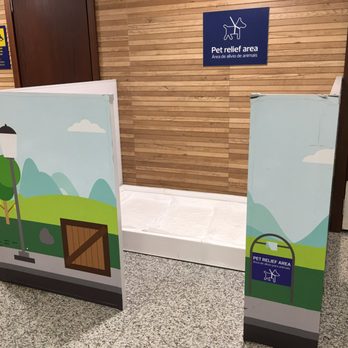
GIG is Rio's main airport and is about a 20-30 minute drive to/from the Copacabana area. ARRIVAL: It was an extremely long walk to immigration. Signs clearly marked the areas for non-residents and residents for passport control. There was no "Welcome to Rio" sign or anything that caught my eye worth taking a pic of, sans for the dog pee pad relief area. How sad! Next, we grabbed our checked in bags. Be sure to get a cart because there'll be another long line to X-ray all of your belongings for customs. Once that ordeal is over with, you're free to go. Sort of. You exit into their large duty-free shop. Buy or breeze through, you'll be out of jail soon! DEPARTURE: Because signage is poor, ask or make sure you're checking in at the correct counter, as our Latam Airline flight from Rio to Buenos Aires had two separate desks for domestic and international flights. We were advised to print out our tickets at the kiosk but it promoted us to see an agent. Everything went smoothly. Because we were flying internationally, there was a separate security & passport area from the domestic gates. Disregard the departure time screens here as the gate info was incorrect for us. Once again, you're routed into another duty free shop. FOOD: If you're hungry, the food court area past the duty free shop is the only place to get some grub as there is nothing at the boarding gates. There was a Subway, Little Mamma (Italian cuisine where we ate), Tapi Tapioca (fried tapiocas which we also tried), and a few other small eateries. TIPS: We arrived 3 hours early which gave us ample time to find our way through and even allowed us to shop and eat. I did see signs painted on construction barrier boards for American Airlines' Admirals Club but didn't see an actual room. Possibly under construction? Free WiFi was strong.
Your browser does not support the video tag.
Daniel MartínezDaniel Martínez
El aeropuerto de Río de Janeiro se identifica como uno de los más transitados en Sudamérica, es un sitio enorme pero bien instruido mediante señalamientos que permiten que el usuario no se confunda. Es bonito y muy limpio, la atención de los empleados es muy buena y las salas de último abordaje son comunes y sencillas. Procesos de abordaje también son muy rápidos.
Jeremy EdmundsJeremy Edmunds
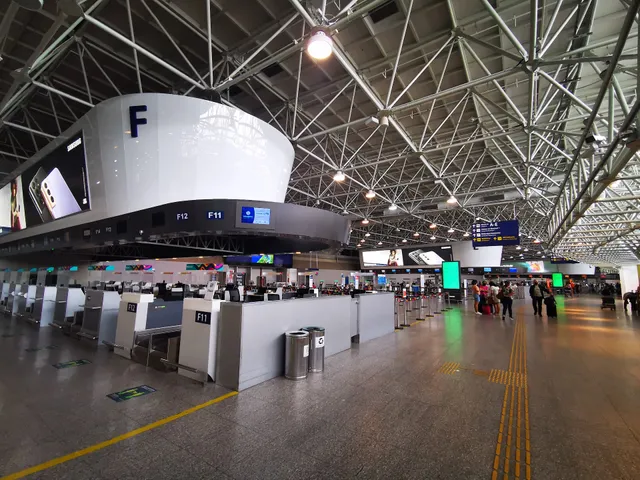
A análise recente do Aeroporto Internacional do Galeão no Rio de Janeiro revela oportunidades significativas para otimização operacional e aprimoramento da experiência do passageiro. Embora a instalação demonstre pontos fortes fundamentais em seu design arquitetônico e capacidades básicas de serviço internacional, ineficiências observáveis no gerenciamento de filas e alocação de recursos necessitam de intervenção estratégica para atender às crescentes demandas de passageiros e padrões internacionais de serviço. Avaliação do Estado Atual A documentação das operações do terminal revela gargalos críticos no processamento de passageiros, particularmente evidentes nas áreas de check-in e controle de segurança. A infraestrutura existente, embora espaçosa e bem projetada com elementos arquitetônicos impressionantes, sofre de utilização abaixo do ideal. Sistemas tradicionais de gerenciamento de filas, catracas básicas nas partidas internacionais e posições fixas de funcionários demonstram metodologias operacionais desatualizadas que não acomodam efetivamente volumes dinâmicos de passageiros. Áreas de Desafio Principais O gerenciamento de filas emerge como a preocupação mais urgente, com evidências visuais mostrando extensa formação de filas nas áreas de check-in. Desafios secundários incluem alocação ineficiente de pessoal, integração tecnológica limitada e gerenciamento subótimo do fluxo de passageiros, particularmente em torno de escadas rolantes e pontos de controle de segurança. As barreiras retráteis atuais e sistemas básicos de sinalização não atendem adequadamente às demandas em períodos de pico. Recomendações Estratégicas 1. Otimização do Gerenciamento de Filas Implementação de um sistema de filas virtual com recursos de notificação por SMS apresenta a oportunidade mais imediata de melhoria. A análise sugere redução potencial na formação de filas físicas em até 40%. Este sistema, combinado com displays eletrônicos de gerenciamento de filas mostrando tempos de espera em tempo real, melhoraria significativamente a experiência do passageiro e a eficiência operacional. 2. Realocação de Recursos Humanos Os modelos atuais de pessoal fixo requerem transformação para um sistema de alocação dinâmica. A recomendação inclui implantação de agentes móveis de atendimento ao cliente equipados com dispositivos móveis, apoiados por funcionários multifuncionais capazes de operações diversificadas durante períodos de pico. Esta abordagem oferece flexibilidade aprimorada e melhor utilização de recursos. 3. Aprimoramento da Infraestrutura Tecnológica Prioridade deve ser dada à atualização das catracas básicas para sistemas biométricos modernos nas partidas internacionais. Implementação de sistemas automatizados de verificação de documentos e um aplicativo abrangente do aeroporto para atualizações em tempo real agilizaria significativamente o processamento de passageiros. A integração de quiosques de autoatendimento em todas as áreas do terminal reduziria dependências de pessoal e melhoraria os tempos de processamento. 4. Reestruturação do Gerenciamento de Fluxo As evidências indicam necessidade de implementar sistemas de fluxo unidirecional durante períodos de pico, particularmente em áreas de escadas rolantes. A instalação de quiosques digitais de orientação em pontos-chave de decisão, combinada com sistemas aprimorados de exibição de informações de voos em tempo real, otimizaria o movimento de passageiros e reduziria pontos de congestionamento. Recomenda-se implementação em fases ao longo de 18-24 meses, priorizando sistemas de gerenciamento de filas em Q1-Q2, seguido por protocolos de realocação de pessoal em Q3-Q4. Atualizações de infraestrutura tecnológica devem ser iniciadas paralelamente às fases iniciais, com integração completa concluída ao final do programa. Melhorias projetadas incluem: - Redução de 40% na formação de filas físicas - Melhoria de 30% na eficiência de utilização de pessoal - Diminuição de 25% nos tempos de processamento de passageiros - Aprimoramento de 35% nas métricas gerais de satisfação do passageiro
See more posts
See more posts
hotel
Find your stay

Pet-friendly Hotels in Região Geográfica Imediata do Rio de Janeiro

Find a cozy hotel nearby and make it a full experience.

GIG is Rio's main airport and is about a 20-30 minute drive to/from the Copacabana area. ARRIVAL: It was an extremely long walk to immigration. Signs clearly marked the areas for non-residents and residents for passport control. There was no "Welcome to Rio" sign or anything that caught my eye worth taking a pic of, sans for the dog pee pad relief area. How sad! Next, we grabbed our checked in bags. Be sure to get a cart because there'll be another long line to X-ray all of your belongings for customs. Once that ordeal is over with, you're free to go. Sort of. You exit into their large duty-free shop. Buy or breeze through, you'll be out of jail soon! DEPARTURE: Because signage is poor, ask or make sure you're checking in at the correct counter, as our Latam Airline flight from Rio to Buenos Aires had two separate desks for domestic and international flights. We were advised to print out our tickets at the kiosk but it promoted us to see an agent. Everything went smoothly. Because we were flying internationally, there was a separate security & passport area from the domestic gates. Disregard the departure time screens here as the gate info was incorrect for us. Once again, you're routed into another duty free shop. FOOD: If you're hungry, the food court area past the duty free shop is the only place to get some grub as there is nothing at the boarding gates. There was a Subway, Little Mamma (Italian cuisine where we ate), Tapi Tapioca (fried tapiocas which we also tried), and a few other small eateries. TIPS: We arrived 3 hours early which gave us ample time to find our way through and even allowed us to shop and eat. I did see signs painted on construction barrier boards for American Airlines' Admirals Club but didn't see an actual room. Possibly under construction? Free WiFi was strong.
Maui World Travelers

Maui World Travelers

hotel
Find your stay

Affordable Hotels in Região Geográfica Imediata do Rio de Janeiro

Find a cozy hotel nearby and make it a full experience.

Get the Appoverlay
Get the AppOne tap to find yournext favorite spots!
El aeropuerto de Río de Janeiro se identifica como uno de los más transitados en Sudamérica, es un sitio enorme pero bien instruido mediante señalamientos que permiten que el usuario no se confunda. Es bonito y muy limpio, la atención de los empleados es muy buena y las salas de último abordaje son comunes y sencillas. Procesos de abordaje también son muy rápidos.
Daniel Martínez

Daniel Martínez

hotel
Find your stay

The Coolest Hotels You Haven't Heard Of (Yet)

Find a cozy hotel nearby and make it a full experience.

hotel
Find your stay

Trending Stays Worth the Hype in Região Geográfica Imediata do Rio de Janeiro

Find a cozy hotel nearby and make it a full experience.

A análise recente do Aeroporto Internacional do Galeão no Rio de Janeiro revela oportunidades significativas para otimização operacional e aprimoramento da experiência do passageiro. Embora a instalação demonstre pontos fortes fundamentais em seu design arquitetônico e capacidades básicas de serviço internacional, ineficiências observáveis no gerenciamento de filas e alocação de recursos necessitam de intervenção estratégica para atender às crescentes demandas de passageiros e padrões internacionais de serviço. Avaliação do Estado Atual A documentação das operações do terminal revela gargalos críticos no processamento de passageiros, particularmente evidentes nas áreas de check-in e controle de segurança. A infraestrutura existente, embora espaçosa e bem projetada com elementos arquitetônicos impressionantes, sofre de utilização abaixo do ideal. Sistemas tradicionais de gerenciamento de filas, catracas básicas nas partidas internacionais e posições fixas de funcionários demonstram metodologias operacionais desatualizadas que não acomodam efetivamente volumes dinâmicos de passageiros. Áreas de Desafio Principais O gerenciamento de filas emerge como a preocupação mais urgente, com evidências visuais mostrando extensa formação de filas nas áreas de check-in. Desafios secundários incluem alocação ineficiente de pessoal, integração tecnológica limitada e gerenciamento subótimo do fluxo de passageiros, particularmente em torno de escadas rolantes e pontos de controle de segurança. As barreiras retráteis atuais e sistemas básicos de sinalização não atendem adequadamente às demandas em períodos de pico. Recomendações Estratégicas 1. Otimização do Gerenciamento de Filas Implementação de um sistema de filas virtual com recursos de notificação por SMS apresenta a oportunidade mais imediata de melhoria. A análise sugere redução potencial na formação de filas físicas em até 40%. Este sistema, combinado com displays eletrônicos de gerenciamento de filas mostrando tempos de espera em tempo real, melhoraria significativamente a experiência do passageiro e a eficiência operacional. 2. Realocação de Recursos Humanos Os modelos atuais de pessoal fixo requerem transformação para um sistema de alocação dinâmica. A recomendação inclui implantação de agentes móveis de atendimento ao cliente equipados com dispositivos móveis, apoiados por funcionários multifuncionais capazes de operações diversificadas durante períodos de pico. Esta abordagem oferece flexibilidade aprimorada e melhor utilização de recursos. 3. Aprimoramento da Infraestrutura Tecnológica Prioridade deve ser dada à atualização das catracas básicas para sistemas biométricos modernos nas partidas internacionais. Implementação de sistemas automatizados de verificação de documentos e um aplicativo abrangente do aeroporto para atualizações em tempo real agilizaria significativamente o processamento de passageiros. A integração de quiosques de autoatendimento em todas as áreas do terminal reduziria dependências de pessoal e melhoraria os tempos de processamento. 4. Reestruturação do Gerenciamento de Fluxo As evidências indicam necessidade de implementar sistemas de fluxo unidirecional durante períodos de pico, particularmente em áreas de escadas rolantes. A instalação de quiosques digitais de orientação em pontos-chave de decisão, combinada com sistemas aprimorados de exibição de informações de voos em tempo real, otimizaria o movimento de passageiros e reduziria pontos de congestionamento. Recomenda-se implementação em fases ao longo de 18-24 meses, priorizando sistemas de gerenciamento de filas em Q1-Q2, seguido por protocolos de realocação de pessoal em Q3-Q4. Atualizações de infraestrutura tecnológica devem ser iniciadas paralelamente às fases iniciais, com integração completa concluída ao final do programa. Melhorias projetadas incluem: - Redução de 40% na formação de filas físicas - Melhoria de 30% na eficiência de utilização de pessoal - Diminuição de 25% nos tempos de processamento de passageiros - Aprimoramento de 35% nas métricas gerais de satisfação do passageiro
Jeremy Edmunds

Jeremy Edmunds

See more posts
See more posts