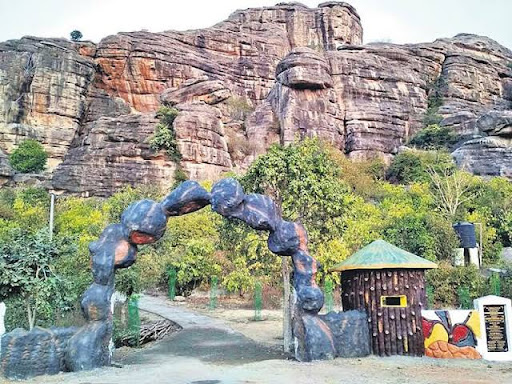
Pandavula Gutta, a sprawling limestone cave system covering approximately 2000 acres in the picturesque Raavulapalle village of Regonda Mandal, Telangana State, is steeped in a rich tapestry of history and cultural significance. These ancient caves, sculpted by nature over millions of years, are part of an expansive geological formation that includes over 30 hills and hillocks collectively known as Pandavula Guttalu in Telangana. The nomenclature is rooted in local folklore, deriving its name from the legendary Pandavas, who are believed to have sought refuge within these caves during their fabled exile in the forest.
For many decades, access to these enigmatic hills was restricted, but the caves now invite visitors to immerse themselves in a world of nature-carved sculptures. These unique formations, unlike traditional sculptures crafted by human hands, are a brilliant testament to the artistic capabilities of nature, portraying a diverse tableau of fauna. Delicately carved within the limestone and sedimentary rock are representations of various creatures, including snails, lions, parrots, dolphins, the sacred Nandi, crocodiles, and even human faces—all echoing the echoes of ancient civilizations.
The stunning landscape of Pandavula Guttalu is characterized by high rocky precipices, secluded deep valleys, and towering stone formations interspersed throughout the region. This dramatic topography enhances the beauty of the ancient rock paintings that adorn its cliffs. Among the prominent sites to explore in this remarkable area are Eduru Pandavula Guha, Gonthemma Guha, Panchapandavula Guha, Potharaju Chelime, Mekala Banda, Mungeesabanda, and Tupakula Gundu, each offering a unique glimpse into the past.
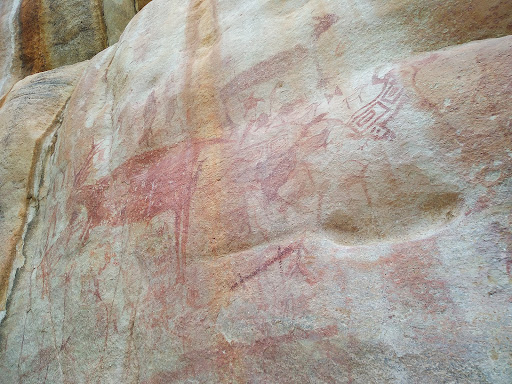
The caverns of Paandavula Gutta are particularly noteworthy, as they house approximately six rock paintings, which hail from the Praak Yugam and Chaarithraka Yugam. Executed in rich dark red hues, these artworks depict a variety of life forms, ranging from herbivores and carnivores to human figures. The animated scenes illustrate quaint interactions among animals—such as deer, fish, goats, dogs, porcupines, rabbits, tortoises, snakes, parrots, butterflies, monkeys, peacocks, frogs, lizards, bears, and tigers. In striking detail, humans are depicted using nets, engaging in hunts involving water mammals and tigers, and observing a deer caring for its fawn. Other fascinating elements of these paintings include various geometric shapes, Trishulams (tridents), star motifs, and some partially...
Read more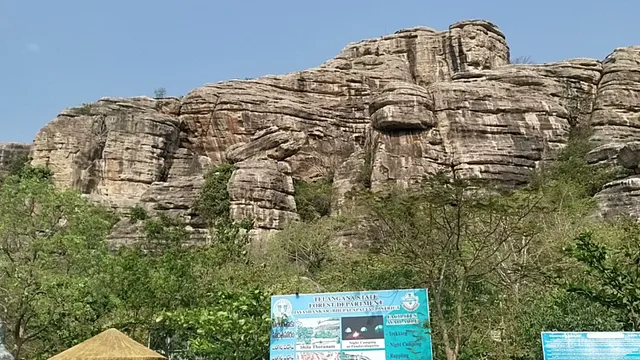
 Learn more insights from Wanderboat AI.