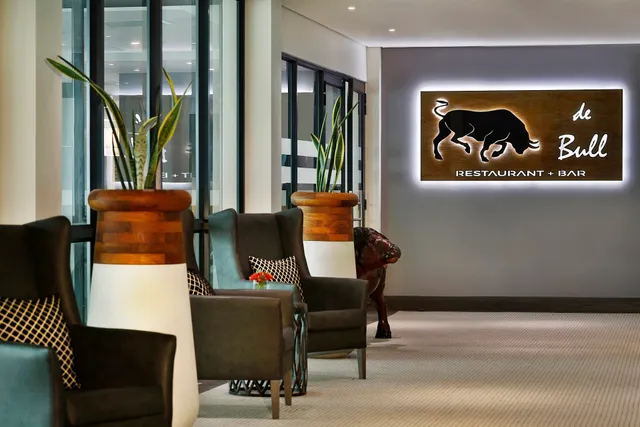
The Murthala Muhammed International Airport (MMIA), Lagos has always been a national asset as the foremost international airport in the country. There're 2 extensions of the MMIA & all are edifying architectural works in there own rights. In recent years, the 2 terminals have undergone several upgrades, massive reconstructions & renovations. The MM2 which is the newest of the extensions, as it was constructed almost from the scratch. It is a beautiful edifice with the terminal located right on the main road in Ikeja District. Big hallway housing the airline checkin desks, spacious departure lounge, several shops or businesses etc. It hosts eateries, boutiques, electronic gadget shops & a host of other shops for the convenience of travellers. There're even fast food outlets just outside/front of the airport building still within the airport premises, for people to eat in style & comfort as they wait to pick up expected travellers flying in. The airport is clean, including the numerous conveniences. The upgrade of our airports is a good development & it is always satisfying to pay for good services/works. The renovations & upgrades in the MM2 terminal has led to more efficient check in procedures & a clean/comfortable departure lounge. Correspondingly, pick up of checked in luggage is always prompt. The shinning terminal is definitely a pleasure to behold. Furthermore, the main Murtala Muhammed International Airport (MMIA) was the foremost International airport serving the country. The airport was initially built during World War II and is named after Murtala Muhammed (1938–1976), the fourth head of state of Nigeria. The airport was built during World War II, initially known as West African Airways Corporation (WAAC) formed in 1947. Originally known as Lagos Airport, it was renamed after the military head of state Murtala Muhammed in 1976 following his assassination in a failed coup attempt. Afterwards a new international terminal modeled after Amsterdam Airport (Schiphol) was constructed officially opening on 15 March 1979. The airport has 2 terminals, located one kilometre apart. With remarkable & edifying architectural structure, the MMIA was for long the sole international air gateway into & out of Nigeria. In recent years, the terminals & original infrastructure have undergone several significant upgrades, renovations & reconstructions. The MMIA benefitted a new terminal building which was connected to the old terminal building, thereby forming a colossal airport main building with modern facilities. A big hallway housing the airline checkin desks now ensures that the previous chaotic check - in situation was now a thing of the past. Interestingly, several shops, lounges, businesses etc now abound in the airport. There is even a rink of Bereau du Changes for official & safe means of changing currencies. It further hosts eateries, boutiques, African art shops & a host of other shops for the shopping pleasure of travellers. The terminal is clean, including the conveniences which is a welcome change from what was the norm before. The upgrade of our airports is a good development & it is always satisfying to pay for good services/works. The renovations & upgrades in the MMIA terminal has led to more efficient check in procedures & a clean/comfortable departure lounge. However, something still needs to be done regarding the air-conditioning system. Also, the terminals still leak water during rainfalls. Generally, the present efficiency in this terminal is definitely a pleasure to behold. I give credit to the airport authorities & governmental bodies in...
Read moreThe airport at Ikeja near Lagos was built during World War II. West African Airways Corporation was formed in 1947 and had its main base at Ikeja. De Havilland Doves were initially operated on WAACs Nigerian internal routes and then West African services. Larger Douglas Dakotas were added to the Ikeja-based fleet from 1957.
Originally known as Lagos International Airport. it was renamed in the mid 1970s, during construction of the new international terminal, after a former Nigerian military head of state Murtala Muhammed. The international terminal was modelled after Amsterdam Airport Schiphol. The new terminal opened officially on 15 March 1979. It is the main base for Nigeria's largest airline, Arik Air.
Murtala Muhammed International Airport consists of an international and a domestic terminal, located about one kilometre from each other. Both terminals share the same runways. This domestic terminal used to be the old Ikeja Airport. International operations moved to the new international airport when it was ready while domestic operations moved to the Ikeja Airport, which became the domestic airport. The domestic operations were relocated to the old Lagos domestic terminal in 2000 after a fire. A new domestic privately funded terminal known as MMA2 has been constructed and was commissioned on 7 April 2007.
During the late 1980s and 1990s, the international terminal had a reputation of being a dangerous airport. From 1992 through 2000, the US Federal Aviation Administration posted warning signs in all US international airports advising travelers that security conditions at Lagos Airport did not meet ICAO minimum standards. In 1993, the FAA suspended air service between Lagos and the United States. During this period, security at LOS continued to be a serious problem.Travelers arriving in Lagos were harassed both inside and outside of the airport terminal by criminals. Airport staff contributed to its reputation. Immigration officers required bribes before stamping passports, while customs agents demanded payment for nonexistent fees. In addition, several jet airplanes were attacked by criminals who stopped planes taxiing to and from the terminal and robbed their cargo holds.
Following Olusegun Obasanjo's democratic election in 1999, the security situation at Lagos began to improve. Airport police instituted a "shoot on sight" policy for anyone found in the secure areas around runways and taxiways, stopping further airplane robberies. Police secured the inside of the terminal and the arrival areas outside. The FAA ended its suspension of direct flights to Nigeria in 2001 in recognition of these security improvements. By 2010, the FAA had granted the airport its highest safety rating.
In 2010, the airport served 6,273,545 passengers. Recent years when have seen substantial improvements at Murtala Muhammed International Airport. Malfunctioning and non-operational infrastructures such as air conditioning and luggage belts have been repaired. The entire airport has been cleaned, and many new restaurants and duty-free stores have opened. Bilateral Air Services Agreements signed between Nigeria and other countries are being revived and new ones signed. These agreements have seen the likes of Emirates, Ocean Air, Delta and China Southern Airlines express interest and receive landing rights to Nigeria's largest...
Read moreMixed Feelings About Nigeria Airport: A Personal Experience
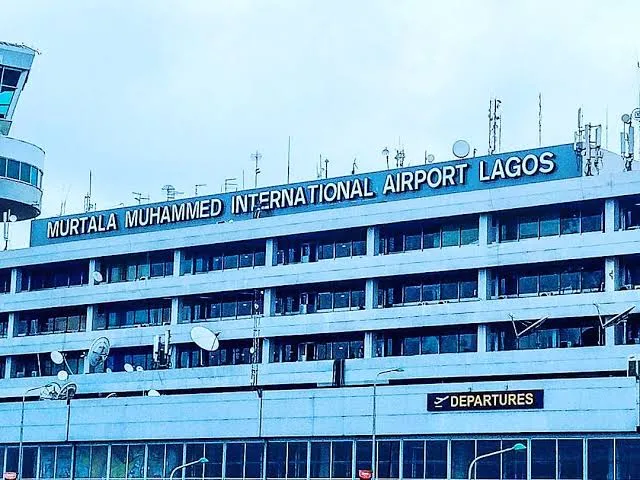
I recently traveled to Nigeria and had an overall enjoyable trip. However, my experience at the airport left me with mixed feelings. While the infrastructure and facilities were adequate, I encountered several instances of what can only be described as daylight robbery.
Upon arrival, I asked a lady for directions to the restroom. She kindly offered to show me the way and even waited for me to finish. Initially, I thought she was being thoughtful, but as soon as I left the restroom, she approached me and said, "Sis, bless me." Confused, I asked what she meant, and she demanded that I give her something for helping me. I was taken aback. Imagine if every time you asked for directions, you were expected to give a tip!
This was not an isolated incident. Several men who clearly did not work at the airport aggressively offered to assist with my luggage, despite my repeated refusals. Once they had pushed themselves into the task, they demanded money for their "assistance." It was frustrating and made what should have been a smooth journey unnecessarily stressful.
These experiences marred an otherwise pleasant trip. The constant demands for tips and the aggressive nature of the unsolicited help were off-putting. While I understand the economic struggles that might drive people to such actions, it was disconcerting and left a negative impression.
The airport could greatly improve by enforcing stricter regulations on who is allowed to offer assistance and ensuring that travelers are not harassed for tips. It would make the travel experience much more pleasant and stress-free.
In conclusion, while Nigeria is a beautiful country with much to offer, the experience at the airport was a stark reminder of the challenges that still need to be addressed. I hope to see improvements in the future, making the airport a more welcoming gateway to the country's many...
Read more