One monastery... three churches.
This monastery is situated on the north side of the city Arad in a very quiet place. You can see the tower of the gate of the monastery from far away. The patron saint of the church is Saint Simeon the Stylite (Sfântul Simeon Stâlpnicul) the hight of the tower of the gate being representative in this way.
The monastery is surrounded by walls and there is a small channel, sometime with water, on the front side of the monastery. There is no entry fees and the gates of the monastery are opened from the sunrise to sunset.
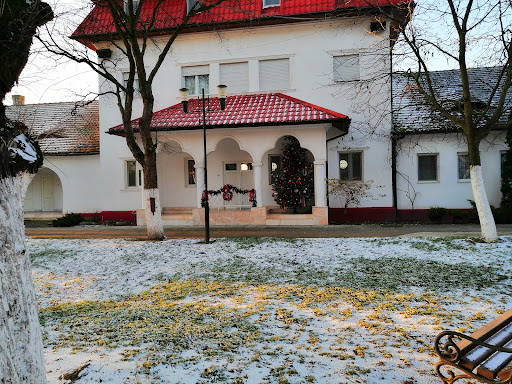
The monastery is run by nuns, and if I remember well there were 6 nuns at the day of my visit. The domain is full of tree, there is grass all over the place, small footpaths "cutting" roads to every church. And yes there are 3 churches.
One of them, the oldest, it is placed between the other two, was built in 1745, it is from wood and can be visited anytime. This church was brought there from the village Săliște. If it is locked just find one of the nuns and she will help you to enter the church. The interior of this old church is unique and as you enter you can smell the unique smell of old wood. The inside light is very poor and the silence is deafening so it is a perfect place for meditation. If you have time have a tour arround this church and observe the construction details: they are amazing.
The second monastery, built earlier but no so recent, is on the left side of the oldest one. Interesting but to enter the church you don't have to climb steps, like in most of churches, but here you have to descent a big step.(mind your step). You can easy observe, by the condition of paintings, that this church is also old. It is bigger that the first one but it cannot accommodate more than 50 persons. Inside this church there is a grave where were burried some important bishops from Arad. There is a box with relics of different saints and a picture of Simeon the Stylite - just look for it. The light in there is also very poor.
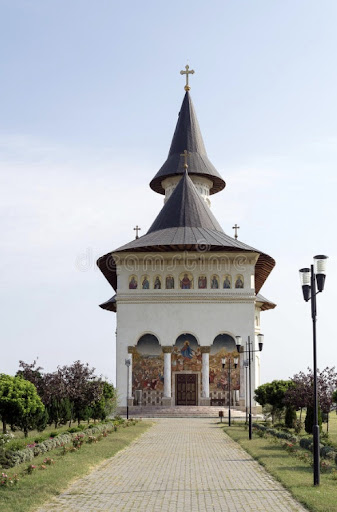
The third church is on the right side of the oldest one, closer to the entrance. The construction is very new and there is a lot of light in. The paintings are beautiful and inside it is very silent.
In the court of the monastery there is a place like a podium, decorated with paintings and everything necessary to attend a service. During the summer time and when the weather is good, the Sunday ceremony (Liturgy) is held there. There are a lot of chairs, from plastic, the people attending the service could put them on the grass and participate.
There is a souvenirs shop, opened usually when there are ceremonies, but if you want to buy something you just ask a nun and she will be glad to help you.
It is a good place to sit on a bench and spend some time in peace and in the...
Read moreNu sunt un mare credincios, dar cred in Dumnezeu. Imi plac Bisericile, Manastirile, indifferent de ce rit sunt. In toate salasuiesc Spiritul Domnului Nostru. Dar sa revenim la subiectul de azi, manastirea Gai, o manastire ortodoxa situata la marginea orasului Arad, intr-o oaza de liniste si verdeata. Un loc minunat si linistit in care te poti reculege si ruga in linistite. Mănăstirea a fost ridicată între anii 1760-1762 de catre episcopul Sinesie Jivanovici, ca reședință de vară pentru el și episcopii următori ai Aradului. Biserica veche are un altar de marmură roșie sub care a fost înmormântat episcopul Sinesie. Se pare că în altar se găsesc și rămașițele pamântești ale episcopilor înhumați în catedrala veche a Aradului, demolată în 1861. Actualmente este mănastire de maici, avand hramul la 1 septembrie când este sărbătorit Sfântul Simeon Stâlpnicul, odată cu începutul anului bisericesc. Nu am stiut ce functie preoteasca este “Stapnic”. Asa ca am cautat si am gasit: Sfântul Simeon Stâlpnicul, patronul spiritual al mănăstirii, s-a născut undeva pe teritoriul Turciei de astăzi, din părinți creștini, luând calea călugăriei devreme și având predilecție pentru o viață monahală cât mai aspră, personal, nu pot să-mi dau seama de ce. Se pare că, la un moment dat, după un post greu de patruzeci de zile, Dumnezeu i-a dat darul vindecării, după care Simeon a continuat anual să țină Postul Mare, mai habotnic ca de obicei, douăzeci de zile rugându-se continuu în picioare, iar în restul de douăzeci de zile așezat, nemaiavând putere. Astfel, a început să fie căutat de lume pentru însănătoșire iar el, considerând că nu i se cuvine lui atâta cinstire din partea tuturor, a hotărât să ridice un stâlp iar în vârful lui să pună o chilie strâmtă în care să se retragă și de unde să nu iasă decât de două ori pe zi pentru a binecuvânta mulțimea, devenind, astfel, primul stâlpnic. Asta se întâmpla prin secolul V. Manastirea este intr-o curatenie si ordine exemplara. Nu am gasit nimic care sa-mi displaca. Totul a fost minunat si linistitor si cred ca am reusit sa comunic cu Divinitatea. Asadar, dupa o slujba placuta si rugaciuni spuse in gand, m-am simtit mult mai bine si am sa mai revin pentru a-mi umple inima cu pace și liniște sufletească, pe care, dacă nu le găsești aici aproape de Dumnezeu,...
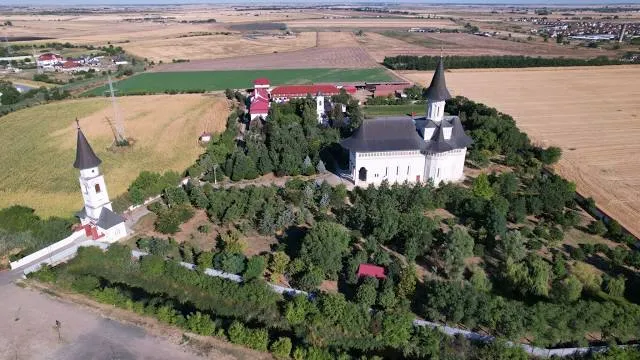
Read moreDas dem Heiligen Symeon Stylites dem Älteren geweihte Nonnenkloster Arad-Gai wurde 1760 bis 1762 auf Veranlassung des damaligen serbisch-orthodoxen Bischof von Arad gebaut. Es war eine Art Sommerresidenz des Bischofs mit angeschlossener Klosterkirche, errichtet im Barockstil. 1986 wurde die kleine Holzkirche aus dem Dorf Seliște auf dem Gelände gebracht und somit vom Verfall gerettet, sie wurde Mitte des 18. Jahrhunderts gebaut. Nach 1989 wurde die Anlage erweitert, es entstand auch eine neue, deutlich zu groß geratene Kirche südöstlich der alten Kirche. Für den Besuch wird kein Eintritt verlangt, allerdings treten die Nonnen ziemlich harsch auf, vor allem wenn man die Bauten fotografiert. Die Grünflächen sind schön gepflegt, die Umgebung wirkt...
Read more