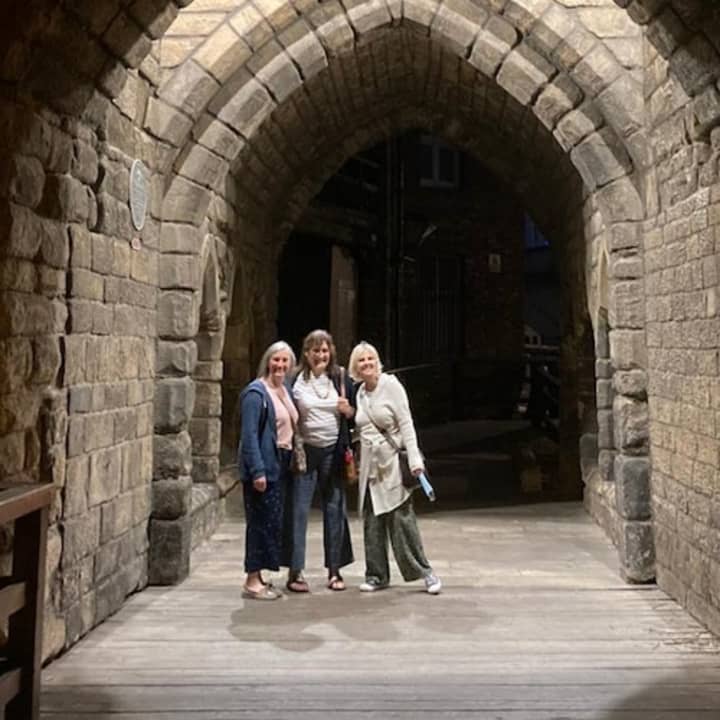
Today we took the opportunity to visit Ushaw House and its historic gardens in Durham, a place that holds echoes of centuries past. Though not as ancient as some of the properties we have recently explored, it is steeped in history and grandeur, and proved to be a fabulous discovery.
As we wandered through its long, hushed corridors, information boards unfolded the story of this remarkable site. Ushaw House began life in the early 19th century as a Catholic seminary, founded in 1808 by priests fleeing religious persecution in France after the Revolution. These corridors once echoed not with curious visitors like us, but with the steady footsteps of young seminarians preparing for priesthood.
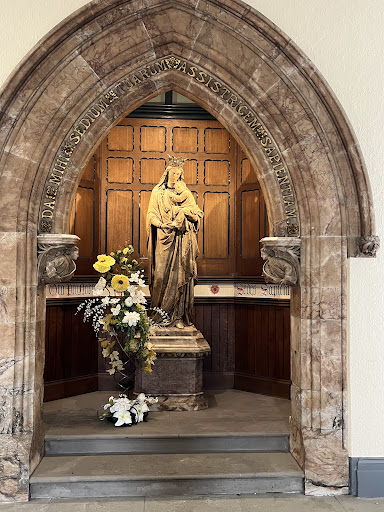
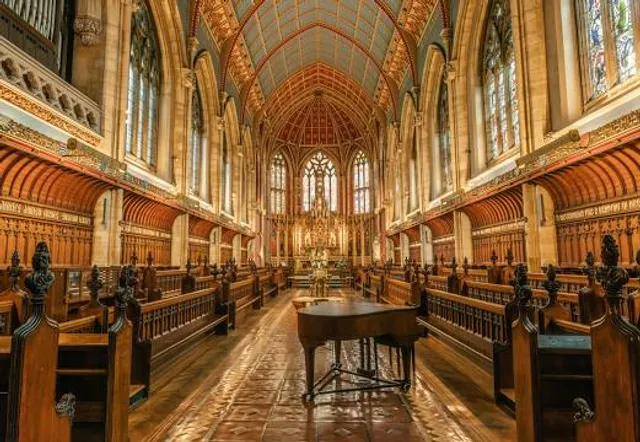
The chapels form the heart of the story. The very first chapel, built in 1808, was described as plain and austere, reflecting the modest beginnings of the seminary. In 1847, however, the renowned Gothic Revival architect Augustus Pugin, famous for his work on the Houses of Parliament, designed St Cuthbert’s Chapel, which served until 1883. By then the seminary had flourished, and the larger, richly decorated chapel that still stands today was created by Dunn and Hansom.
Stepping inside, any notion of austerity disappears. The soaring ceilings are richly ornamented, sunlight spills through jewel-toned stained-glass windows, and the altar gleams with the lavish decoration typical of the wealth and confidence of the 19th-century Catholic Church. As we stood in the stillness, gentle prayerful singing played in the background, filling the air with a sense of reverence and timeless peace. It was impossible not to feel both moved and uplifted in such a holy place.
Along the corridors, we discovered several smaller chapels, each carrying its own theme and story, each a jewel box of colour and craftsmanship. From there, the narrative of Ushaw shifted from sacred to scholarly as we entered an old schoolroom. Complete with wooden desks, benches, and chalkboards, it offered a glimpse into the daily life of students in the early 1900s. Its stark simplicity stood in sharp contrast to the splendour of the chapels, but felt just as evocative in its own way.
The dining room that followed was altogether more opulent. Gilded with large silver candlesticks and dominated by two original paintings by Canaletto, it spoke of refinement and prestige. Beyond it lay the teachers’ dining hall, a more functional space but one that completed the picture of life when the seminary was still at its height.
Then came a delightful surprise, an exhibition of Ladybird books. Suddenly, history turned personal. We smiled as we wandered through the displays, recognising familiar titles and illustrations from childhood: Chicken Licken, Little Red Riding Hood, The Magic Honey Pot. The brightly coloured covers stirred happy memories of school days long gone, reminding us how books can bind generations together.
The visit wasn’t complete without a stop at the second-hand bookshop. A true treasure trove, its shelves brimmed with stories waiting to be rediscovered. I left with five carefully chosen books, having spent the princely sum of just £5.
We ended our visit in the café, enjoying a restorative cup of tea and a slice of moist, fragrant ginger cake, before strolling into the gardens. The grounds, once a place of quiet contemplation for seminarians, now offer peace and beauty to all who visit.
Ushaw House is more than a house; it is a place where faith, learning, and history intertwine. With chapels that dazzle, stories that resonate, and gardens that soothe, it is a destination we would wholeheartedly recommend. There is so much to see, and every corridor seems to hold a...
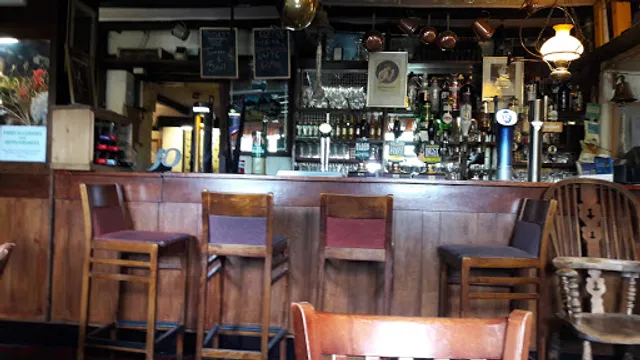
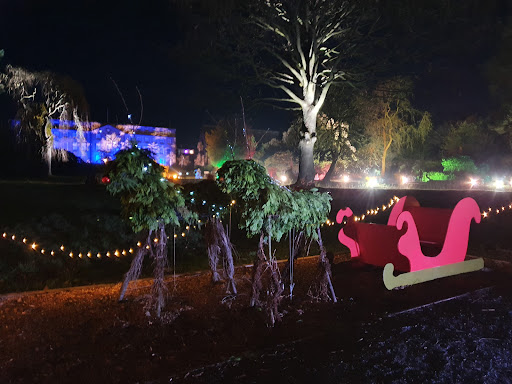
Read moreThis place deserves to be more than it currently is. People around sometimes don't even realise it is there. I haven't been to the house except for the concert hall used by local orchestras. I would gladly buy tickets for concerts if more were organised. I explored the boundary walk first (5km). The views are very good, but I wouldn't call them breathtaking, as in local walking guides do. I liked coming through a path in the young willow forest (are those willows?). They grow tightly, and the wind in the willows is really quite something! You can stop for a pint in the New Board Inn. The views down onto Langley Park are great at night with the lights on. However, I wouldn't take the boundary walk at night -too dirty around the farm and difficult to navigate. The path also come close to the large abandoned old house on the western side of the estate. Sad, but also great sight to get you into the Halloween mood. Going back to the main entrance of the Ushaw House, have a look into the garden. For many times I have been to the parking lot, I never realised there is a garden there! There are wooden statures here and things for kids to enjoy. Roses stay even into November, and the selection of plants give plenty of colour during all seasons (see photos). However, I'd say there are some signs of neglect starting to appear there too! The plants are taken care of, but the rose garden is a bit boring with a limited range of roses. Also, those varieries that are present are great and the plants are healthy. Can it be because of the reduced footfall? I wish the college did more to advertise itself! I wonder how much Durham Council helps -we don't have an excess of attractions around Durham! If there are exhibitions (see a photo of the well made stands) and fairs (large pink/blue tents on the field) at Ushaw, residents and tourists should know more. The grounds could offer a very good walk. But at the moment just a plain walk -no morden statues, or interesting features. And the ground itself feels forgotten. There are two cafes one inside and the one outside closes 3pm. Currently the garden is free of charge while a part is closed for maintenance, is being prepared for Halloween. But the day and the annual tickets are really cheap! What is done here for the Christmas and Easter? Great opportunities are all there! All in one it is still very much worth a visit! With little kids or at any age. But I hope this place receives more attention, investment and...
Read moreI stayed here for 1 week in the “Small Double Room”, to work in the area.
The check in process was fine, you call the number and someone comes to you although I did have to go and find someone in the end at main reception. There is parking for hotel guests.
The room - The bed & bedding were both comfy. The heater was slightly tricky to figure out even with instructions. There was a hanging rail and towels. There was a kettle with tea, coffee, sugar, sweetener, milk, biscuits and water which was a nice touch. The provided toiletries were nice quality! It was a little noisy due to the architecture of the rooms, bring earplugs if you are super sensitive to noise. I felt with the clientele though that it was all quiet after around 10:30pm.
The bathroom - I felt even with the shower curtain that the wooden divide between the bathroom and bedroom got wet, which I wanted to try and prevent. The shower pressure was fantastic though for such an old building. The hot tap is VERY, VERY hot, even at first use (be careful). The bathroom floor looks like it maybe needs a good scrub but if you are not too fussy like me, it doesn’t really matter, it’s an old building!
The views of baby bunnies and walking around the historic buildings and gardens on a night without any visitors was truly lovely and we will be returning to stay here to visit family nearby.
The breakfast was nice. There were bagels, toast, jam, honey, cereals, pastries and fruit. The only thing I would have liked would be some meats / cheese. I was very grateful for the bag to-go if you are leaving before breakfast starts.
The check-out was simple, the lady cleaning told me I was able to just leave my key in my room and go. As luck should have it there was a beautiful plant market on the day I checked out which made for a lovely end to the stay.
As I said, I would...
Read more