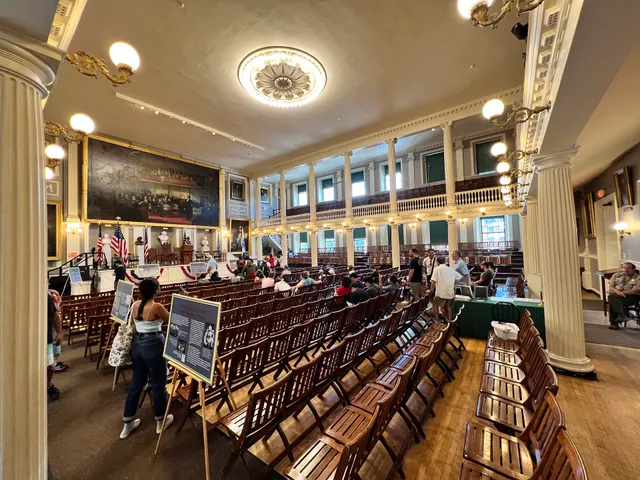
Boston Notes 11 – Faneuil Hall 🏛️✨
Known as the "Cradle of Liberty" 🗽, Faneuil Hall has played a central role in American history since its construction in 1742. Funded by wealthy merchant Peter Faneuil, it was initially built as a food market to showcase his success 🍎🥦, though it only gained approval after heated debates. Today, the hall remains a vibrant symbol of free speech and civic engagement: Ground floor: Divided into multiple stalls rented to local vendors 🛍️ Second floor: The official city hall where local affairs were discussed 🏛️📜 Historic speeches: Iconic figures like Samuel Adams 🎤 (whose statue stands proudly outside) delivered powerful speeches here Revolutionary debates: Issues like the Sugar Act, Stamp Act, and Tea Act were debated here, spreading ideas that fueled the fight for independence 🍵⚖️🇺🇸 In the 19th century, architect Charles Bulfinch expanded and beautified the hall 🏗️🎨. Over the years, it has hosted discussions on abolitionism 🚫⛓️, temperance, women’s suffrage 🗳️, and more. Even today, Faneuil Hall remains active – hosting community meetings, high school graduations 🎓, and naturalization ceremonies for new citizens 🤝✨. Just a short walk away near Salem Street, you’ll find a trendy photo spot 📸🌟 marking where Puritan leader John Winthrop and his followers established Boston in 1630 – a foundational moment in American history 🕰️🍃. #History #Travel #FreedomTrail #Boston #USHistory #Landmark