

HTML SitemapExplore
logo
Find Things to DoFind The Best Restaurants

Capital of the Amazon—Manaus🌿

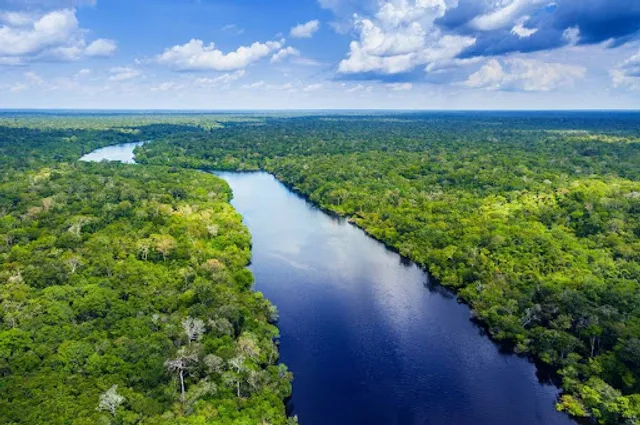
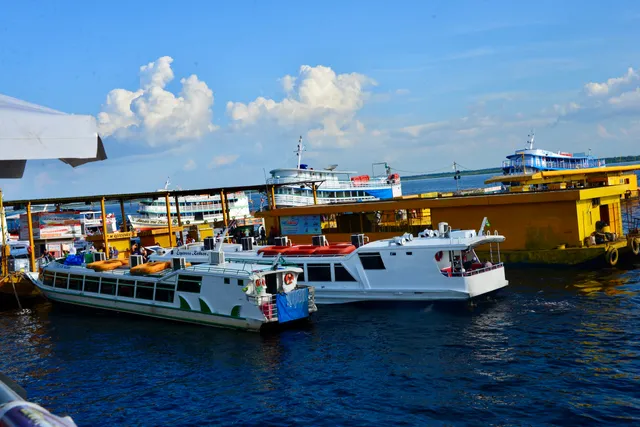
Welcome to Amazon! After a long journey, my face is getting puffier and puffier, but I can't hide my excitement—finally arrived in Manaus! The name "Manaus" comes from the local indigenous Indian tribe. "Manaos" in the indigenous language is said to mean either "Mother of the Gods" (Mae dos Deuses) or "the Great One". There's still no consensus on its exact meaning—after all, there are few written records of indigenous languages, and many meanings are passed down orally, which inevitably involves some vague imagination. But if we take "Mother of the Gods", it's a bit like the mother of Jesus in Christianity, roughly the concept of "Virgin Mary", which sounds like it carries an ancient sense of tenderness.😍😍😍 As the capital of Brazil's Amazonas state, it stands firmly on the left bank of the Negro River, a tributary of the Amazon River. From the late 19th century to the early 20th century, when the rubber industry boomed here, Manaus also "took off"—in 1912, its rubber export volume directly ranked first in the world. Just imagining it, you can picture the bustling scene back then: ships carrying rubber by the port, merchants busy negotiating deals. Today, it remains an important port and a free trade zone, and the old prosperity continues in a different way. It has a typical tropical rainforest climate—really hot and really humid. On a 32-degree day, you break a sweat after walking a few steps🔥, but precisely because of this, there's lush green everywhere, and even the wind is moist. As the "gateway" to exploring the Amazon Rainforest, it has long become a must-visit spot for many people coming to South America—it holds old historical stories and is waiting to create new adventures with travelers. Before heading into the rainforest, I wandered around downtown Manaus first:🤩🤩🤩 The old building trade market is worth a visit. The stone paths creak when you step on them, and the old stalls have rainforest dried goods and hand-woven baskets. A casual glance is full of traces of time; There's also the century-old opera house, which is simply a "living symbol" of the former glory of the rubber industry—obviously hidden by the rainforest, yet it has European-style grandeur. The carved columns and stained glass, it's said that when it was built, even the building materials were shipped all the way from Europe. Just standing at the door, you can imagine how prosperous it was back then. #ConvergenceOfHistoryAndModernity #WanderingTheWorld #TravelTheWholeWorld #OnceTraveledTheWorld #travel #Brazil#BrazilTravel #AmazonTravel #OffTheBeatenPath #SouthAmericaTravel #RoundTheWorldTravel #AmazonRainforest #ClassicalArchitecture
Related posts
🇧🇷 Manaus – The Capital of the Amazon! 🌿🌎Wildman Returns to Manaus 🏙️🌿 – Restaurante Banzeiro🇧🇷 Manaus Amazon Jungle Day Trip Adventure! 🌿🐬🇧🇷 Manaus | The Beating Heart of the AmazonA Comprehensive Guide to Lençóis Maranhenses!🇧🇷 Must-Try Foods in Manaus, Brazil 🍽️
Una Hawkins
Una Hawkins
4 months ago
Una Hawkins
Una Hawkins
4 months ago

Capital of the Amazon—Manaus🌿

Welcome to Amazon! After a long journey, my face is getting puffier and puffier, but I can't hide my excitement—finally arrived in Manaus! The name "Manaus" comes from the local indigenous Indian tribe. "Manaos" in the indigenous language is said to mean either "Mother of the Gods" (Mae dos Deuses) or "the Great One". There's still no consensus on its exact meaning—after all, there are few written records of indigenous languages, and many meanings are passed down orally, which inevitably involves some vague imagination. But if we take "Mother of the Gods", it's a bit like the mother of Jesus in Christianity, roughly the concept of "Virgin Mary", which sounds like it carries an ancient sense of tenderness.😍😍😍 As the capital of Brazil's Amazonas state, it stands firmly on the left bank of the Negro River, a tributary of the Amazon River. From the late 19th century to the early 20th century, when the rubber industry boomed here, Manaus also "took off"—in 1912, its rubber export volume directly ranked first in the world. Just imagining it, you can picture the bustling scene back then: ships carrying rubber by the port, merchants busy negotiating deals. Today, it remains an important port and a free trade zone, and the old prosperity continues in a different way. It has a typical tropical rainforest climate—really hot and really humid. On a 32-degree day, you break a sweat after walking a few steps🔥, but precisely because of this, there's lush green everywhere, and even the wind is moist. As the "gateway" to exploring the Amazon Rainforest, it has long become a must-visit spot for many people coming to South America—it holds old historical stories and is waiting to create new adventures with travelers. Before heading into the rainforest, I wandered around downtown Manaus first:🤩🤩🤩 The old building trade market is worth a visit. The stone paths creak when you step on them, and the old stalls have rainforest dried goods and hand-woven baskets. A casual glance is full of traces of time; There's also the century-old opera house, which is simply a "living symbol" of the former glory of the rubber industry—obviously hidden by the rainforest, yet it has European-style grandeur. The carved columns and stained glass, it's said that when it was built, even the building materials were shipped all the way from Europe. Just standing at the door, you can imagine how prosperous it was back then. #ConvergenceOfHistoryAndModernity #WanderingTheWorld #TravelTheWholeWorld #OnceTraveledTheWorld #travel #Brazil#BrazilTravel #AmazonTravel #OffTheBeatenPath #SouthAmericaTravel #RoundTheWorldTravel #AmazonRainforest #ClassicalArchitecture

Manaus
Amazon Rainforest
Port of Manaus
Amazon RainforestAmazon RainforestPort of ManausPort of Manaus
no-comment

No one has commented yet...