
Come, gaze upon a cityscape.
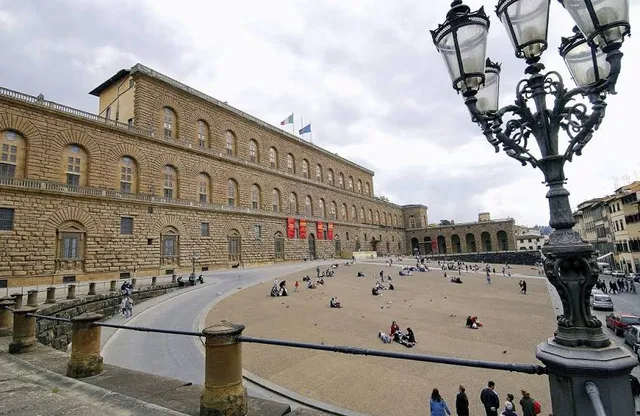
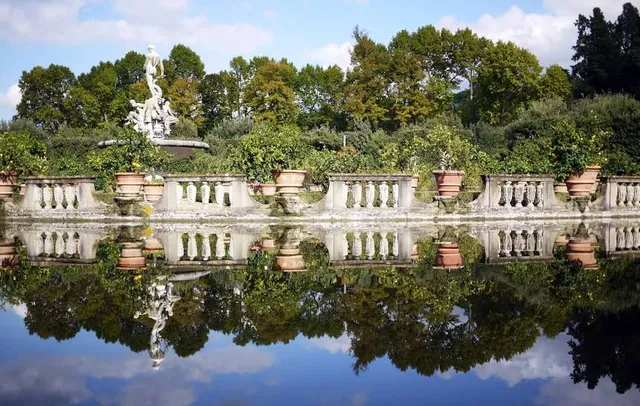
📍"Within the architectural walls of Florence, there exists decoration as splendid as that on the outside; no street is specially adorned, yet every district shares in the city's beauty. Thus, just as blood circulates throughout the body, such excellent architecture and decoration are spread throughout the entire city." —— "In Praise of Florence" ⛪️ Florence Cathedral (2345 is the view of the city from the dome) Originally, churches were built with religious purposes at their core, rather than the will of the public. However, in Florence's urban construction, building churches was actually a way for the public will to be expressed, with churches being constructed as public spaces. "The scale of the Florence Cathedral was intended to accommodate the entire population of Florence. This was clearly a need of democratic politics, not religious necessity." 🏛️ Pitti Palace and Boboli Gardens (6789 is the view of the city from the garden) In addition to cathedrals and municipal buildings, from the 15th century onwards, private palaces in Florence were built on a large scale. About twenty of these 15th-century palaces still exist today, such as the Medici Palace, the Pitti Palace, and the Rucellai Palace. Palaces generally required an investment of half or even two-thirds of a person's wealth. The entire family lived in a palace, which was a reflection of the family's prestige, tradition, and continuity. Statue Square (1.10.11 is Michelangelo's distant view) Between approximately 1410 and 1425, a kind of public statue unprecedented in Florence appeared on the streets. These statues had an imposing presence that was spatially undeniable and psychologically irresistible. They were erected to "converse" with the pedestrians on the streets below. Functionally, these new sculptures did not have the monumental nature of Roman times, nor did they have the devotional nature of medieval sculptures. This kind of street sculpture, or sculpture in public space, began to transform into what we call "public art." In Florence, there was a consensus among the city, government, families, various social groups, and individuals: the city, as a public space, symbolizes the ideals and spirit of everyone. 🌄 In this process, Florence's culture underwent a leap forward: Salutati and Bruni completed the revival of Latin prose and pioneered humanist vernacular historical works, especially the writing of Florence's urban history; in the field of architecture, Brunelleschi completed the revival of classical architectural art; Donatello began to create a new style in sculpture; Masaccio began to create paintings with a Renaissance style, and the early Renaissance unfolded a magnificent chapter. #Florence #Sunset #Square #Humanism #SunsetCityscape #FlorenceCathedral #MichelangeloSquare #PittiPalace #BoboliGardens