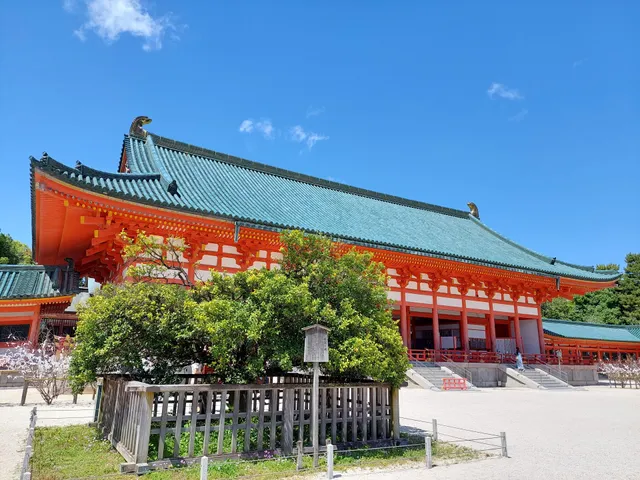

Kyoto Reborn - Heian Shrine 🌊🌸
Heian Shrine was built in 1895 to commemorate the 1100th anniversary of the capital's relocation to Heian-kyo. 🌇🌿 The architectural layout of Heian-kyo was influenced by the Tang Dynasty (618-907) capital of Chang'an (now Xi'an, China). From the late 8th century to the mid-19th century, it remained the capital of Japan. Heian Shrine enshrines the first emperor of the Heian period (794-1185), Emperor Kanmu (737-806), and the last emperor to rule Heian-kyo, Emperor Komei (1831-1866). 🌟 Unlike other shrines, the buildings of Heian Shrine are replicas of the main hall of the imperial palace in Heian-kyo, 🍃🌺 the Chodo-in, at five-eighths scale. The Chodo-in was the administrative center of Heian-kyo and the place where the emperor conducted state affairs. 🌿 Heian Shrine features a spacious courtyard covered with gravel, with magnificent halls and buildings arranged symmetrically. Among them, the Daigokuden (Outer Worship Hall), Otenmon (Main Gate), Ryuobi-dan, 🎢🌟 Soryu-ro, and Byakko-ro, which were part of the original construction of the shrine, are all designated as Important Cultural Properties by the state. 🌸 #Tokyo 🌊