

HTML SitemapExplore

Majdanek Struggle and Martyrdom Monument 🕯️⚡

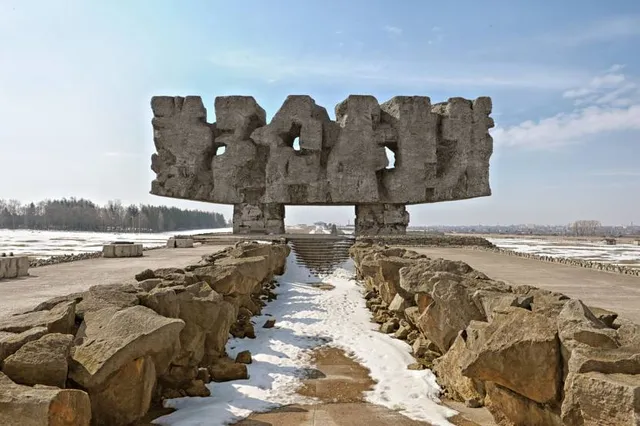
This imposing brutalist memorial (unveiled in 1969) stands on the grounds of the former Majdanek concentration camp—one of Nazi Germany’s deadliest WWII extermination camps, near Lublin, Poland. Historical Context ⚫ Camp Operation: Active from Oct 1, 1941 – July 22, 1944 (liberated by Soviet Red Army). ⚫ Victims: ~79,000 murdered, including 59,000 Polish Jews. ⚫ Scale of Horror: Up to 150,000 prisoners passed through; 78,000 confirmed deaths (Tomasz Kranz research). The Monument’s Design 🏗️ Materials Used: 🏺 600 tons of clay 🪨 1,500 tons of granite ⚙️ 400 tons of steel 🪙 2,200 tons of crushed stone Structure: 🚪 The Gate (10.8×35×7.6m): Twin concrete towers framing a void. ⚰️ The Mausoleum: Linked by the "Path of Homage and Remembrance." 🖤 Brutalist Aesthetic: Raw, unyielding—mirroring the camp’s unfathomable suffering. The Camp’s Atrocities ☠️ Mass Executions: Women, children & the sick shot in Krępiecki Forest (10–12km away). 💀 "Bloody Wednesday" (Nov 3, 1943): 18,000 Jews slaughtered in Erntefest ("Harvest Festival"). ☣️ Gas Chambers: Operated 1942–1943—50% of arrivals killed immediately. 🔥 Body Disposal: Victims cremated, ground into bone meal, and used as SS farm fertilizer. Why Visit? ✔️ A harrowing but vital confrontation with history. ✔️ Preserved barracks, gas chambers & crematorium—evidence of industrialized evil. ✔️ The monument’s crushing weight of concrete and granite forces remembrance. #Brutalism #ConcreteArchitecture #WWII #Holocaust #NeverForget 🕯️ #AntiWar ✌️
Related posts
Weekend in Poland - Kazimierz Dolny Adventure 🌄✨A Timeless Stroll Through Lublin's Open-Air Museum 🏡⏳Majdanek Struggle and Martyrdom Monument 🕯️⚡🇵🇱 Lublin | The Holy Trinity Chapel – A Hidden Byzantine Treasure 🎨🍣 2Pier Sushi House | Gdańsk's Floating Omakase Experience
Maya Layla
Maya Layla
5 months ago
Maya Layla
Maya Layla
5 months ago
no-comment

No one has commented yet...

Majdanek Struggle and Martyrdom Monument 🕯️⚡

This imposing brutalist memorial (unveiled in 1969) stands on the grounds of the former Majdanek concentration camp—one of Nazi Germany’s deadliest WWII extermination camps, near Lublin, Poland. Historical Context ⚫ Camp Operation: Active from Oct 1, 1941 – July 22, 1944 (liberated by Soviet Red Army). ⚫ Victims: ~79,000 murdered, including 59,000 Polish Jews. ⚫ Scale of Horror: Up to 150,000 prisoners passed through; 78,000 confirmed deaths (Tomasz Kranz research). The Monument’s Design 🏗️ Materials Used: 🏺 600 tons of clay 🪨 1,500 tons of granite ⚙️ 400 tons of steel 🪙 2,200 tons of crushed stone Structure: 🚪 The Gate (10.8×35×7.6m): Twin concrete towers framing a void. ⚰️ The Mausoleum: Linked by the "Path of Homage and Remembrance." 🖤 Brutalist Aesthetic: Raw, unyielding—mirroring the camp’s unfathomable suffering. The Camp’s Atrocities ☠️ Mass Executions: Women, children & the sick shot in Krępiecki Forest (10–12km away). 💀 "Bloody Wednesday" (Nov 3, 1943): 18,000 Jews slaughtered in Erntefest ("Harvest Festival"). ☣️ Gas Chambers: Operated 1942–1943—50% of arrivals killed immediately. 🔥 Body Disposal: Victims cremated, ground into bone meal, and used as SS farm fertilizer. Why Visit? ✔️ A harrowing but vital confrontation with history. ✔️ Preserved barracks, gas chambers & crematorium—evidence of industrialized evil. ✔️ The monument’s crushing weight of concrete and granite forces remembrance. #Brutalism #ConcreteArchitecture #WWII #Holocaust #NeverForget 🕯️ #AntiWar ✌️

Lublin
The State Museum of Majdanek
The State Museum of MajdanekThe State Museum of Majdanek