
🌸 Must-Visit in Kyoto, Japan this July!
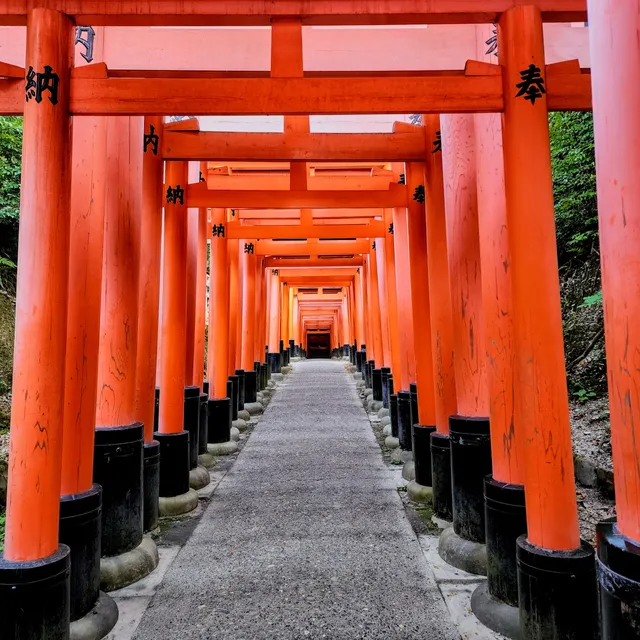
Fushimi Inari Taisha is the head shrine of over 30,000 ,Inari shrines across Japan. The deity enshrined at Inari Shrine is: the god who governs the foundation of clothing, food, housing, and blessings, ensuring everyone's life is rich and happy—the Great Inari God, the god who blesses the harvest, prosperity in business, family safety, and the realization of all desires. 1️⃣ There is no need to purchase a ticket to visit Fushimi Inari Taisha. 2️⃣ Fushimi Inari Taisha is open 24 hours, but the shops selling amulets inside have operating hours from 8:30 to 16:30. 3️⃣ Transportation: The nearest subway station to Fushimi Inari Taisha is JR Inari Station. It takes only one minute to walk there from the station. 4️⃣ Tourist routes: Fushimi Inari Taisha is located on Mount Inari, thus creating two tourist routes. One is a leisurely tour without mountain climbing (Figure 2, yellow arrow route), and the other is a hiking in-depth tour for enthusiasts, which can be planned according to your own journey. Main check-in points: ❶ Gate Tower: The main gate of Fushimi Inari Taisha, it is said that it was built by Toyotomi Hideyoshi in gratitude to the Great Inari God for his mother's recovery from illness. It is the oldest and largest building among Kyoto shrines. ❷ Main Hall: The place where the gods of Fushimi Inari Taisha are enshrined, and what you see now is the appearance after its reconstruction in 1499. ❸ Senbon Torii: A must-check-in point, the torii gates are donated by worshippers. Each gate has the donor's name, donation time, and other information. The donation amounts for torii gates of different sizes also vary. The term "Senbon Torii" means a thousand gates, but from ancient times until now, there have been more than ten thousand torii gates in Fushimi Inari Taisha, forming the spectacular scenery we see, with gates closely lined up and endless. #KyotoTravel #KyotoTravelGuide #FushimiInariTaisha #JapanFreeTravel #FreeTravel